
In this article:
- Right positioning
- Controlled feeding
- Careful observation
How Does Choking Happen During Breastfeeding?
Choking occurs when milk enters the airway instead of moving smoothly down the food pipe.
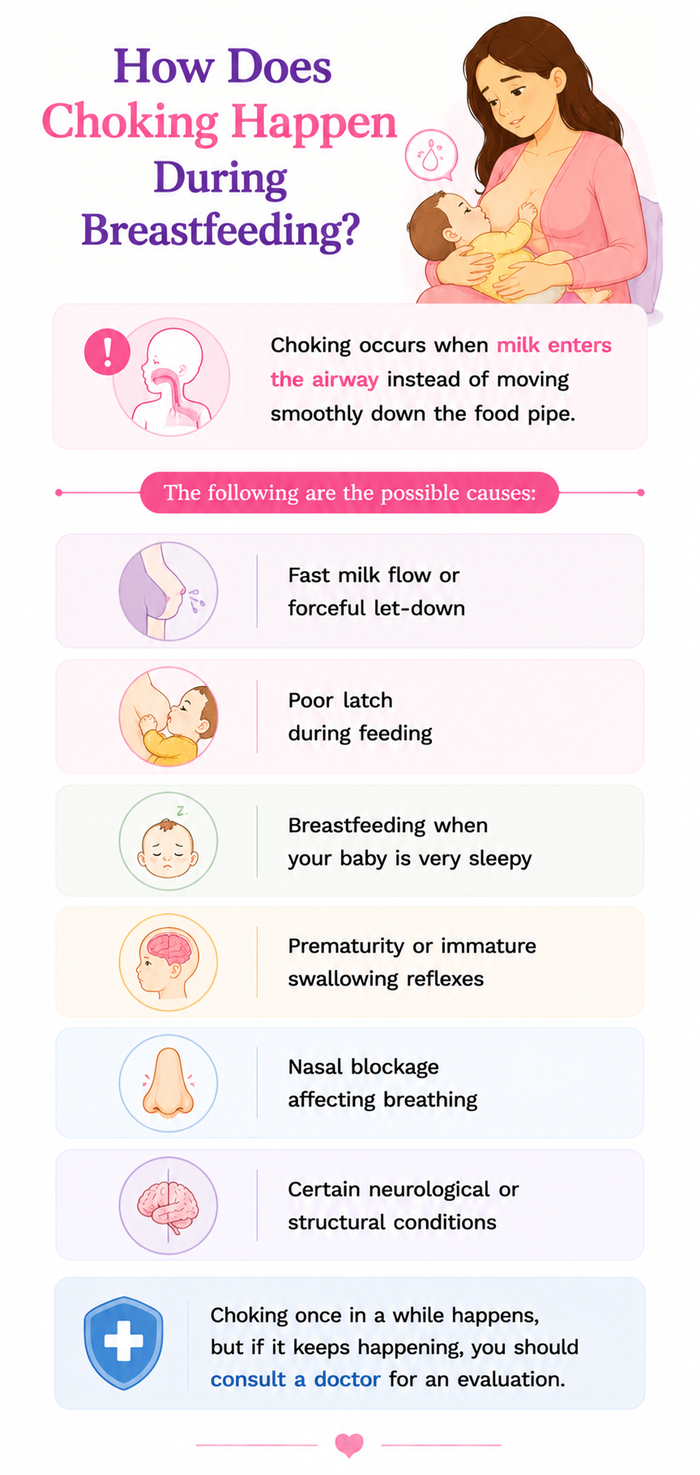
The following are the possible causes:
- Fast milk flow or forceful let-down
- Poor latch during feeding
- Breastfeeding when your baby is very sleepy
- Prematurity or immature swallowing reflexes
- Nasal blockage affecting breathing
- Certain neurological or structural conditions
Best Breastfeeding Positions to Prevent Choking
If you correctly position your baby, it can help manage milk flow more effectively.
| Breastfeeding Positions | How it May Help | How to Position Your Baby |
| Position 1: Laid-Back | Gravity can slow milk flow down |
|
| Position 2: Side-Lying | Comfortable for nighttime feeding |
|
| Position 3: Upright Feeding | If your baby frequently coughs or struggles to manage milk flow during feeds |
|
Effective Ways To Manage a Fast Milk Letdown
If there is a forceful let-down of the milk from the nipples, it can cause difficulty for your baby to suck and swallow that fast.
You may try the following technique to manage the fast milk let-down:
- Expelling a small quantity of milk before feeding
- Using laid-back breastfeeding techniques
- Following the one-breast-per-feed approach only if recommended by your healthcare practitioner
- Taking brief breaks while feeding, if necessary
- Gulping sounds
- Frequent coughing
- Pulling away from the breast
- Milk leaking from the mouth
Signs Your Baby May Be Struggling During a Feed
Watch for signs that suggest feeding is becoming difficult.
At first, we need to understand the difference between gagging and choking so we can seek the right care.
| Gagging | Choking |
| Baby coughs and makes sounds | Baby may be silent |
| Airway remains partially open | The airway may be blocked |
| Usually resolves on its own | Requires immediate attention |
Common Warning Signs of Choking
Here are some warning signs:
- Repeated coughing
- Choking episodes
- Gasping between sucks
- Watery eyes during feeding
- Frequent pulling away from the breast
- Changes in skin colour around the lips
Feeding Habits That Help Reduce Choking Risk
The following simple habits can improve feeding safety:
- Feed when your baby shows early hunger cues
- Avoid waiting until your baby becomes extremely hungry
- Keep feeds calm and unhurried
- Burp your baby regularly during and after feeds
- Ensure the nose remains unobstructed
- Avoid forcing continued feeding when your baby needs a break
What Should You Do If Your Baby Chokes While Breastfeeding?
If your baby is choking, then stay calm and act quickly.
- Stop the feed briefly
- Sit your baby upright
- Allow them to clear the airway naturally
- Seek emergency medical help immediately
- Follow infant choking first-aid measures if trained
- Avoid putting fingers in the mouth unless the object obstructing the airway is visible
When Should You Speak to a Doctor?
You should consult your doctor if your baby:
- Chokes frequently during feeds
- Has difficulty gaining weight
- Shows breathing difficulties
- Has recurrent chest infections
- Feeds for unusually long periods with poor milk transfer
- Appears distressed during most feeds
Seeking timely professional help for early assessment can identify feeding or swallowing difficulties before complications develop.
Whether you’re pregnant, a new mom, or navigating postpartum, you don’t have to do it alone. Join our support group to connect, share, and support one another.
FAQs on Can Babies Choke While Breastfeeding? Safety Tips for Parents
- Is coughing during breastfeeding always a sign of choking?
No. Brief coughing can occur when milk flow is fast. However, repeated coughing or breathing difficulty should be assessed by a healthcare professional. - Can a forceful milk let-down increase choking risk?
Yes. A strong milk flow may make it harder for some infants to coordinate sucking, swallowing, and breathing. - Which breastfeeding position is safest for babies who frequently cough during feeds?
Laid-back and upright breastfeeding positions often help babies manage milk flow more effectively.