In this article:
How Long Do You Need a Urinary Catheter After a C-Section?
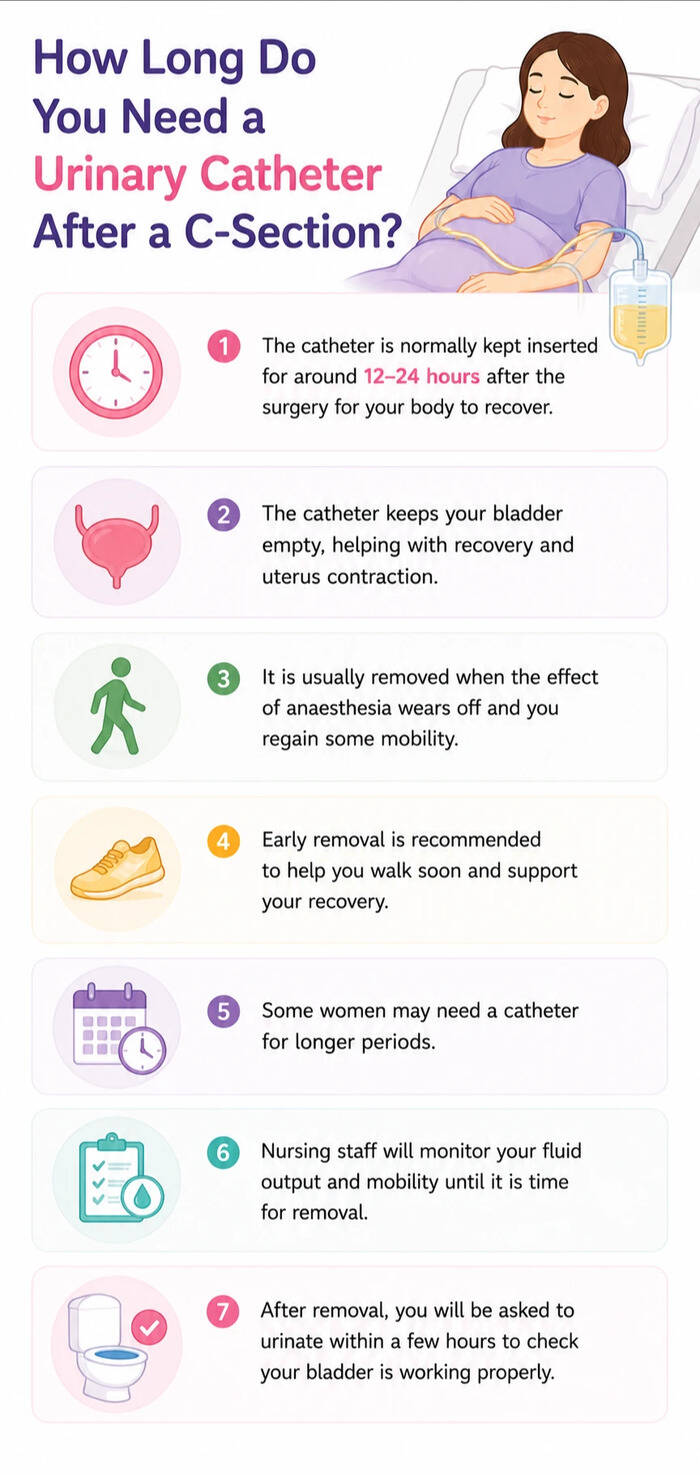
A urinary catheter is generally used briefly after a caesarean, and it depends highly on your recovery rate. Here is what you must know about the duration:- The catheter is normally kept inserted for around 12-24 hours after the surgery, during which your body can relax and recover
- The catheter ensures your bladder stays empty, thereby helping with recovery and ensuring effective contraction of the uterus
- It is usually removed when the effect of anaesthesia fades off, and you regain some mobility in the lower part of your body
- Early removal of the catheter is recommended since this will help you walk soon, thereby aiding your general recovery process
- Some women may have a catheter placed for longer periods
- The nursing staff will monitor your fluid output and mobility until the appropriate time for removal
- Once the catheter is removed, you will be asked to urinate within a couple of hours, indicating that your bladder is working properly again
Why Is There a Need for a Urinary Catheter Post-Caesarean?
After a caesarean delivery, a catheter is commonly used for practical and medical reasons that support recovery and comfort. It helps your body heal while reducing strain during the initial hours after surgery.- Prevents bladder strain: Anaesthesia can reduce bladder sensation, so a catheter ensures the bladder does not become overly full
- Supports surgical safety: An empty bladder creates more space during surgery and lowers the risk of accidental injury
- Monitors urine output: It helps doctors track kidney function and hydration after surgery
- Reduces movement discomfort: New mothers can rest without needing to get up immediately after surgery
- Promotes wound healing: Limited movement in early recovery supports proper healing of the incision
- Ensures hygiene: It helps maintain cleanliness when mobility is restricted
- Temporary support: The catheter is usually removed within 12-24 hours once mobility improves
Post-Removal Expectations
Once the catheter is removed after a caesarean section, your body gradually resumes natural bladder function. Knowing what to expect can help you feel more comfortable and confident during this transition.- First urination: You may feel a slight delay or hesitation while passing urine for the first time
- Mild discomfort: A brief burning or sensitivity can occur but usually settles quickly
- Increased awareness: You may feel the urge to urinate more clearly as sensation returns
- Assisted mobility: Nurses may help you walk to the bathroom for the first few attempts
- Hydration support: Drinking fluids helps restore normal bladder function
- Monitoring output: Doctors may check if you are passing urine adequately
- Improving control: Bladder control strengthens gradually within a short time
- Encouragement to move: Gentle walking supports both bladder function and overall recovery
- Hygiene care: Maintaining cleanliness helps keep you comfortable and promotes healing
Recovery Tips for Comfort
A few simple habits can make your recovery smoother and more comfortable:- Rest as much as your body needs and avoid overexertion
- Keep the surgical area clean and dry to prevent infection
- Wear loose, breathable clothing to reduce irritation
- Stay hydrated and eat balanced meals to support healing
- Use prescribed medications on time for pain relief
- Practice gentle movements or short walks to improve circulation
- Support your abdomen while coughing or moving
- Maintain good posture when sitting or feeding your baby
- Ask for help with daily tasks to reduce strain
- Listen to your body and progress at your own pace
Whether you’re pregnant, a new mom, or navigating postpartum, you don’t have to do it alone. Join our support group to connect, share, and support one another.
FAQs on How Long is a Catheter Needed after a C-Section?
- Can I voluntarily get my catheter removed early?
No, you cannot get your catheter removed voluntarily unless your doctor or nurse says it's safe. Early removal can be appropriate in some cases, but it depends on why it was placed and your risk of urinary retention or infection. - Does catheter placement restrict mobility after my surgery?
Usually it does not affect mobility much. Many patients can still walk with a catheter, but it may feel awkward, tuggy, or slightly uncomfortable after surgery. - What should I do to feel comfortable when the catheter is placed?
To feel comfortable while the catheter is still placed, you can keep the tubing secured and avoid pulling or kinking it. Deep breathing, loose clothing, and good hygiene can reduce discomfort.