In this article:
Why Are Foot Fungal Infections More Common During Pregnancy?
We asked a doctor to explain.Foot fungal infections are relatively common during pregnancy, especially during themonsoon when humidity and damp footwear create an ideal environment for fungi to thrive.
Dr Bharadwaj explains that hormonal changes, increased sweating and swelling of the feet further increase susceptibility. The CDC notes that fungi grow best in warm, moist environments, making damp feet more vulnerable to infection.
Symptoms Of A Foot Fungal Infection
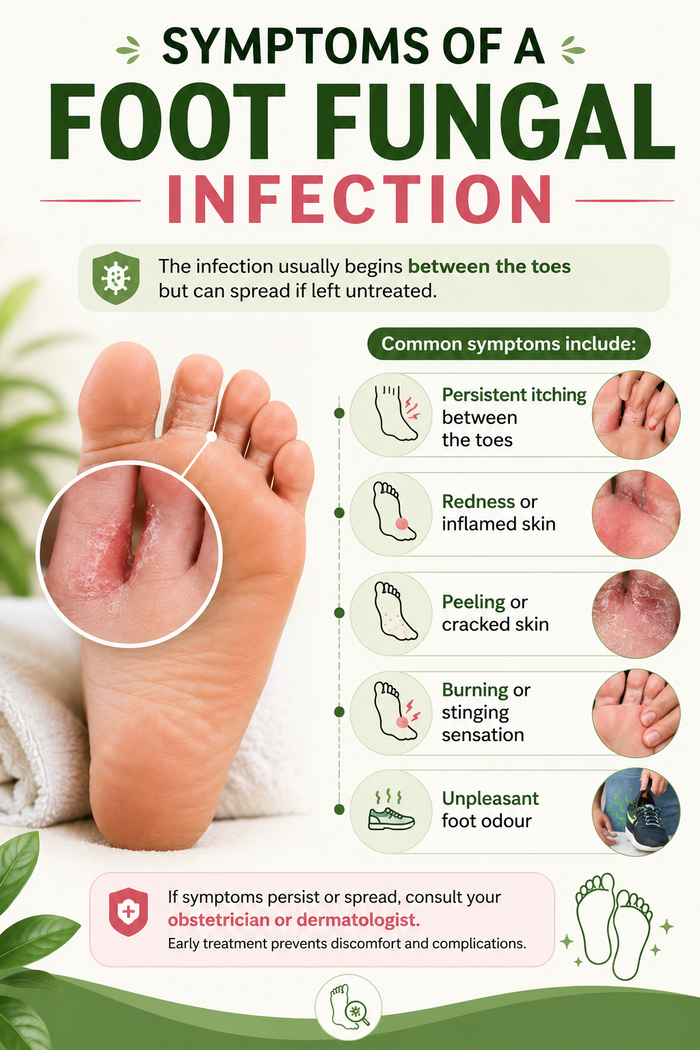
The infection usually begins between the toes but can spread if left untreated. Common symptoms include:- Persistent itching between the toes
- Redness or inflamed skin
- Peeling or cracked skin
- Burning or stinging sensation
- Unpleasant foot odour
How To Prevent Foot Fungal Infections During Pregnancy
Good foot hygiene remains the most effective defence. The NHS recommends keeping feet clean and dry to reduce the risk of fungal infections.To lower your risk:
- Wash and dry your feet thoroughly, especially between the toes.
- Change socks every day or whenever they become damp.
- Wear breathable footwear that allows moisture to escape.
- Avoid walking barefoot in public swimming pools, gyms and changing rooms.
- Rotate shoes regularly so they dry completely before being worn again.
Is Treatment Safe During Pregnancy?
Dr Bharadwaj says, "If symptoms persist or spread, consult your obstetrician or dermatologist before using antifungal creams, as some medications may not be suitable during pregnancy without medical advice."The ACOG also advises pregnant women to discuss over-the-counter medications with their healthcare provider before use. If redness, swelling or pain worsens, or the infection fails to improve, seek medical advice promptly.
Foot fungal infections during pregnancy are usually easy to manage with early care and good hygiene.
FAQs on Foot Fungal Infections During Pregnancy
- Can a foot fungal infection affect my baby?
No. The fungal infection itself does not usually affect the baby, but prompt treatment can prevent it from worsening and causing discomfort. - Can I use antifungal cream while pregnant?
Some antifungal creams may be safe during pregnancy, but always consult your obstetrician or dermatologist before starting any treatment.