
In India, there is an estimated incidence rate of systemic lupus of between 20 and 70 people per 100,000 individuals, and the incidence is higher for women of childbearing age; therefore, all women with systemic lupus need to manage their pregnancy carefully.
With proper preparation, medical assistance and systemic guidance, most women with SLE will have uncomplicated pregnancies and will be able to give birth to healthy babies.
Planning for a Healthy Pregnancy
If you have SLE, planning for pregnancy begins even before getting pregnant. Effective preparation puts your body in the most optimal state for getting pregnant, minimising your uncertainties, which in turn makes you feel more confident about the next step.
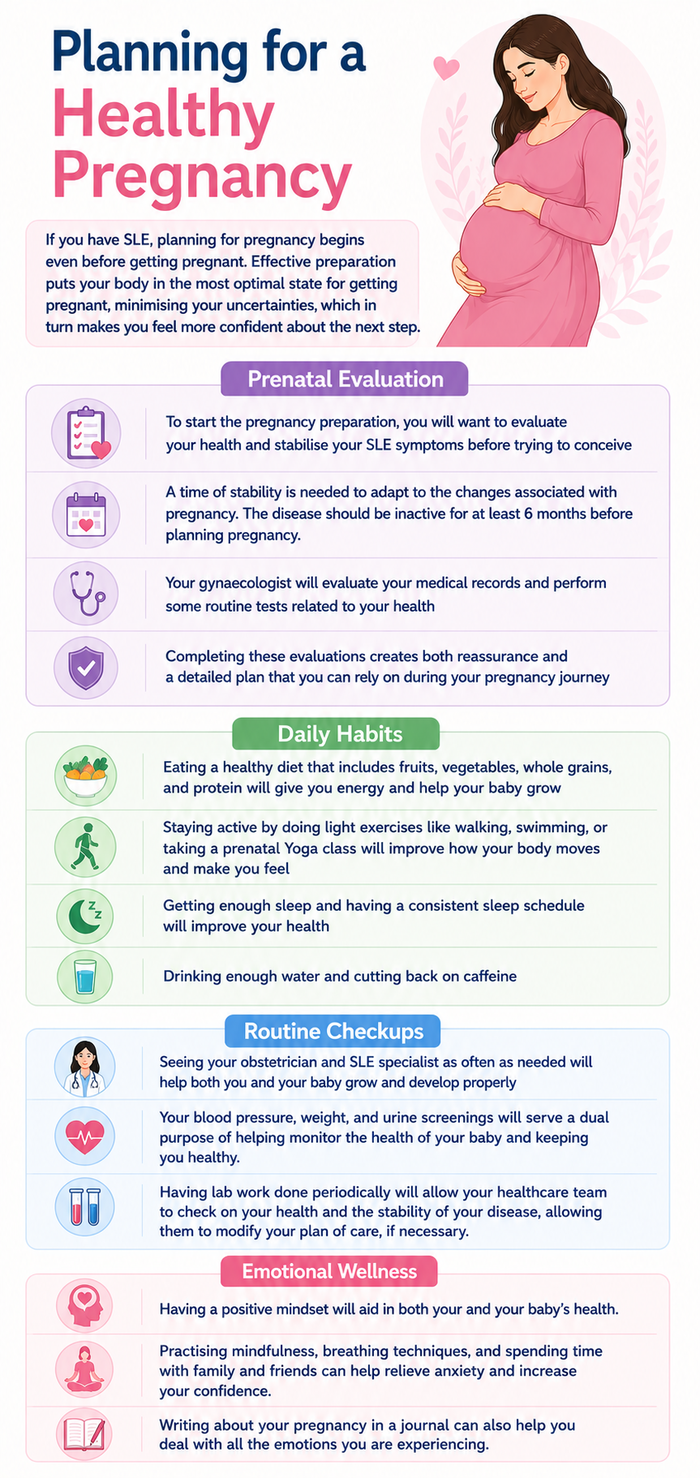
Prenatal Evaluation
- To start the pregnancy preparation, you will want to evaluate your health and stabilise your SLE symptoms before trying to conceive
- A time of stability is needed to adapt to the changes associated with pregnancy. The disease should be inactive for at least 6 months before planning pregnancy.
- Your gynaecologist will evaluate your medical records and perform some routine tests related to your health
- Completing these evaluations creates both reassurance and a detailed plan that you can rely on during your pregnancy journey
Daily Habits
- Eating a healthy diet that includes fruits, vegetables, whole grains, and protein will give you energy and help your baby grow
- Staying active by doing light exercises like walking, swimming, or taking a prenatal Yoga class will improve how your body moves and make you feel
- Getting enough sleep and having a consistent sleep schedule will improve your health
- Drinking enough water and cutting back on caffeine
Routine Checkups
- Seeing your obstetrician and SLE specialist as often as needed will help both you and your baby grow and develop properly
- Your blood pressure, weight, and urine screenings will serve a dual purpose of helping monitor the health of your baby and keeping you healthy.
- Having lab work done periodically will allow your healthcare team to check on your health and the stability of your disease, allowing them to modify your plan of care, if necessary.
Emotional Wellness
- Having a positive mindset will aid in both your and your baby’s health.
- Practising mindfulness, breathing techniques, and spending time with family and friends can help relieve anxiety and increase your confidence.
- Writing about your pregnancy in a journal can also help you deal with all the emotions you are experiencing.
Safe Medications to Use During Pregnancy
Medications are critical in maintaining a stable SLE and protecting your baby. Your medical professionals will assist you with the correct medications to take, change or switch.
Medications that are commonly used:
- Hydroxychloroquine can help with immune response stabilisation and help promote a healthy pregnancy
- Corticosteroids (low dose) can manage mild symptoms while not impacting the baby
- Azathioprine may be used if additional support for maintaining stability is required
- Low-dose Aspirin helps in women with clotting issues or increased risk of hypertension.
Medication guidelines
- Only take those medications your doctor has prescribed
- Keep a current list of all medications and supplements
- Do not make any changes to or discontinue medications without first consulting your medical team
Monitoring Your Baby
Your health will impact how fast and healthy your baby can grow, as well as when specific developmental milestones occur for your baby. To ensure your baby’s optimal growth, your doctors will closely monitor various parameters of your baby's development and growth throughout the pregnancy.
Obstetric Ultrasound is the most common method to keep track of how well your baby is developing. It gives information regarding the placenta, Amniotic fluid, growth of the baby and blood flow to the baby, which is commonly known as Doppler studies. These tests provide your care team with the data they need to evaluate if your baby is developing well and help ensure timely changes.
The recommendations on the minimum ultrasound needed are as follows:
- Viability and Dating scan in the first trimester of pregnancy
- NT scan with first-trimester screening at 11+3 weeks to 13+6 weeks
- Anomaly scan (18-22 weeks)
- Growth scan as per need in subsequent months.
The Process of Preparing For Your Delivery
You can have a positive and interactive delivery if you are given the proper support and instructions. Women with SLE can have natural birth. Labour can be induced in favourable conditions and in the absence of any contraindication. The mode of delivery can be decided during the course of the pregnancy. Elective Cesarean section can also be planned on patient’s request with proper discussion and consent for risks involved. The more informed and prepared you are, the more at ease you will be during labour and delivery.
Planning steps:
- Discuss and create a birth plan with your health care team
- Ask your haematologist to collaborate with you on your birth plan
- Arrange for supportive individuals to assist you in creating a positive birth environment
- Practice breathing exercises and relaxation techniques in preparation for delivery
Postnatal Care
The importance of postpartum care for you and your baby is critical to providing a seamless transition for the family to adjust to their new lives together, to support their ability to thrive.
Maternal Care
- Follow the medication regimen prescribed by your doctor
- Be vigilant about monitoring your health and contact your doctor with any changes or concerns as they occur
- Take time to rest and care for yourself as needed during this time, but you are taking care of your infant.
- Schedule follow-up postpartum appointments for continued support of your recovery and overall health
- Plan to have routine rheumatology appointments so that your physician can monitor your SLE activity and make recommendations for any changes to your treatment protocol as necessary.
Baby Care
- Attend regularly scheduled pediatric appointments to help your child grow and develop
- Attend any neonatal follow-up appointments to provide the earliest assessment and the best possible care to your child
- Keep track of your child’s developmental milestones and celebrate each one as it occurs
- Maintain communication with your healthcare providers so that you can continue to get guidance and reassurance
Whether you’re pregnant, a new mom, or navigating postpartum, you don’t have to do it alone. Join our support group to connect, share, and support one another.
FAQs on Pregnancy With Lupus (SLE): What to Expect and How to Stay Healthy
- When is the best time to plan a pregnancy with SLE?
For those who meet the desired criteria, women who wish to conceive should do so while experiencing either remission or low activity (the expectation is to have experienced low activity for at least six months). - Does SLE cause complications during pregnancy?
There is a risk of flares during pregnancy, depending on the prior activity level of SLE. Generally, most flares are mild and easily treated with either symptomatic treatment or medication. - How can a woman with SLE give birth?
Women with SLE can deliver through traditional vaginal delivery if there are no complications. The mode of delivery for women with SLE will be based on their overall maternal health, the activity level of SLE at the time of delivery, and other obstetric indications that would indicate a cesarean section would be required.