In this article:
It is less common than single pregnancies, but it can happen naturally in healthy pregnancies. About 1 out of every 250 pregnancies results in a twin pregnancy.
No natural method can ensure the birth of twins. Studies suggest that factors such as maternal age and family history may increase the likelihood of twins. Learning about these factors helps you understand twin conception in a clear and simple way.
What Are the Different Types of Twins?
Twins may form in different ways depending on how conception happens during pregnancy.
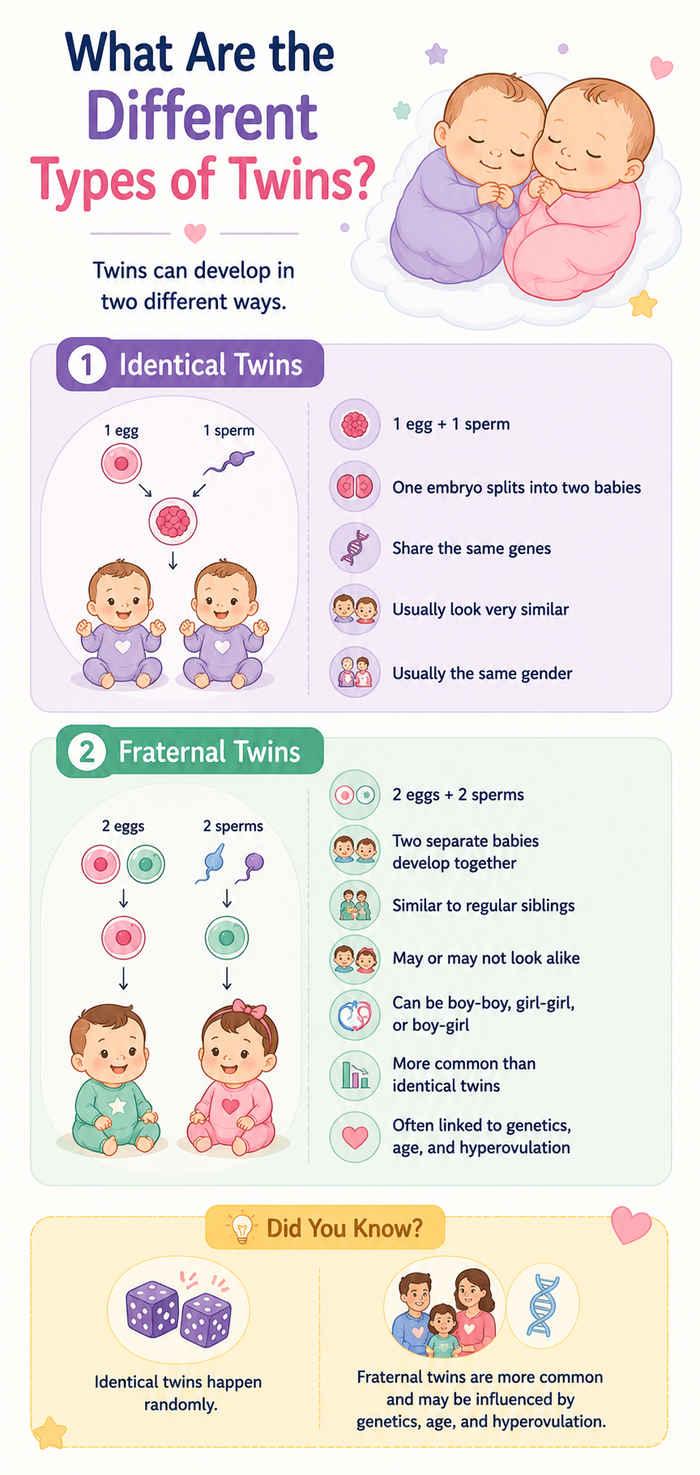
Identical twins:
- Identical twins form when one egg is fertilised by one sperm and makes a single embryo.
- In the early days of pregnancy, this embryo splits into two babies.
- Because both babies come from the same egg, they share the same genes. That’s why they often look very similar.
- Identical twins usually are the same gender.
- They may have similar hair, eyes, and facial features.
- This type of twin pregnancy happens naturally and randomly. It is not strongly linked to family history.
Fraternal Twins (Non-Identical):
- Fraternal twins form when your ovaries release two eggs during ovulation instead of one. Each egg is fertilised by a different sperm, so two separate babies grow at the same time.
- Since they result from different eggs and sperm, fraternal twins are similar to siblings in all aspects.
- They may resemble each other or not.
- They could be two boys, two girls, or one of each.
- Fraternal twins are more common than identical twins.
- They are often linked to natural factors like family genetics, your age, and hyperovulation.
Natural Factors That May Increase the Chances of Twins
Some natural factors that increase your possibility of having twins. There is no natural way to guarantee twins. But some body patterns and fertility traits may raise your chances of a twin pregnancy.
1. Genetics and Family History:
If twins run in your family, you may have a slightly higher chance of having fraternal twins.The reason for this is that some women are biologically predisposed to a condition called hyperovulation, which means they produce multiple eggs during ovulation.
2. Maternal Age:
Women over 30 are more likely to have naturally occurring twins. As age increases, the hormonal fluctuations can sometimes lead to double ovulation. This can increase the likelihood of two eggs being fertilised in one cycle.3. Previous Pregnancies:
Women who have had multiple pregnancies may have a slightly higher chance of conceiving twins compared to first-time mothers.4. Body Type:
Tall women and those within a healthy body weight range may be more likely to conceive twins.5. Ethnicity:
According to research, twin pregnancy rates can vary naturally across different populations around the world.Can Diet Help Support Natural Twin Conception?
Food alone cannot make you have twins. But a balanced diet helps your body prepare for pregnancy and supports your reproductive health.
Some foods are often connected with healthy ovulation and better fertility, such as:
- Dairy products
- Sweet potatoes and yams
- Folate‑rich foods (like leafy greens)
- Protein‑rich foods (like beans, eggs, fish)
- Nuts and seeds
- Healthy fats (like olive oil, avocados)
Can Supplements Increase the Chances of Twins?
There are various vitamins and nutrients that may help improve your reproductive system's functions and help you prepare your body for conception. However, no dietary supplement can ensure twins during natural conception.
The following is a list of supplements that may help you conceive twins.
1. Folic Acid and Folate:
The most vital supplement before pregnancy is folic acid. It helps both your health and your baby’s early development.2. Zinc:
Zinc is another essential supplement for improving fertility. It can help women maintain normal menstrual cycles and improve sperm quality and motility in men.3. Iron:
Proper iron intake plays an important role during the preparation period for pregnancy. This mineral is good for your overall well-being and reproductive health.4. Vitamin D and Omega-3 Fatty Acids:
These supplements may support hormonal balance and fertility.Healthy Tips for Couples Trying to Conceive Naturally
Small daily habits can play an important role in reproductive health for both partners.
- Eat a healthy and nutritious diet
- Do some physical activity, such as exercise
- Keep your bodyweight healthy
- Sleep well every day
- Manage your stress level healthily
- Stay hydrated
Focusing on your overall fertility health and getting proper medical guidance can support a safer and healthier pregnancy journey.
Whether you’re pregnant, a new mom, or navigating postpartum, you don’t have to do it alone. Join our support group to connect, share, and support one another.
FAQs on Can You Naturally Increase Your Chances of Having Twins?
- Can twins happen naturally without fertility treatment?
Yes, twins can occur naturally when one egg splits or when two eggs are fertilised at the same time. - What is hyperovulation?
It means your ovaries release more than one egg during ovulation, which can increase the chance of fraternal twins. - Can twins have separate placentas?
Yes, fraternal twins usually have separate placentas, while identical twins may share one or have two, depending on when the egg splits.