In this article:
Why Is There Mucus in a Babys Stool?
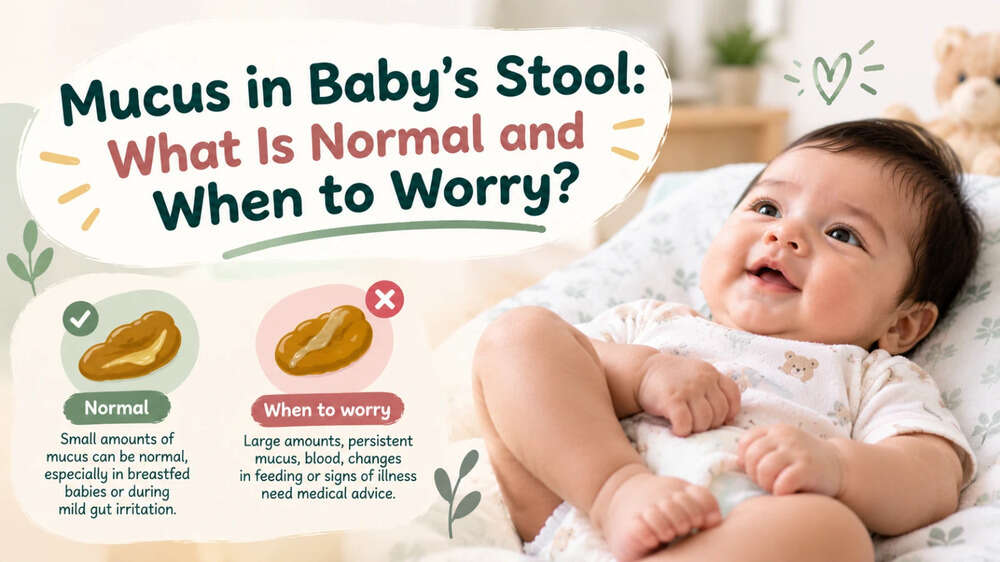
The bowel naturally produces mucus to lubricate its lining and help stool pass. An occasional small amount may not be concerning if the baby is feeding normally, remains active and has no other symptoms.According to Dr Nayan Kumar S, Associate Professor at SDM College of Ayurveda and Hospital, Hassan, the key consideration is whether mucus appears alongside other changes in the baby’s health.
Mucus may also occur with diarrhoea or intestinal irritation. The Seattle Children’s Hospital guidance on diarrhoea in babies identifies mucus or blood in the stool, alongside changes in stool frequency, poor feeding or fever, as signs that may warrant medical assessment.
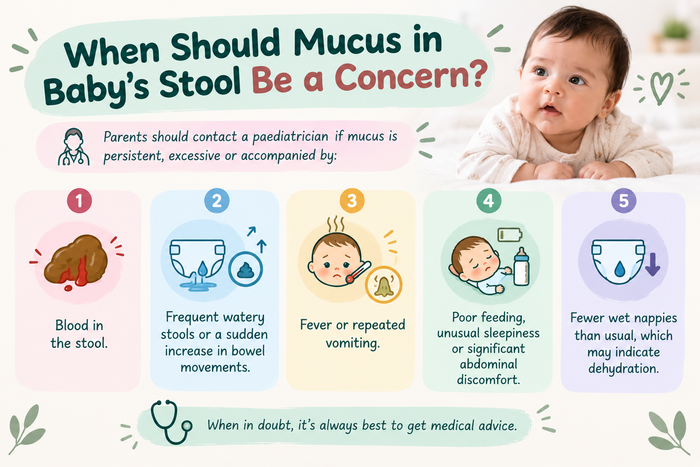
When Should Mucus in Babys Stool Be a Concern?
Parents should contact a paediatrician if mucus is persistent, excessive or accompanied by:- Blood in the stool.
- Frequent watery stools or a sudden increase in bowel movements.
- Fever or repeated vomiting.
- Poor feeding, unusual sleepiness or significant abdominal discomfort.
- Fewer wet nappies than usual, which may indicate dehydration.
The NHS guidance on urgent medical help for babies and young children advises urgent assessment for signs such as breathing difficulties, difficulty waking or a markedly reduced number of wet nappies. Seek immediate medical attention if a baby appears seriously unwell.
What Should Parents Do?
If a baby has a small amount of mucus but is otherwise well, parents can monitor the stool pattern, feeding and wet nappies. Photographing an unusual nappy may help the paediatrician understand the change.Avoid giving medicines or home remedies without professional advice, particularly to young infants. Persistent symptoms or any warning signs should be assessed rather than managed through observation alone.
Mucus in a baby’s stool is not automatically a sign of illness, but changes in frequency, appearance and the baby’s overall condition are important. Monitoring symptoms and seeking timely paediatric advice when warning signs appear can help ensure that any underlying problem is addressed.
FAQs on Mucus In Baby's Stool
- Is mucus in a baby’s stool normal?
A small amount may occur without indicating a serious problem, particularly if the baby is otherwise well. Persistent mucus or mucus accompanied by other symptoms should be discussed with a paediatrician. - When should a baby with mucus in their stool see a doctor?
Seek medical advice if mucus occurs with blood, frequent watery stools, fever, vomiting, poor feeding or signs of dehydration. Urgent care is needed if the baby appears seriously unwell.