While the diagnosis can sound concerning, its severity can vary considerably from one baby to another. To understand congenital pulmonary airway malformation (CPAM), its causes, diagnosis, and treatment options, we spoke with Dr Sulaiman Ladhani, Consultant Pulmonologist at Wockhardt Hospital, Mumbai Central.
What Is Congenital Pulmonary Airway Malformation?
Congenital pulmonary airway malformation, or CPAM, is a rare developmental abnormality in which a portion of a baby's lung develops abnormally. Instead of normal lung tissue, the affected area contains abnormal cyst-like or solid tissue.CPAM develops before birth and usually affects one lung. The affected area does not function like normal lung tissue and can vary in size.
What Causes CPAM?
The exact cause of CPAM is not usually known. It develops during the baby's lung development in pregnancy.CPAM is generally considered a developmental condition rather than something caused by the mother's food, activities, or lifestyle during pregnancy. Parents should not blame themselves if their baby is diagnosed with CPAM.
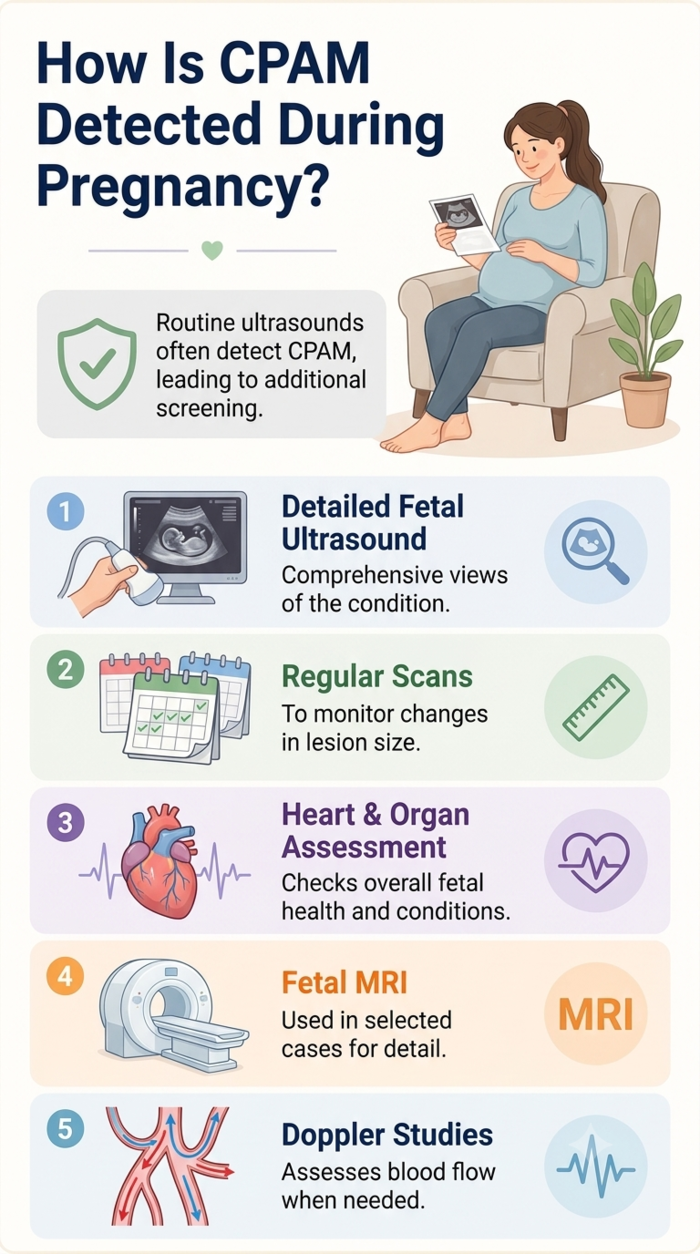
How Is CPAM Detected During Pregnancy?
CPAM is often detected during a routine prenatal ultrasound. Doctors may see an abnormal area in one of the baby's lungs.Depending on the ultrasound findings, the doctor may recommend:
- Detailed foetal ultrasound
- Regular scans to monitor the size of the lesion
- Assessment of the baby's heart and other organs
- Foetal MRI in selected cases
- Doppler studies when needed
Can CPAM Affect Pregnancy?
The effect of CPAM depends largely on the size and location of the abnormal lung tissue.Small lesions may cause few or no problems during pregnancy. Larger lesions can sometimes take up space inside the baby's chest and put pressure on the developing lungs or heart.
In severe cases, this may contribute to:
- Reduced development of normal lung tissue
- Displacement or compression of the heart
- Fluid accumulation in the foetus
- Foetal hydrops, in severe cases
Can CPAM Be Seen on Ultrasound?
Yes. Ultrasound is usually the main test used to identify CPAM before birth.The doctor may look at:
- The size of the abnormal lung area
- Whether it appears cystic or solid
- Its location in the chest
- The effect on the heart and surrounding structures
- Whether there is any fluid accumulation
Does CPAM Go Away During Pregnancy?
In some babies, a CPAM lesion may become smaller or less noticeable as pregnancy progresses. In other cases, it may remain visible until birth.A lesion appearing smaller on ultrasound does not always mean that the condition has completely disappeared. Doctors usually continue monitoring the baby based on the overall findings.
How Is CPAM Managed During Pregnancy?
Management depends on the lesion's size, its effect on the baby, and whether complications are present.- For smaller or stable lesions, doctors may recommend regular ultrasound monitoring.
- If a large lesion is causing significant problems, the pregnancy may need closer monitoring by a foetal medicine specialist. In selected severe cases, specialists may consider treatment.
Surgical evaluation is generally recommended for babies with symptomatic CPAM, particularly those experiencing breathing difficulties or other complications.
What Happens After Birth?
After delivery, doctors will assess the baby's breathing and overall condition.Some babies may have no immediate symptoms, while others may develop breathing difficulties.
Depending on the situation, doctors may use:
- Chest imaging
- CT scan when appropriate
- Monitoring of breathing and oxygen levels
- Other tests to assess the lungs
When Should Parents Seek Specialist Advice?
Parents may benefit from consultation with a foetal medicine specialist or paediatric team when:- CPAM is detected during an ultrasound
- The lesion appears large
- The baby shows signs of fluid accumulation
- There is concern about lung or heart compression
- The scan findings change during pregnancy
- Parents need guidance about delivery and newborn care
Whether you’re pregnant, a new mom, or navigating postpartum, you don’t have to do it alone. Join our support group to connect, share, and support one another.
FAQs on Abnormal Lung Growth in Babies Before Birth: Causes and Treatment
- Is CPAM a serious condition?
CPAM can range from mild to severe. The impact depends mainly on the lesion's size and whether it affects the baby's lungs, heart, or fluid balance. - Can CPAM come back after surgery?
Once doctors remove all affected lung tissue, CPAM usually does not grow back. Follow-up depends on the child's condition. - Can CPAM affect the baby's breathing after birth?
Yes. Some babies have breathing difficulties, although others may have no symptoms immediately after birth.