In this article:
What Are Natal Teeth?
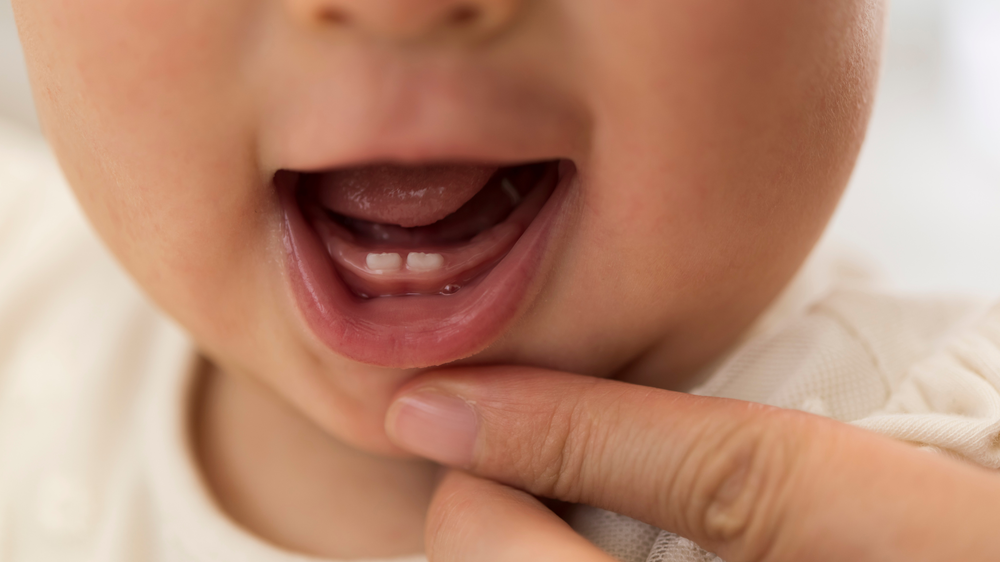
Natal teeth mean your baby is born with teeth. They appear in the lower front part of the mouth, where the first baby teeth usually come in. Most of the time, these are just regular baby teeth that have appeared earlier than expected.
Some natal teeth are strong and firmly attached, while others may be smaller, loose, or not fully formed. Natal teeth are not the same as neonatal teeth. Natal teeth are present at birth, while neonatal teeth come out during the first month after birth.
How Common Are Babies Born With Teeth?
Seeing a tooth in a newborn's mouth is unusual because most babies do not start teething until around 6 months of age. In fact, natal teeth are estimated to occur in only about 1 in 2,000 to 3,500 births, making them relatively rare.Why Are Some Babies Born With Teeth?
The exact cause of natal teeth is not fully understood. However, several factors may contribute to their early appearance.
Genetics and Family History
Natal teeth sometimes run in families. If a parent or close relative was born with teeth, a baby may be more likely to have them as well.
Early Tooth Development
In some babies, the developing tooth forms closer to the gum surface than usual. This can cause the tooth to erupt before birth.
Certain Medical Conditions
Rarely, natal teeth are associated with genetic or developmental conditions, such as Ellis-van Creveld or Sotos syndrome.
Unknown Causes
In many cases, there is no clear reason why a baby is born with teeth. The condition can occur in otherwise healthy newborns with no family history or associated medical concerns.
How Are Natal Teeth Different From Regular Baby Teeth?
Natal teeth and regular baby teeth are often the same teeth, but they differ mainly in when they appear and how developed they are. Here is a simple comparison:
| Natal Teeth | Regular Baby Teeth |
| Present at birth | Usually appear around 6 months of age |
| May be smaller or less developed | Typically well-formed when they erupt |
| Can be loose due to incomplete root development | Usually firmly attached to the gums |
| May require monitoring soon after birth | Usually, no special evaluation |
| Uncommon | A normal part of infant development |
Are Natal Teeth Harmful to the Baby?
Most of the time, natal teeth do not cause any harm to your baby. However, they may occasionally lead to minor problems that need attention, such as:- Discomfort for the baby during feeding
- Baby's tooth may rub against and irritate the tongue
- Nipple discomfort for breastfeeding mothers
When Do Natal Teeth Need Treatment or Removal?
Many natal teeth do not need any treatment and can be left in place. A doctor or dentist will examine your baby's tooth and decide whether any treatment is needed. They may consider:- Whether the tooth is firm or loose
- If your baby is feeding well
- Whether the tooth is causing any discomfort
- The condition of the surrounding gums
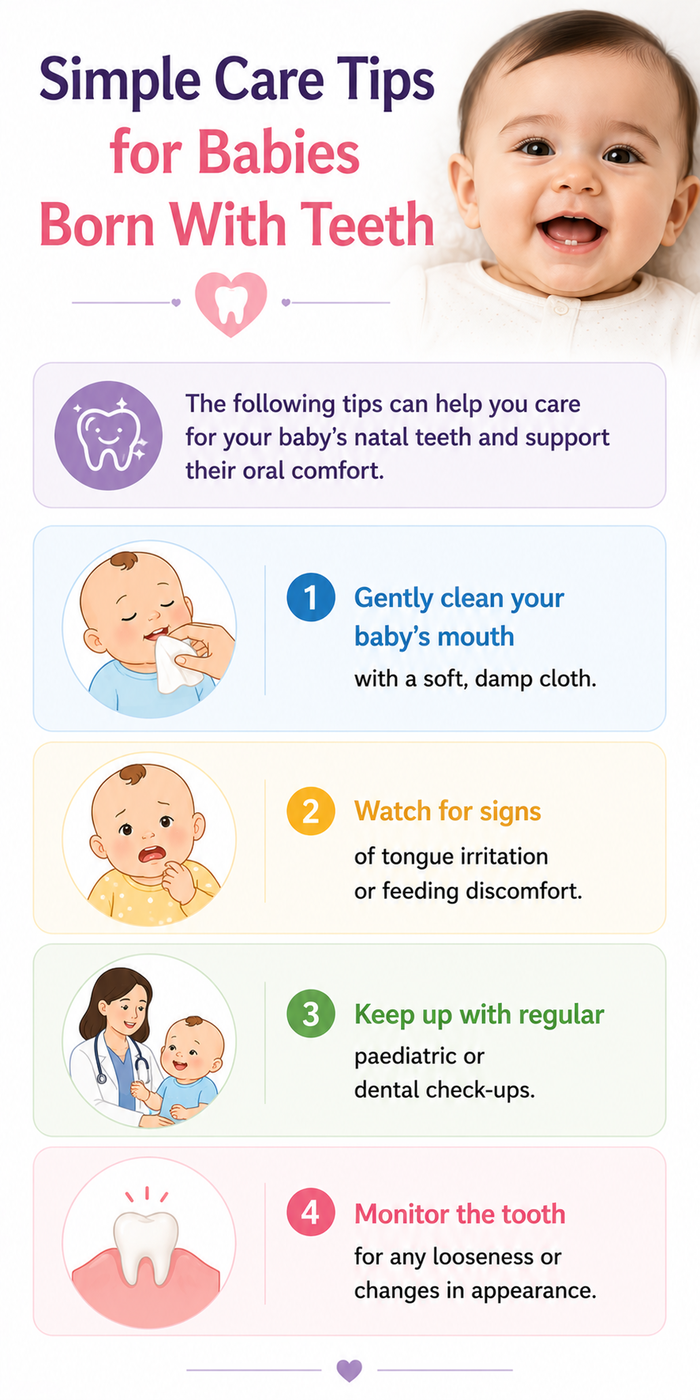
Simple Care Tips for Babies Born With Teeth
The following tips can help you care for your baby's natal teeth and support their oral comfort. This includes:- Gently clean your baby's mouth with a soft, damp cloth
- Watch for signs of tongue irritation or feeding discomfort
- Keep up with regular paediatric or dental check-ups
- Monitor the tooth for any looseness or changes in appearance
When Should You Contact a Paediatrician or Paediatric Dentist
Contact your baby's paediatrician or paediatric dentist if you notice the following changes:- The tooth appears unusually shaped or discoloured
- You notice bleeding around the tooth or gums
- The gums become red, swollen, or tender
- Your baby develops sores inside the mouth
- You are unsure how to care for the tooth
- You have any concerns about your baby's oral health
The journey of parenthood begins with many unexpected moments, and a tooth at birth may be one of them. With the right care and guidance, most babies with natal teeth continue to grow and feed normally.
Whether you’re pregnant, a new mom, or navigating postpartum, you don’t have to do it alone. Join our support group to connect, share, and support one another.
FAQs on Babies Born With Teeth: Is It Normal and What Does It Mean?
- Can natal teeth change the appearance of my baby's future teeth?
Generally, no. Natal teeth do not usually affect the appearance or development of the permanent teeth that will come in later. - Do natal teeth always need to be removed?
No. Many natal teeth can remain in place if they are stable and not causing any problems.