In this article:
The most important thing is that you should know how they differ in their causes, symptoms, and management. This can help you tell when a situation is normal and when you need to take immediate action.
Why Is Gagging Usually Less Dangerous Than Choking?
The main factor that makes gagging safer than choking is that, unlike choking, gagging allows your baby to breathe.
When your baby gags, their body is trying to protect the airway from milk entering too deeply. Airflow usually continues.
When your baby chokes, milk may partially or completely block the airway. This can interfere with breathing and requires prompt attention.
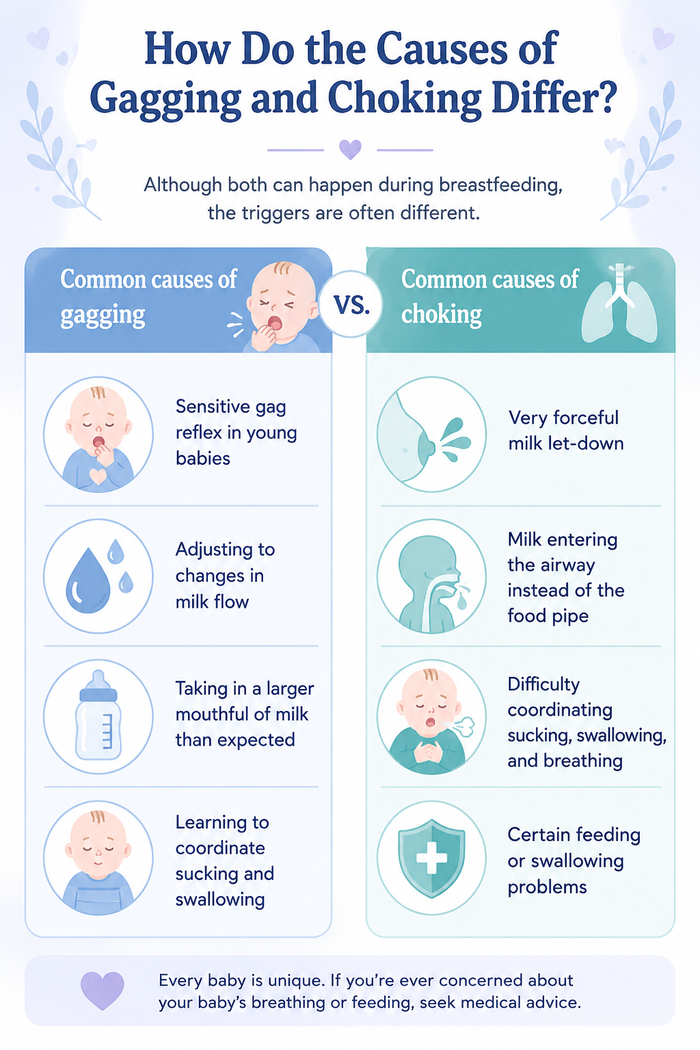
How Do the Causes of Gagging and Choking Differ?
Although both can happen during breastfeeding, the triggers are often different.
Common causes of gagging
- Sensitive gag reflex in young babies
- Adjusting to changes in milk flow
- Taking in a larger mouthful of milk than expected
- Learning to coordinate sucking and swallowing
Common causes of choking
- Very forceful milk let-down
- Milk entering the airway instead of the food pipe
- Difficulty coordinating sucking, swallowing, and breathing
- Certain feeding or swallowing problems
What Are the Differences in Symptoms of Gagging and Choking?
The signs can help you figure out what your baby is actually experiencing.
| Symptom | Gagging | Choking |
| Coughing | Usually strong | May be weak or absent |
| Breathing | Continues normally | Becomes difficult |
| Noise | Often loud and noticeable | May be silent |
| Skin colour | Remains normal | May become pale or bluish |
| Feeding behaviour | Often resumes feeding soon after | May remain distressed |
Signs that suggest gagging
- Spluttering during feeding
- Tongue pushing forward
- Brief coughing followed by recovery
- Continued alertness
Signs that suggest choking
- Struggling to breathe
- Inability to cry normally
- Persistent distress
- Change in skin or lip colour
How Does the Body Respond in Each Situation?
Gagging is a defence mechanism.It helps move milk away from the airway before it causes harm.
Choking, however, means the protective mechanisms have not fully prevented airway blockage. As a result, breathing may be affected.
What Are The Options To Manage These Conditions?
Your response should depend on how accurately you can analyse whether your baby is gagging or choking.If your baby is gagging:
- Pause the feed briefly
- Keep your baby upright
- Allow them to clear the milk naturally
- Restart feeding only when they appear comfortable
If your baby is choking:
- Stop feeding immediately
- Assess whether your baby is breathing
- Seek emergency medical help if breathing is impaired
- Follow infant first-aid guidance if you are trained
When Should You Be Concerned?
Occasional gagging during breastfeeding is generally not a sign of a serious problem.You should seek medical advice if:
- Choking episodes occur repeatedly.
- Feeding difficulties happen frequently.
- Your baby has trouble gaining weight.
- Breathing problems occur during feeds.
Whether you’re pregnant, a new mom, or navigating postpartum, you don’t have to do it alone. Join our support group to connect, share, and support one another.
FAQs on Baby Gagging vs. Choking During Breastfeeding: Which Is More Dangerous?
- Can a baby gag and choke during the same feed?
Yes. A baby may gag first and, in some situations, progress to choking if milk enters the airway and affects breathing. - Does gagging mean there is something wrong with breastfeeding?
Not always. Many babies experience occasional gagging as they learn feeding skills and adapt to milk flow. - Which is more dangerous: gagging or choking?
Choking is more dangerous because it can block the airway and interfere with breathing, whereas gagging is usually a protective reflex.