In this article:
What matters most is that your baby continues to gain weight steadily over time.
Knowing about healthy indicators of growth will help you feel more assured during those months when your child grows and develops.
How Much Weight Gain Is Normal for Babies?
Generally, most babies follow a similar pattern of growth during the first few weeks.| Age of the baby | Expected weight change |
| First 3–5 days | A small loss of birth weight is normal |
| Around 2 weeks | Most babies regain their birth weight |
| First 6 months | Weight usually increases steadily |
| After 6 months | Growth continues, although weight gain becomes slower |
What Are the Signs Of Healthy Baby Growth?
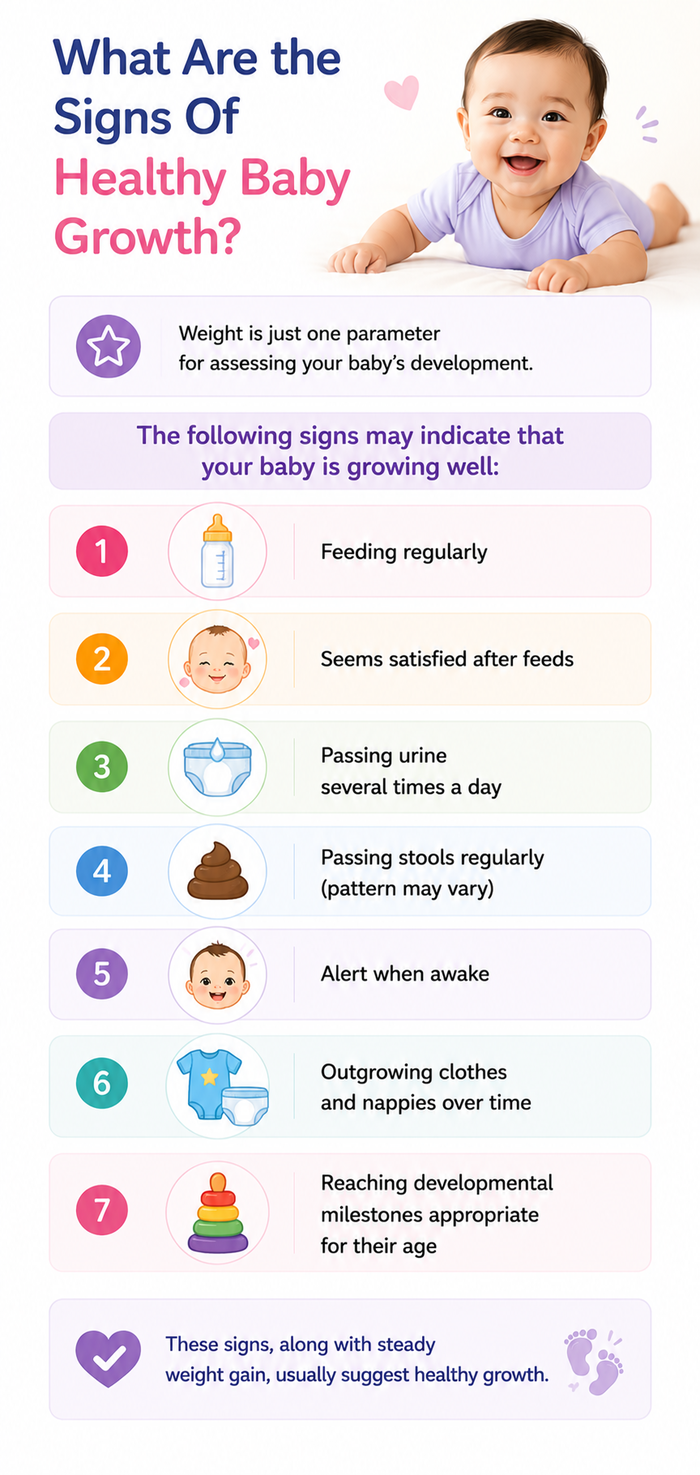
Weight is just one parameter for assessing your baby’s development.The following signs may indicate that your baby is growing well:
- Feeding regularly
- Seems satisfied after feeds
- Passing urine several times a day
- Passing stools regularly (pattern may vary)
- Alert when awake
- Outgrowing clothes and nappies over time
- Reaching developmental milestones appropriate for their age
What Can Affect Your Baby's Weight Gain?
The following are the factors that can influence the pace of your baby’s weight gain:| Causes | Impact On Weight Gain |
| Feeding difficulties | Your baby may not take enough milk. |
| Premature birth | Growth may follow a different pattern. |
| Illness | Temporary illnesses can reduce feeding. |
| Certain medical conditions | These may affect feeding or nutrient absorption. |
Should You Compare Your Baby's Weight With Other Babies?
It is easy to compare your baby with others. However, doing so can cause unnecessary worry.Every baby grows differently.
For example, one baby may gain weight quickly during the first few months, while another grows more gradually. Both patterns can be completely healthy.
Your doctor is more interested in whether your baby is following their own growth curve than how they compare with another child.
When Should You Speak to Your Doctor?
You should reach out for a medical review if you notice any of the following:- Your baby has not regained their birth weight by about two weeks
- Feeding has become difficult
- Your baby produces fewer wet nappies than usual
- Weight gain slows down or stops
- Your baby seems unusually sleepy or difficult to wake for a feed
- Frequent vomiting makes it difficult to keep feeds down
How Can You Support Healthy Weight Gain?
The following simple daily habits can support healthy growth:- Ensure that your baby gets fed whenever they show hunger cues
- Check whether your baby is latching well during breastfeeding
- Never miss routine health check-ups and growth monitoring visits
- Follow age-appropriate feeding advice when introducing solids
- Discuss any feeding concerns with your doctor rather than waiting for the next visit
Whether you’re pregnant, a new mom, or navigating postpartum, you don’t have to do it alone. Join our support group to connect, share, and support one another.
FAQs on Is My Baby Gaining Enough Weight? How to Tell if Your Baby Is Growing Well
- How often should my baby's weight be checked?
Your baby's weight is usually checked during routine health visits. Your doctor may recommend more frequent checks if there are concerns about feeding or growth. - Is it normal for babies to lose weight after birth?
Most newborns lose a small amount of weight during the first few days after birth. They usually regain their birth weight by around two weeks. - Can breastfed babies gain weight differently from formula-fed babies?
Growth patterns may vary slightly. However, both breastfed and formula-fed babies should continue to gain weight steadily when they are feeding well.