In this article:
We spoke with Dr Sunil Bhasin, Director & Unit Head – Paediatrics, Max Super Speciality Hospital, Dwarka, to understand neonatal polycythemia and why some newborns have an excess of red blood cells.
What Is Neonatal Polycythemia?
Neonatal polycythemia occurs when a baby has an abnormally high red blood cell concentration after birth. Doctors usually assess this using the baby’s venous hematocrit, which measures the percentage of blood made up of red blood cells.A hematocrit of around 65% or higher in a newborn is commonly used as a threshold for polycythemia. However, doctors do not make treatment decisions based on a single number. They also consider the baby’s symptoms, age, hydration status, blood glucose levels, and overall condition.
Having more red blood cells can make the blood thicker than usual. This increased thickness is known as hyperviscosity and may slow blood flow through small blood vessels.
What Causes Neonatal Polycythemia?
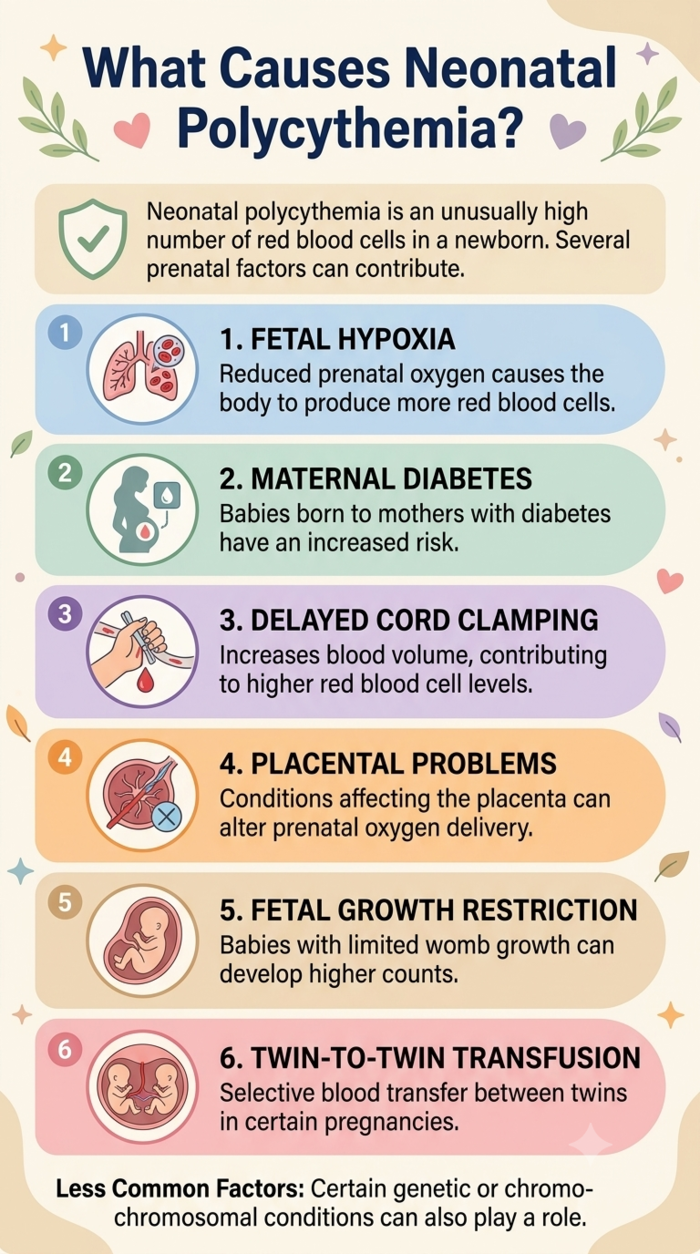
Possible causes include:- Reduced oxygen before birth: If the baby receives less oxygen during pregnancy, the body may respond by producing more red blood cells.
- Maternal diabetes: Babies born to mothers with diabetes may have an increased risk.
- Delayed cord clamping: This can increase the baby’s blood volume and, in some cases, contribute to higher red blood cell levels.
- Twin-to-twin transfusion: In certain twin pregnancies, one baby may receive more blood than the other.
- Placental problems: Conditions affecting the placenta can alter oxygen delivery to the baby.
- Growth restriction: Some babies who did not grow as expected in the womb may develop higher red blood cell counts.
- Certain genetic or chromosomal conditions: Some medical conditions can increase the likelihood of polycythemia.
What Are the Signs of Neonatal Polycythemia?
Possible signs include:- Difficulty feeding or poor sucking
- Unusual sleepiness or reduced alertness
- Irritability
- Fast or difficult breathing
- Bluish or dusky skin colour
- Low blood sugar
- Vomiting
- Reduced urine output
- Abdominal swelling
- Shaking or jitteriness
- Seizures in severe cases
How Is Neonatal Polycythemia Diagnosed?
Dr Sunil Bhasin explains that doctors assess the baby’s symptoms and history and confirm elevated hematocrit levels with a venous blood test when needed.Other tests may be recommended depending on the baby’s symptoms and risk factors.
These can include:
- Blood glucose testing
- Bilirubin testing
- Oxygen level monitoring
- Blood gas testing when needed
- Additional investigations to identify an underlying problem
Can Neonatal Polycythemia Cause Complications?
According to Dr Sunil Bhasin,“Neonatal polycythemia can cause complications such as hypoglycemia, jaundice, respiratory distress, neurological symptoms or seizures, feeding intolerance or NEC, thrombosis, renal impairment, and, rarely, heart failure.”
Early recognition and timely management can help prevent these complications.
How Is Neonatal Polycythemia Treated?
Dr Sunil Bhasin explains that treatment is decided based on the baby’s symptoms, hematocrit level, hydration, and overall health.Treatment may include:
1. Monitoring
Doctors may monitor feeding, breathing, blood sugar, urine output, oxygen levels, and other vital signs. Repeat blood tests may also be done to monitor red blood cell levels.
2. Feeding and Fluids
Keeping the baby well hydrated is important. Feeding may be supported, or fluids may be given intravenously if needed.
3. Partial Exchange Transfusion
In some babies with very high hematocrit levels and significant symptoms, doctors may consider a partial exchange transfusion. This involves removing a small amount of blood and replacing it with fluid to reduce the red blood cell concentration.
When Should Parents Seek Medical Attention?
A newborn should receive medical assessment if they have:- Difficulty breathing
- Poor feeding or repeated vomiting
- Extreme sleepiness or difficulty waking
- Bluish or unusually pale skin
- Shaking, abnormal movements, or seizures
- Very few wet diapers
- Any sudden change in behaviour or responsiveness
Whether you’re pregnant, a new mom, or navigating postpartum, you don’t have to do it alone. Join our support group to connect, share, and support one another.
FAQs on Neonatal Polycythemia: Why Some Newborns Have Too Many Red Blood Cells
- Is neonatal polycythemia the same as thick blood?
Not exactly. Polycythemia refers to an increased concentration of red blood cells, while hyperviscosity describes blood that flows less easily because it has become unusually thick. - Can a newborn outgrow polycythemia?
Many mild cases improve as the baby adjusts after birth and the body naturally regulates blood cell production. Doctors may monitor the baby until the blood levels and symptoms settle. - How long does neonatal polycythemia last?
The duration varies between babies. The underlying cause, severity, hydration, and response to care all influence how quickly the blood cell concentration returns toward the expected range.