
In this article:
Is Thumb Sucking Normal in Newborns and Infants?
Thumb sucking begins even before birth; ultrasound scans often show foetuses sucking their thumbs in the womb. Around 90% of newborns show some form of hand sucking within two hours of birth. The habit supports the natural suck reflex babies need for feeding and offers comfort during periods of hunger, tiredness, or overstimulation.Many children stop sucking their thumb between the ages of two and four, though about a quarter continue at age two. This age often overlaps with the start of preschool, where longer stretches away from parents and more time with other children can naturally reduce the urge to suck for comfort.
At What Age Does Thumb Sucking Become a Concern?
The American Academy of Pediatric Dentistry recommends dental evaluation once thumb sucking continues beyond age 3, or earlier if signs of misaligned teeth appear.Dental changes caused by thumb sucking often correct themselves if the habit stops before the permanent front teeth erupt; if it continues beyond that point, the shape of the mouth or the alignment of the teeth may be affected.
Parents should schedule the child's first dental check-up by age 1, as advised by paediatric dental bodies, so that any early changes to the palate or bite can be tracked at routine visits rather than discovered later.
What Problems Can Prolonged Thumb Sucking Cause?
If a child stops sucking a thumb or a pacifier before the permanent front teeth erupt, the bite often corrects itself; if not, orthodontic treatment may be needed to realign the teeth.Frequent, forceful sucking beyond the toddler years can push the front teeth outward, narrow the palate, and alter speech sounds that need the tongue to touch the roof of the mouth, such as "s" and "t" sounds.
Constant moisture can leave the thumb sore, cracked, or calloused, and sometimes lead to mild infection around the nail bed.
How Can Parents Stop Thumb Sucking Gently at Home?
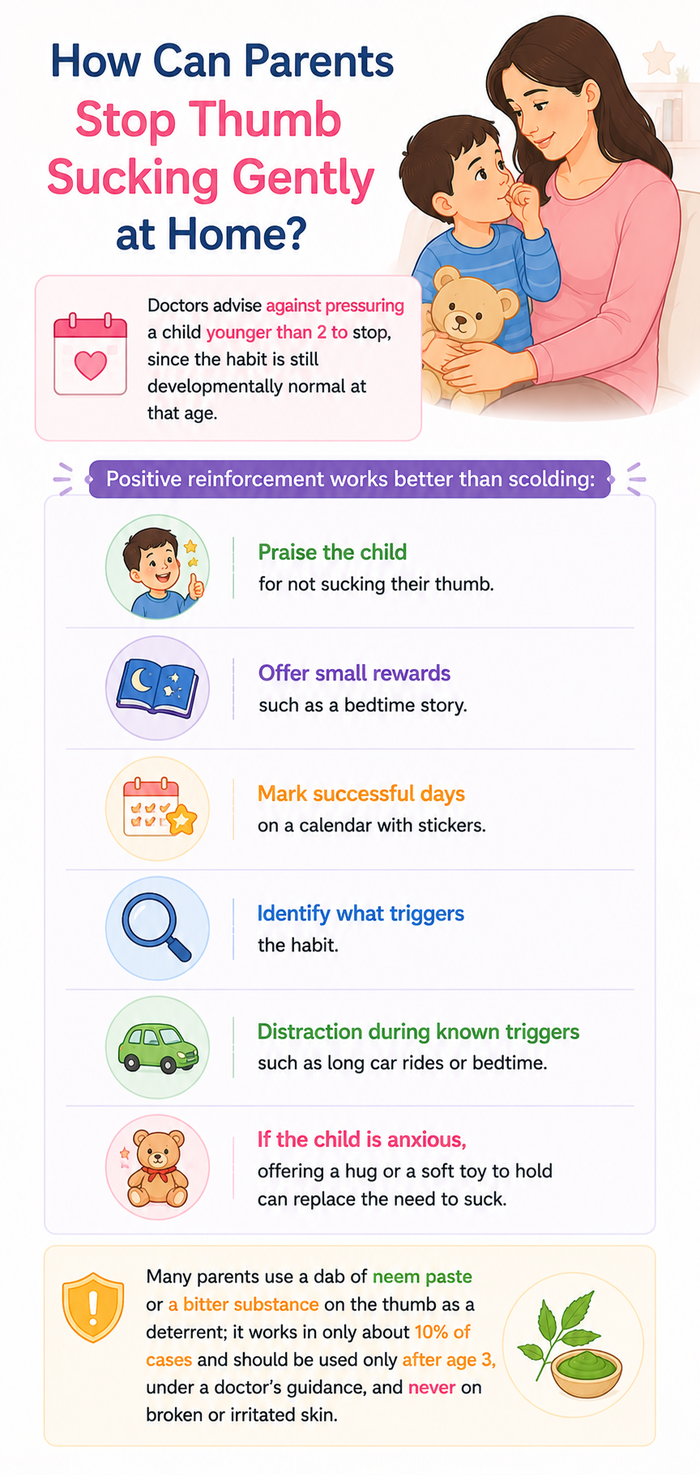
Doctors advise against pressuring a child younger than 2 to stop, since the habit is still developmentally normal at that age.Positive reinforcement works better than scolding:
- Praise the child for not sucking their thumb
- Offer small rewards such as a bedtime story
- Mark successful days on a calendar with stickers
- Identify what triggers the habit
- Distraction during known triggers such as long car rides or bedtime
- If the child is anxious, offering a hug or a soft toy to hold can replace the need to suck
When Should Parents Consult a Dentist?
A visit to a paediatrician or paediatric dentist is advisable if:- Thumb sucking continues past age 4
- The child's front teeth appear to be shifting
- The thumb shows persistent soreness or infection
- Speech sounds are unclear once the child is old enough to form full sentences
Most children give up thumb sucking on their own by the time they start school. Gentle, consistent support at home is usually enough to guide the rest.
Whether you’re pregnant, a new mom, or navigating postpartum, you don’t have to do it alone. Join our support group to connect, share, and support one another.
FAQs on Thumb Sucking in Babies: When Should Parents Stop It?
- Is it normal for a one-year-old to suck their thumb?
Yes. Thumb sucking is a normal reflex in infants and toddlers and does not need correction before age 2. - What home remedy stops thumb sucking in toddlers?
Positive reinforcement, sticker charts, and identifying triggers work best. Bitter-tasting substances like neem paste help in some cases but are not guaranteed and should be used only after age 3. - Should I use a pacifier instead of letting my baby suck their thumb?
Both are considered normal in infancy. Pacifiers are easier to wean gradually, while thumb sucking is harder to control because the thumb is always available.