
In this article:
In this guide, we explain how it affects newborns, which babies are at higher risk, and when medical evaluation is important.
What Is Transient Tachypnea of the Newborn (TTN)?
Before birth, your baby’s lungs are filled with fluid because oxygen is supplied through the placenta. After birth, this fluid normally clears as the baby begins breathing air.
Sometimes, a little fluid stays in the lungs for longer than expected. This can make your baby breathe faster than usual in the first few hours or days. Doctors call this Transient Tachypnea of the Newborn (TTN).
It can be worrying to see your baby breathing quickly, but TTN usually goes away on its own. With gentle care and monitoring, most babies recover fully as the fluid clears and their breathing becomes normal.
Which Babies Are More Likely to Develop TTN?
TTN can happen to any newborn. But some babies are more likely to develop it than others.
Babies who may have a higher risk of TTN include:
- Babies born by C-section, especially if labour did not start naturally
- Babies born a few weeks early
- Babies whose mothers had asthma or gestational diabetes during pregnancy
- Babies born after a very quick delivery
- Baby boys, who may be slightly more likely to develop TTN than baby girls
Common Signs of TTN in Newborns
One of the first things you may see is that your baby is breathing faster than usual. This happens because the lungs are still clearing extra fluid after birth.
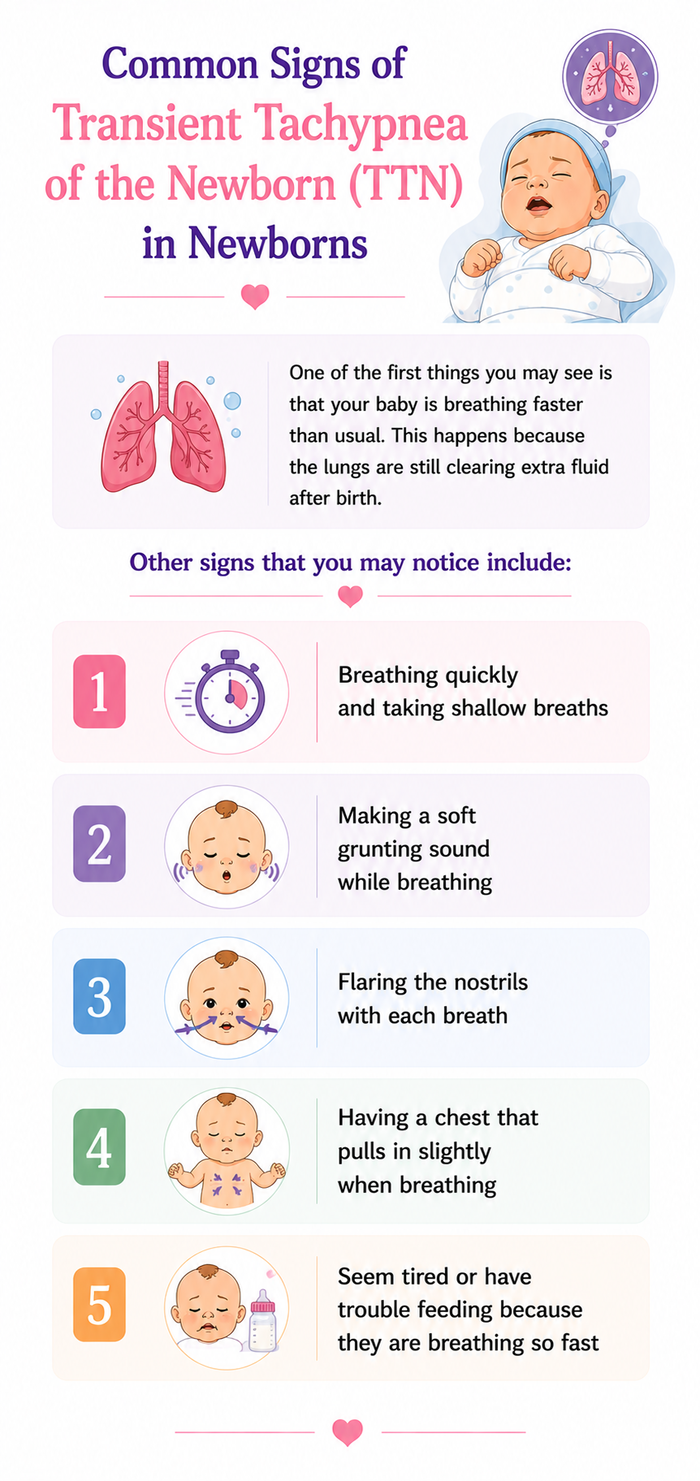
Other signs that you may notice include:
- Breathing quickly and taking shallow breaths
- Making a soft grunting sound while breathing
- Flaring the nostrils with each breath
- Having a chest that pulls in slightly when breathing
- Seem tired or have trouble feeding because they are breathing so fast
What Happens If a Baby Is Diagnosed With TTN?
If doctors suspect your baby has TTN, they will closely monitor the baby's breathing and overall health.
Depending on the baby's needs, care may include:
- Monitoring in the hospital to check breathing, heart rate, and oxygen levels
- Extra oxygen support if your baby is not getting enough on their own
- Temporary feeding support if fast breathing makes feeding hard
- Regular check-ups by the healthcare team to ensure the baby is recovering as expected
Steps That May Help Reduce the Risk of TTN
TTN cannot always be prevented, but some steps may help support a healthy pregnancy and newborn transition after birth:
- Attend regular prenatal check-ups throughout pregnancy
- Manage conditions such as diabetes and asthma with guidance from your healthcare provider
- Discuss the timing of a planned C-section with your doctor when appropriate
- Follow your healthcare provider's advice on maintaining a healthy pregnancy
When Should Parents Seek Immediate Medical Help?
Seek urgent medical care if your newborn:
- Has bluish lips, tongue, or skin
- Stops breathing or has long pauses between breaths
- Is very difficult to wake up
- Refuses feeds repeatedly or cannot feed at all
- Shows signs of dehydration, such as fewer wet diapers
- Seems unusually weak, floppy, or less responsive
- Develops a fever or appears generally unwell
- Has breathing difficulties that are getting worse rather than improving
Whether you’re pregnant, a new mom, or navigating postpartum, you don’t have to do it alone. Join our support group to connect, share, and support one another.
FAQs on Fast Breathing in Newborns: Understanding Transient Tachypnea of the Newborn (TTN)
- Does TTN mean my baby's lungs are weak?
No. TTN does not mean there is a problem with your baby's lungs. It simply means the lungs need a little more time to clear the fluid that is normally present before birth. - Can TTN be seen before birth?
TTN cannot usually be diagnosed during pregnancy. It is typically identified after birth if a baby develops fast breathing or other signs of breathing difficulty. - How long does TTN usually last?
TTN is usually temporary. Most babies improve within 24 to 72 hours as the extra fluid in their lungs clears, and they typically recover completely within a few days.