In this article:
When Does the Belly Button Pop Out During Pregnancy?
Most women notice the change towards the end of the second trimester, commonly around week 26. The uterus begins rising above the pubic bone between weeks 16 and 20, and throughout the second trimester, it expands rapidly.
In the third trimester (weeks 28–40), your belly reaches its largest size, and the pressure on your abdominal wall is at its peak, making a popped-out belly button most likely during this stage.
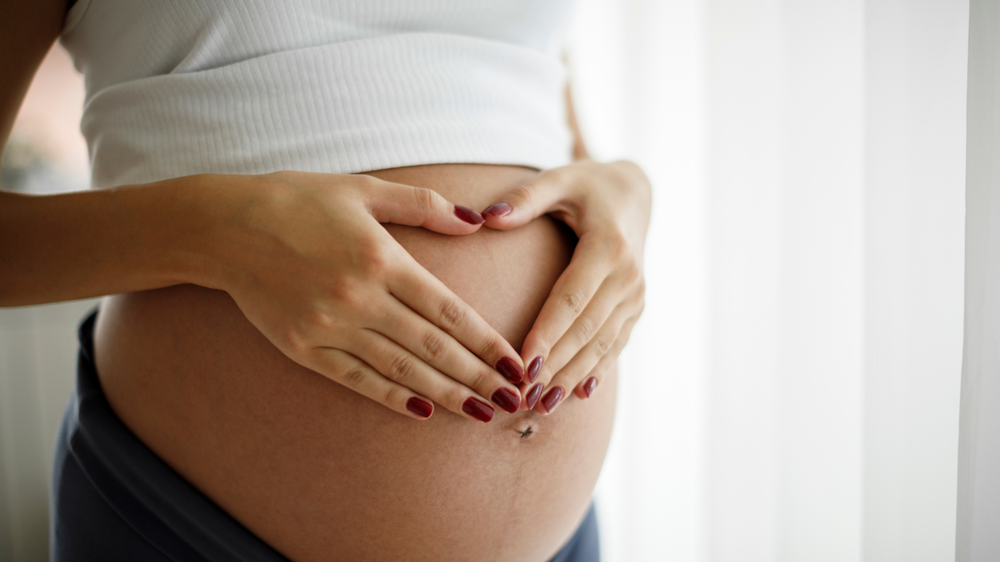
Not every pregnant woman will experience this. Some navels flatten out and are at the same level as the surrounding skin. Some pop out only partially, and some remain unchanged throughout pregnancy.
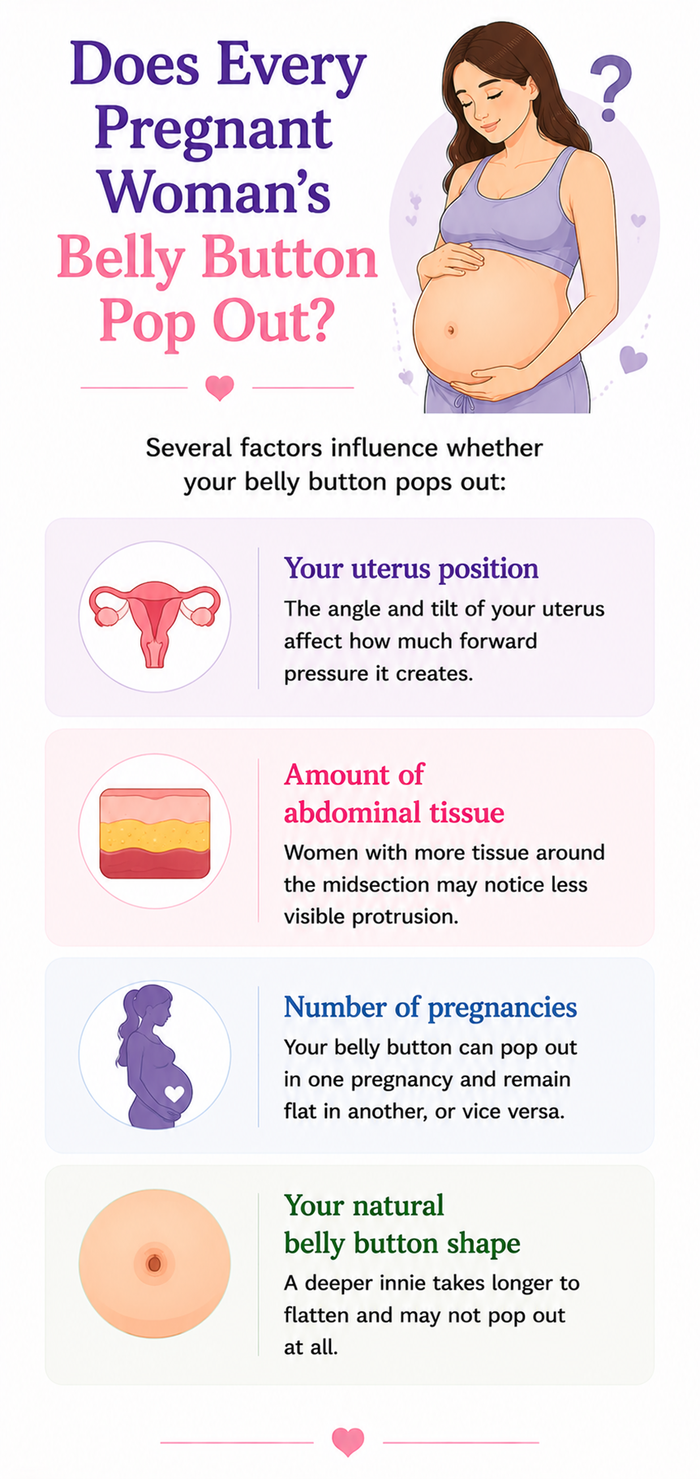
Does Every Pregnant Woman's Belly Button Pop Out?
Several factors influence whether your belly button pops out:
- Your uterus position: The angle and tilt of your uterus affect how much forward pressure it creates.
- Amount of abdominal tissue: Women with more tissue around the midsection may notice less visible protrusion.
- Number of pregnancies: Your belly button can pop out in one pregnancy and remain flat in another, or vice versa.
- Your natural belly button shape: A deeper innie takes longer to flatten and may not pop out at all.
Is a Popped-Out Belly Button During Pregnancy Painful?
A protruding belly button during pregnancy is usually painless. Some women report mild sensitivity when the belly button rubs against clothing, particularly tight salwar kameez waistbands or saree petticoats.
Covering it with a soft bandage or wearing loose cotton fabric, which is practical for summers and indoor settings, can reduce friction. If you feel pain inside or around the belly button, not just surface irritation, discuss it with your doctor.
What Is the Difference Between a Popped-Out Belly Button and an Umbilical Hernia?
A popped-out belly button happens when the uterus pushes the navel outward from behind. It is painless, the skin remains intact, and it returns to its previous shape after delivery.
An umbilical hernia occurs when a portion of the intestine or fatty tissue pushes through a weak opening in the abdominal muscle wall near the navel. Umbilical hernias can develop or worsen during pregnancy because the abdominal muscles stretch and thin under the weight of a growing uterus.
Signs that suggest an umbilical hernia rather than a normal protrusion:
- A soft but firm bulge near the belly button that remains visible even when you lie down
- A dull ache or pressure around the navel
- Pain that worsens when you cough, sneeze, lift, or stand for long periods
- Redness, swelling, or skin discolouration around the bulge
Seek emergency care if you experience sudden, sharp pain around the belly button, a bulge that hardens or grows rapidly, or nausea and vomiting alongside any bulge; these can signal a hernia complication that requires urgent attention.
Will Your Belly Button Go Back to Normal After Delivery?
Once you give birth, the pressure inside your abdomen decreases significantly. As your uterus contracts back to its pre-pregnancy size and your abdominal muscles recover tone over the following weeks and months, your belly button typically returns to its usual position.
This process takes time, usually a few months after delivery. Some women notice a slight change in the shape of their navel permanently, particularly after multiple pregnancies or if significant skin stretching occurred.
How to Manage Belly Button Discomfort During Pregnancy
These simple measures can reduce friction and keep the area comfortable throughout your pregnancy.
- Wear loose, soft cotton clothing that does not press directly against your navel
- Use a maternity support band, which provides abdominal support and reduces rubbing
- Cover the protruding belly button with a soft adhesive bandage if fabric irritation is an issue
- Keep the area clean and dry to prevent bacterial build-up, especially in humid climates
- Apply a fragrance-free moisturiser around the belly button area to ease itching from skin stretching
Whether you’re pregnant, a new mom, or navigating postpartum, you don’t have to do it alone. Join our support group to connect, share, and support one another.
FAQs on Why Does Your Belly Button Pop Out During Pregnancy?
- Is it normal for the belly button to itch when it pops out?
Itching around the belly button during pregnancy is usually caused by the stretching of the surrounding skin. Keeping the area moisturised with a fragrance-free lotion can help. If the itching is severe or accompanied by a rash, consult your doctor to rule out a skin condition. - Does a belly button popping out mean the baby is ready to be born?
No. The belly button popping out is not a sign of labour. It is simply a result of increasing abdominal pressure as your uterus grows. - Can I push my belly button back in during pregnancy?
You can gently press it inward, but it will protrude again because the pressure from your uterus is ongoing. There is no need to try to keep it in place, and no benefit to doing so.