In this article:
What True Labour Pain Feels Like
According to ACOG, true labour contractions usually come at regular intervals, get closer together, become stronger and last longer over time. They do not usually stop with walking, resting or changing position.True labour pain cannot be missed because it is quite severe. One important characteristic is that it is never continuous. It is intermittent until delivery. It comes and goes.
She further added, “The intensity of labour pain keeps increasing. The pain-free interval keeps decreasing. The duration for which the pain lasts also keeps increasing.”
What Are Braxton Hicks Contractions?
Braxton Hicks contractions are practice contractions. They may feel like tightening in the abdomen, but do not mean the cervix is opening. According to the Cleveland Clinic, Braxton Hicks contractions are less intense than real labour contractions and do not get closer together over time.In a conversation with Pregatips, Dr Gupta explained, “Braxton Hicks contractions are part of false labour. They are irregular pains, with no pattern, not associated with opening of the cervix, and certainly not associated with delivery.”
Key Differences To Watch For
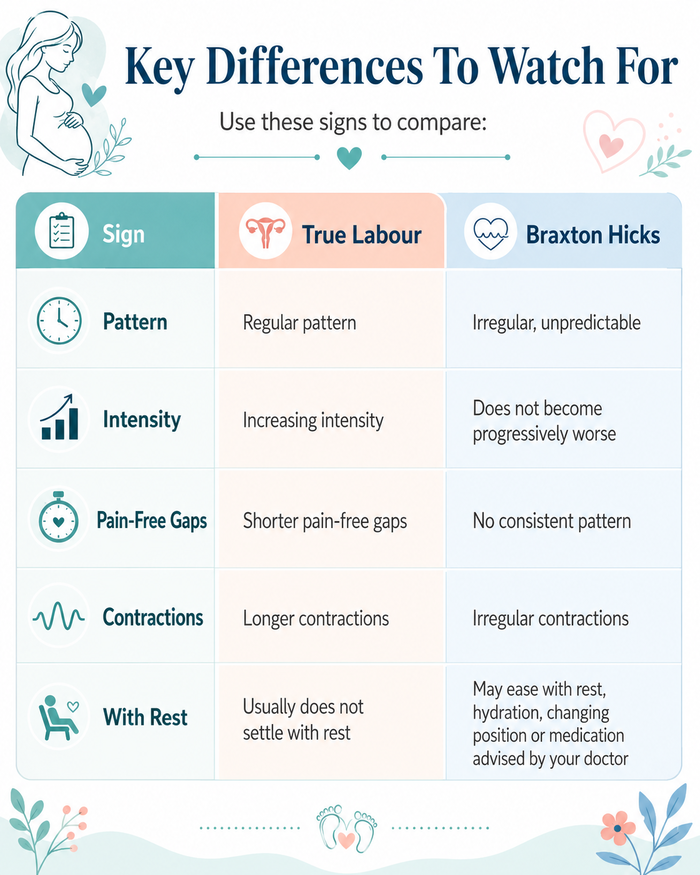
Use these signs to compare:- True Labour: Regular pattern, increasing intensity, shorter pain-free gaps, longer contractions.
- Braxton Hicks: Irregular, unpredictable, does not become progressively worse.
- True Labour: Usually does not settle with rest.
- Braxton Hicks: May ease with rest, hydration, changing position or medication advised by your doctor.
When Should You Call Your Doctor?
According to the NHS, signs of labour can include contractions, a show, the waters breaking, backache, or needing to use the toilet. Call your doctor or maternity unit if contractions become regular and painful, your waters break, you have bleeding, reduced baby movements, severe pain or if you are before 37 weeks.True labour pain will not disappear with rest or with any painkiller. It goes away only after delivery.
Braxton Hicks contractions can be uncomfortable, but they are usually irregular and do not progress. True labour follows a pattern: stronger, longer and closer together. If you are unsure, especially in the third trimester, call your maternity team. It is always safer to ask than to wait.
FAQs On True Labour Pain Vs Braxton Hicks
- Do Braxton Hicks Mean Labour Is Starting?
No. Braxton Hicks are false labour contractions and are not usually linked with cervical contractions, opening or delivery. - When Should I Go To The Hospital For Contractions?
Call your doctor or maternity unit if contractions become regular, stronger and closer together, or if your waters break, bleeding occurs or baby movements reduce.