In this article:
She highlighted that early detection is critical. This is because anaemia can affect energy levels, growth and development. Also, the appropriateness of the treatment options depends on the causes.
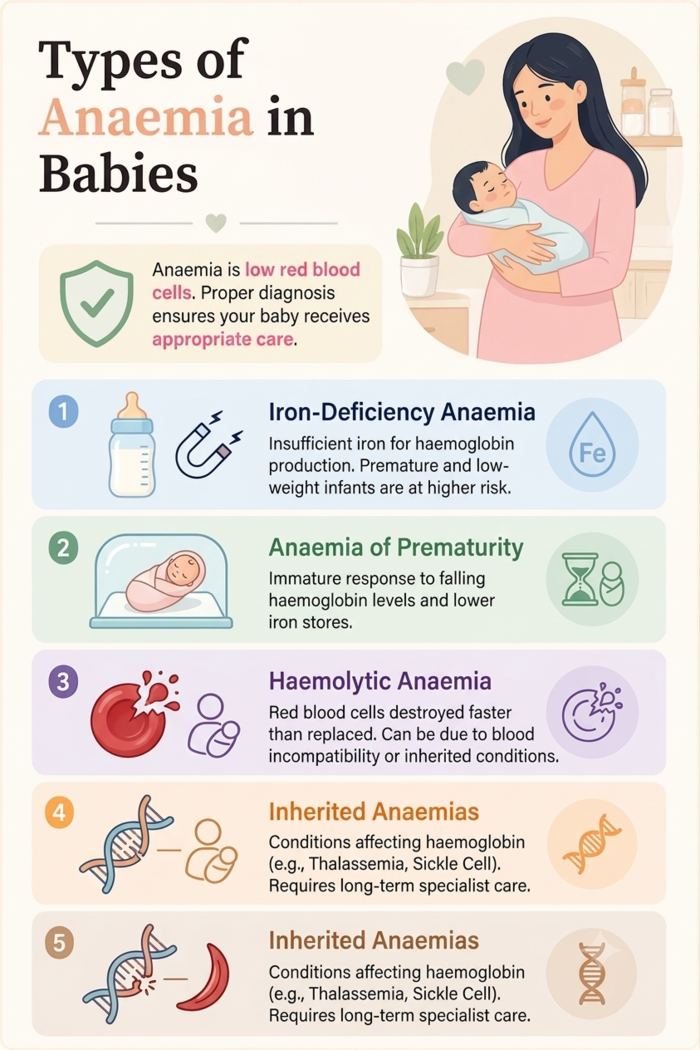
What Are the Different Types of Anaemia in Babies?
The following are the types of anaemia babies may develop:1. Iron-deficiency anaemia
Iron-deficiency anaemia develops when your baby does not have enough iron to produce adequate haemoglobin. Iron is essential for healthy red blood cell production.
This condition usually develops when their iron intake of babies does not meet their needs. Premature babies and infants born with low birth weight are at higher risk.
As babies grow, their iron requirements also change. Your paediatrician can advise whether your baby's feeding pattern and iron intake are appropriate for their age.
2. Anaemia of prematurity
Babies born prematurely may develop anaemia because their bodies produce red blood cells differently from those of full-term babies. They may also have lower iron stores and a less mature response to falling haemoglobin levels.
Dr Harshit Kumar highlights the importance of individual assessment, particularly for babies born early or with low birth weight. Their care needs may differ from those of healthy, full-term infants.
3. Haemolytic anaemia
Haemolytic anaemia occurs when red blood cells are destroyed faster than the body can replace them. This reduces the number of circulating red blood cells and may lower haemoglobin levels.
One possible cause is blood-group incompatibility between the mother and baby. Certain inherited conditions can also cause red blood cells to break down prematurely.
Depending on the underlying cause, a baby may develop jaundice, paleness or other symptoms. Prompt medical assessment helps identify the reason for red blood cell destruction and determine whether treatment is needed.
4. Inherited anaemias
Some babies inherit conditions that affect haemoglobin production or function. Examples include thalassaemia and sickle cell disease.
Inherited anaemias, including thalassaemia and sickle cell disease, affect haemoglobin production or function. These conditions require specialist assessment and long-term care.
These conditions require specialist assessment. The type and severity of the condition determine the monitoring, treatment and long-term support your baby may need.
What Are the Signs of Anaemia in Babies?
Symptoms can vary depending on your baby's age, haemoglobin level and the underlying cause. Possible signs include:- Unusual paleness, particularly of the lips, gums or skin
- Tiredness or reduced activity
- Poor feeding or difficulty feeding
- Irritability
- Slow or inadequate weight gain
Dr Harshit Kumar emphasises that a paediatric assessment is important when you notice persistent paleness, feeding difficulties or concerns about your baby's growth. Your doctor may recommend blood tests, including a complete blood count, to check haemoglobin levels and assess red blood cells. Additional tests may be needed to identify the cause.
Seek urgent medical attention if your baby has difficulty breathing, is unusually difficult to wake, appears severely weak or has other signs of serious illness.
How Is Anaemia in Babies Treated?
Treatment depends on the type and severity of anaemia. Your paediatrician may recommend prescribed iron for iron deficiency, dietary adjustments when appropriate for your baby's age, or specialist treatment for inherited conditions and haemolytic anaemia. Some premature babies need closer monitoring or specific treatment.Anaemia in babies may happen due to many causes. Timely paediatric assessment and early treatment are critical to support your baby's healthy growth and development.
Whether you’re pregnant, a new mom, or navigating postpartum, you don’t have to do it alone. Join our support group to connect, share, and support one another.
FAQs on Types of Anaemia in Babies: What Parents Should Know
- Is anaemia common in babies?
Anaemia can occur during infancy for several reasons, including iron deficiency and the normal changes in red blood cell production after birth. Premature babies may be at greater risk. - Can anaemia affect a baby's growth?
Yes. Depending on its cause and severity, anaemia may affect energy levels, feeding and healthy development. - Should I give iron drops if my baby looks pale?
No. Paleness can have several causes, and it does not confirm iron deficiency. Consult your paediatrician before giving iron drops or other supplements.