
In this article:
What Happens After Embryo Transfer During the Two-Week Wait?
After an embryo is transferred into the uterus, it needs to implant in the uterine lining for pregnancy to continue. The exact timing depends on the stage of the embryo transferred.If implantation occurs, the developing pregnancy produces hCG. This hormone rises as the pregnancy develops and is what pregnancy tests detect. However, hCG may not be high enough to detect very early in the waiting period.
Testing too early can produce a negative result even when pregnancy is developing. Some IVF cycles also involve an hCG injection to trigger ovulation before egg retrieval, and residual hCG from this medication can cause an early pregnancy test to appear positive.
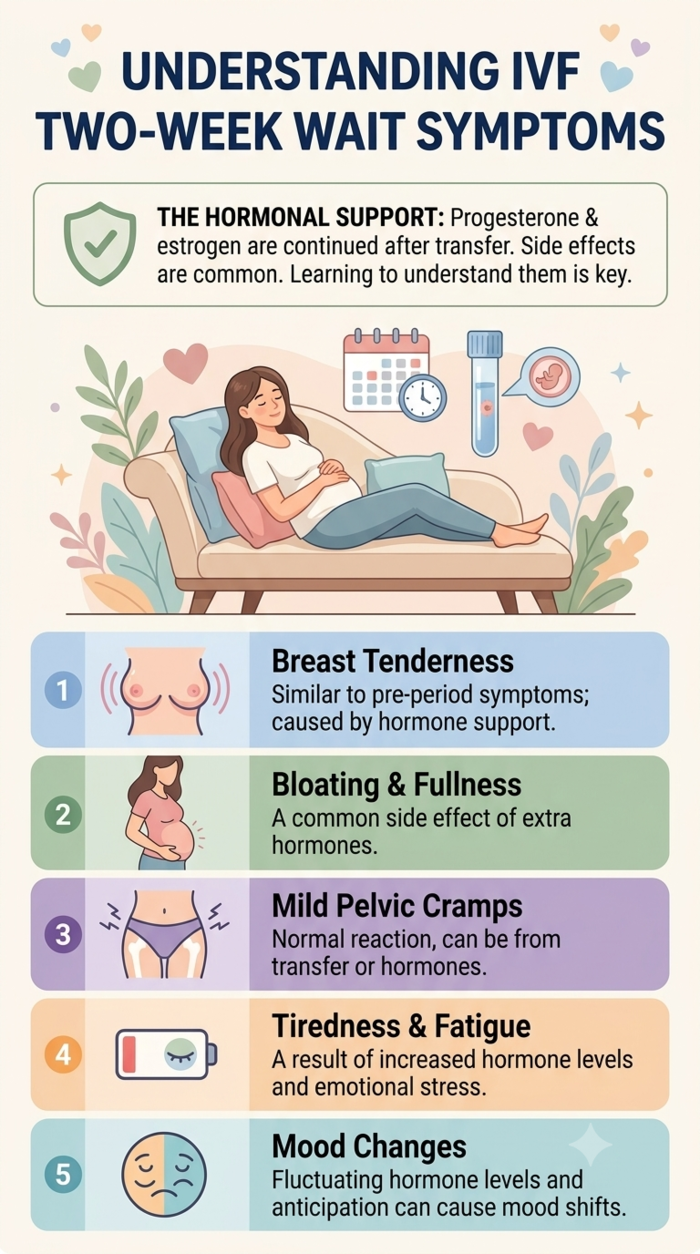
IVF Two-Week Wait Symptoms: Pregnancy or Progesterone?
After transfer, you continue progesterone (gel, pessaries, capsules or injections) and often oestrogen. These hormones commonly cause:- Breast tenderness
- Bloating
- Mild cramps
- Tiredness
- Mood changes
- Mild spotting
- Changes in vaginal discharge
When to Take a Pregnancy Test After Embryo Transfer
Most clinics schedule the beta hCG blood test 9 to 14 days after transfer. The date depends on embryo age: a day-5 blastocyst implants sooner than a day-3 embryo. A second test about 48 hours later checks whether hCG is rising.A blood beta-hCG test can detect and measure hCG, while a home urine pregnancy test detects hCG once it reaches a sufficient level.
It is very emotionally challenging for patients to wait for the next 2 weeks after IVF because patients start expecting whether the treatment has become successful or not. My advice would be to stop comparing experiences and avoid relying on visible symptoms. The medications should not stop, and a blood beta-hCG test or other scheduled tests should be taken under a doctor’s scrutiny.
Spotting and Cramps After Embryo Transfer: Does it mean IVF failed?
Light spotting and mild cramps are common. Causes include- Transfer procedure
- Vaginal progesterone
- Possible implantation
What to Do During the Two-Week Wait?
Families often pass on advice that differs from clinical guidance. Here is how common beliefs compare with what clinics advise.- Bed rest: Doctors do not advise complete bed rest, and it may not improve implantation. Rest gently for 24 to 48 hours, then return to light activity. Work can continue if the job is not physically demanding. Avoid heavy lifting and long-distance travel without your doctor's approval.
- Food: No food has been shown to raise IVF success, and no "hot" or "cold" food rule has evidence behind it. Eat balanced, home-cooked meals. Limit caffeine and stay hydrated.
- Fasting: Ask your clinic before keeping a fast, as medicines and hydration matter in this phase.
- Medicines: Take progesterone exactly as prescribed. Check with the clinic before using any painkiller, herbal, or Ayurvedic remedy.
- Bathing: Showers are fine. Many clinics advise avoiding baths and swimming pools for one to two weeks.
- Stress: Anxiety during the wait is not understood to cause implantation failure by itself.
When to Call Your IVF Clinic
Contact the clinic the same day for:- Heavy bleeding, similar to a period, or passing clots
- Severe pelvic or abdominal pain
- Fever
- Persistent vomiting
- Rapid weight gain, severe bloating, breathlessness, or passing very little urine, which can signal ovarian hyperstimulation syndrome (OHSS)
You’re not alone in your journey when trying to conceive. Join our supportive community to connect with others, share experiences, and find encouragement every step of the way.
FAQs on The Two-Week Wait After IVF: What Your Symptoms Can and Cannot Tell You
- Can I have no symptoms and still be pregnant?
Yes. Some patients have no symptoms at all and still test positive, so having no symptoms does not rule out pregnancy. - Can stress cause IVF to fail?
Stress during the wait is not understood to cause implantation failure on its own. Speak to your clinic's counsellor if anxiety is hard to manage.