
When these changes do not happen as expected, conception may become more difficult for some women. Cervical factor infertility is one aspect doctors may consider during a fertility evaluation.
To understand cervical factor infertility, how the cervix can affect conception, and how it is diagnosed and treated, we spoke with Dr Nikita Kulkarni, Obstetrician and Gynaecologist.
What Is Cervical Factor Infertility?
Cervical factor infertility refers to fertility problems that may occur when changes in the cervix or cervical mucus interfere with sperm movement.The cervix is the lower part of the uterus that connects to the vagina. It plays an important role in allowing sperm to pass into the uterus and travel towards the fallopian tubes.
Around ovulation, cervical mucus normally becomes thinner, clearer, and more slippery. This can make it easier for sperm to move through the cervix.
However, cervical factors are not usually considered the main cause of infertility. Doctors may look at the cervix along with other factors when evaluating a couple's fertility.
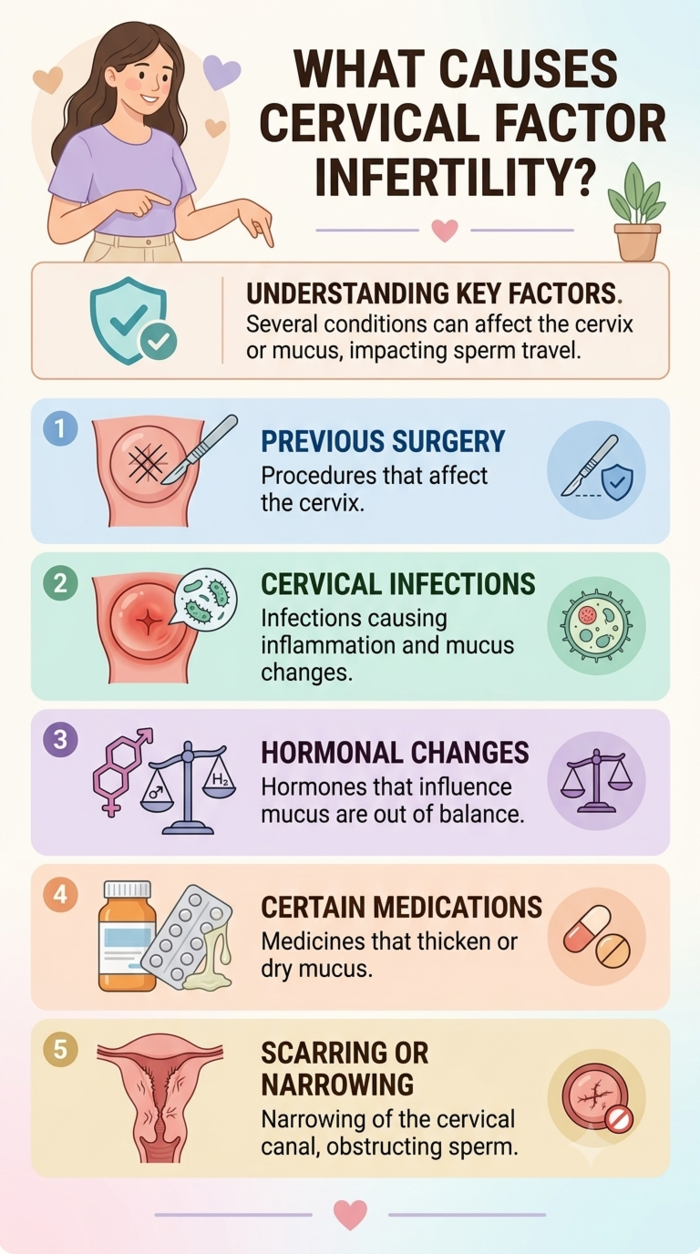
What Causes Cervical Factor Infertility?
Several factors can affect the cervix or cervical mucus, including:- Previous cervical surgery: Procedures involving the cervix may sometimes affect cervical mucus production or the cervical opening.
- Cervical infection: Some infections can cause inflammation or changes in cervical mucus.
- Hormonal changes: Hormones influence cervical mucus throughout the menstrual cycle.
- Certain medications: Some medicines may make cervical mucus thicker or drier.
- Scarring or narrowing: Previous procedures or inflammation may occasionally change the cervical canal.
- Abnormal cervical mucus: Mucus that remains thick around ovulation may make sperm movement more difficult.
What Are the Signs of Cervical Factor Infertility?
Cervical factor infertility usually does not cause specific symptoms.Some women may notice changes in cervical mucus, such as:
- Little or no cervical mucus around ovulation
- Mucus that remains thick instead of becoming slippery
- Vaginal dryness around the fertile window
- Changes after cervical procedures or treatment for infection
How Is Cervical Factor Infertility Diagnosed?
There is no single test to diagnose cervical factor infertility. A fertility specialist may review your menstrual cycle, medical history, previous cervical procedures, infections, and how long you have been trying to conceive.Depending on your situation, tests may include:
- Pelvic examination: To check the cervix for infection, inflammation, scarring, or other changes.
- Cervical mucus assessment: To check its amount and consistency around ovulation.
- Transvaginal ultrasound: To assess the uterus, ovaries, and endometrial lining.
- Infection testing: If an infection is suspected.
- Other fertility tests: These may include ovulation tests, hormone tests, semen analysis, and tests to check whether the fallopian tubes are open.
Can Cervical Factor Infertility Affect Sperm Movement?
Yes, changes in cervical mucus may make sperm movement more difficult.During the fertile window, cervical mucus normally becomes more sperm-friendly. It can help sperm survive and move through the cervix.
If the mucus is too thick or the cervical environment is not favourable, fewer sperm may pass through.
For couples having difficulty conceiving, a complete fertility evaluation is important rather than assuming the cervix or cervical mucus is the cause. Looking at all relevant factors helps doctors plan management based on the individual clinical situation.
How Is Cervical Factor Infertility Treated?
Treatment depends on the cause and whether other fertility problems are present.Options may include:
- Treating infections: Your doctor can treat any identified cervical or reproductive infection.
- Reviewing medicines or hormones: Your doctor may adjust medicines if they are affecting cervical mucus.
- Timed intercourse: Having sex around ovulation may improve the chances of conception.
- IUI: Prepared sperm are placed directly into the uterus, bypassing the cervix.
- IVF: Fertilisation takes place outside the body, so sperm do not need to pass through the cervix to reach the egg.
When Should You See a Fertility Specialist?
Consider speaking with a fertility specialist if:- You have been trying to conceive without success
- You have a history of cervical surgery or procedures
- You have had repeated cervical infections
- You notice significant changes in cervical mucus
- You have irregular menstrual cycles or difficulty identifying ovulation
- You have already undergone fertility treatment without success
You’re not alone in your journey when trying to conceive. Join our supportive community to connect with others, share experiences, and find encouragement every step of the way.
FAQs on Cervical Mucus Problems: Can They Affect Getting Pregnant?
- Can cervical mucus affect fertility?
Yes. Cervical mucus normally becomes thinner and more sperm-friendly around ovulation. Changes in its amount or consistency may make it harder for sperm to move. - Does cervical factor infertility affect IVF?
Usually, cervical factors have less effect on IVF because fertilisation occurs outside the body. However, your doctor will consider the overall fertility picture when choosing treatment. - Does age affect cervical mucus and fertility?
Age can influence hormonal changes and cervical mucus patterns, although many other factors also affect fertility as women get older.