
In this article:
What Is a Uterus Didelphys (Double Uterus) and Why Does It Happen?
Before birth, two small tubes called Mullerian ducts normally fuse to form one uterus. In uterus didelphys, they fail to fuse completely, leaving two uterine cavities, two cervices, and, often, two vaginal canals divided by a wall. The condition affects about 0.3% of the general population.Uterus didelphys is different from a bicornuate uterus, where one uterus has a deep indentation and two upper cavities. These conditions can look similar on some scans, which is why accurate imaging is important.
Double Uterus Symptoms and Diagnosis
Many women have no symptoms. When symptoms appear, they can include:- Bleeding that continues despite using a tampon, because blood can pass through the second vaginal canal
- Painful periods or pain during intercourse
- Repeated miscarriages or a difficult first labour
What Are the Risks of Pregnancy With Two Wombs?
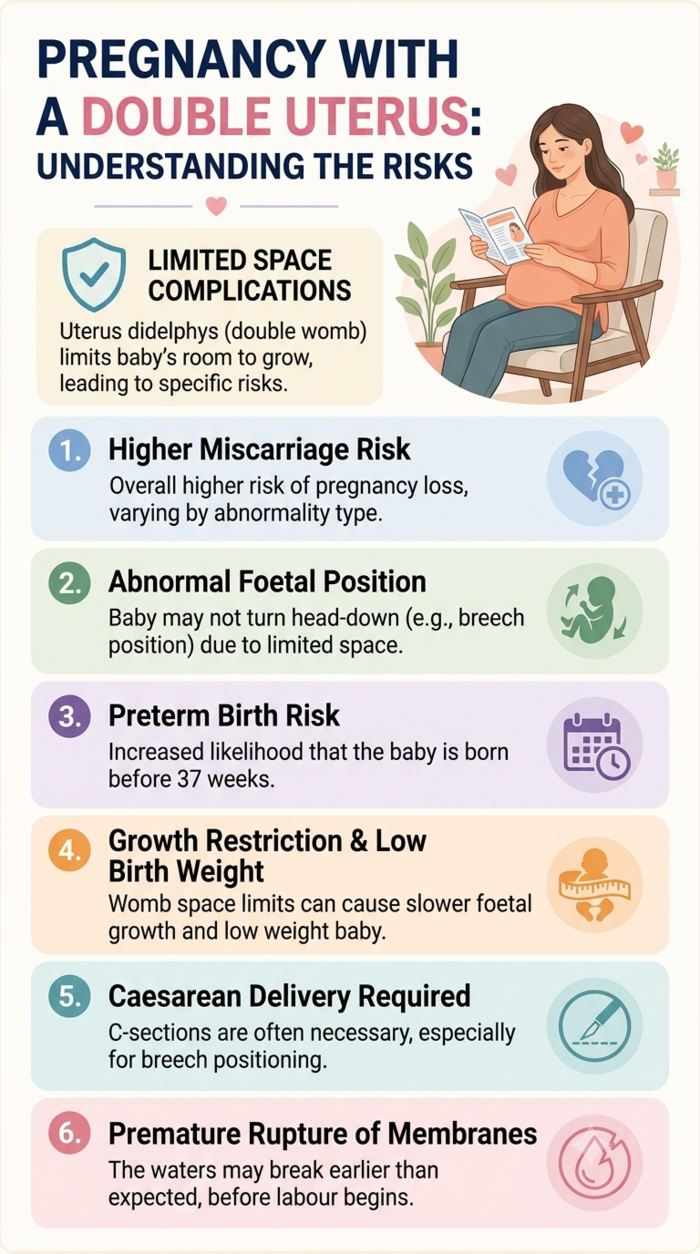
A uterus with half the usual space can limit the baby's room to grow. Possible risks include:- Preterm birth: The baby may be born before 37 weeks.
- Breech position: The baby may not turn head-down.
- Premature rupture of membranes: The waters may break earlier than expected.
- Caesarean delivery: Abnormal foetal position or other obstetric factors may make a C-section necessary.
- Low birth weight and growth restriction: The baby may grow more slowly.
- Miscarriage: Congenital uterine abnormalities overall are associated with a higher miscarriage risk, although the risks vary by the type of uterine anomaly.
Having this condition does not mean that pregnancy is impossible. With accurate imaging, appropriate preconception counselling and regular specialist monitoring, women with uterus didelphys can be supported well.
Pregnancy Care and Delivery With Two Wombs
No treatment is needed for the uterus itself. Surgery is limited to removing a vaginal wall that causes pain or blockage. Care in pregnancy usually includes:- An early ultrasound to confirm which uterus holds the pregnancy
- Regular growth scans and cervical length checks
- Delivery at a hospital with a newborn intensive care unit (NICU)
Can You Get Pregnant in Both Uteruses At the Same Time?
Yes, but this is extremely rare. In exceptionally rare situations, an embryo can implant in each uterus during the same menstrual cycle, resulting in a twin pregnancy with one baby developing in each uterus.This is called a uterus didelphys twin pregnancy or a pregnancy in both uterine cavities. It is different from an ordinary twin pregnancy because each baby develops in a separate uterus.
Such pregnancies require specialist obstetric care because the risks associated with multiple pregnancy and uterine didelphys can occur together.
Early diagnosis and appropriate antenatal monitoring can help doctors identify complications early and plan pregnancy and delivery care according to the woman's individual anatomy and risks.
Whether you’re pregnant, a new mom, or navigating postpartum, you don’t have to do it alone. Join our support group to connect, share, and support one another.
FAQs on Uterus Didelphys: Pregnancy With Two Wombs: Is It Possible?
- Can a woman with two uteruses have a normal delivery?
Yes. A vaginal birth is possible if the baby is head-down and labour progresses. A caesarean is more common because of a breech position. - Does uterus didelphys need treatment?
Usually not. Surgery is advised only if a vaginal wall blocks menstrual flow or causes pain. - Does a double uterus affect fertility or cause miscarriage?
Fertility is usually normal. The risk of miscarriage and preterm birth is higher; early antenatal care is advised.