In this article:
Does Genital Herpes Cause Miscarriage?
Although genital herpes is not a common cause of miscarriage, the timing of infection is a major concern when assessing the risk of complications.
1. History of Herpes Before Pregnancy
If you already had genital herpes before becoming pregnant:
- Your body has antibodies against the virus
- These antibodies can pass to your baby during pregnancy
- The risk of miscarriage is not significantly increased
2. Herpes During Pregnancy Without Any Past History
A primary HSV infection may pose greater risks because your immune system has not yet developed protective antibodies.
Potential concerns include:
- Increased inflammation
- Early pregnancy loss in rare cases
- Higher risk of transmitting the virus to your baby
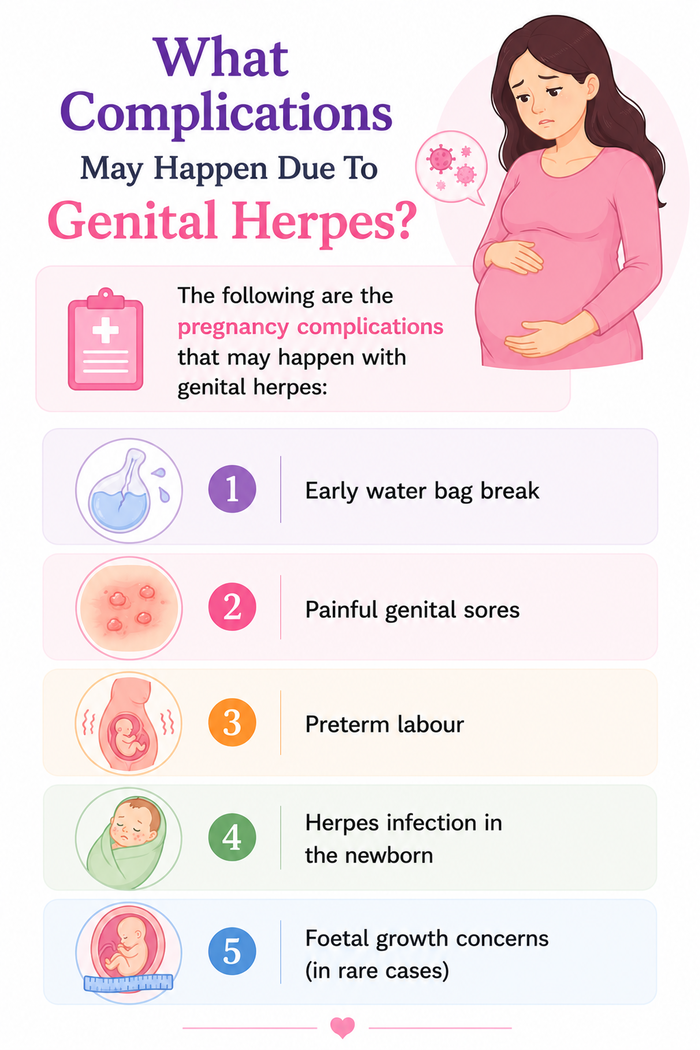
What Complications May Happen Due To Genital Herpes?
The following are the pregnancy complications that may happen with genital herpes:
- Early water bag break
- Painful genital sores
- Preterm labour
- Herpes infection in the newborn
- Foetal growth concerns (in rare cases)
When Is The Risk Highest?
The risk of complications is high when you acquire genital herpes during the last trimester without a previous history.
This is because:
- Your body may not have enough time to produce protective antibodies
- The virus may be present in the birth canal during labour
- The likelihood of neonatal herpes increases
The risk may be low if:
- You had herpes before pregnancy
- It is not a new infection
- No active lesions are present at delivery
Effect Of Genital Herpes on the Health of Your Baby
It may cause neonatal herpes in newborns. It happens rarely but may cause serious complications, including:
- Skin and eye infections
- Nervous system involvement
- Widespread infection affecting multiple organs
Signs Indicating Genital Herpes During Pregnancy
Consult your doctor if you notice any of the following signs during pregnancy:
- Painful blisters or sores around the genital area
- Burning during urination
- Itching or tingling sensations
- Unusual genital discomfort
- Flu-like symptoms with the first outbreak
Top Tips To Manage Genital Herpes During Pregnancy
Several steps can help lower the risk of complications.
During Pregnancy
- You should attend all your antenatal appointments
- Always inform your doctor about any history of genital herpes
- You should reach out for medical help if you experience new genital symptoms
- Stick to the management plan recommended by your healthcare team
Your doctor may monitor your condition by:
- Assessing your active genital lesions
- Evaluating the risk of neonatal herpes
- Discussing the safest mode of delivery if necessary.
When Should You Consult Your Doctor?
Contact your healthcare provider if you:- Develop genital sores during pregnancy.
- Suspect exposure to herpes.
- Experience a first outbreak while pregnant.
- Notice symptoms close to your expected delivery date.
You’re not alone in your journey when trying to conceive. Join our supportive community to connect with others, share experiences, and find encouragement every step of the way.
FAQs on Can Genital Herpes Increase the Risk of Miscarriage or Pregnancy Complications?
- Can recurrent genital herpes cause miscarriage?
If you are experiencing repeated herpes infections, then the risk of miscarriage is generally lower than with a new infection acquired during pregnancy. - Is genital herpes dangerous in early pregnancy?
A primary infection in early pregnancy may require medical evaluation, but most pregnancies continue normally. The overall risk of miscarriage remains low. - Can I have a healthy baby if I have genital herpes?
Most people with genital herpes deliver healthy babies. Your doctor can manage your health and reduce the transmission of infection to your baby with an appropriate management plan.