In this article:
In many women, HPV infections are temporary. The immune system can clear them naturally. The important concern is whether HPV has caused abnormal changes in the cervical cells.
Can High-Risk HPV Affect Your Chances of Getting Pregnant?
Usually, HPV itself does not directly interfere with conception. However, significant cervical disease may have implications for a future pregnancy. The same can apply to procedures used to treat precancerous cervical changes. Some cervical treatments can increase the risk of preterm birth.Dr Chetna says that your doctor will consider the cervical changes, if any, along with your pregnancy plans. So, a high-risk HPV result should not be viewed in isolation.
If you have received a positive result while planning pregnancy, discuss it with your gynaecologist. This can help you understand what the result means for you.
What Should You Do After a High-Risk HPV Result?
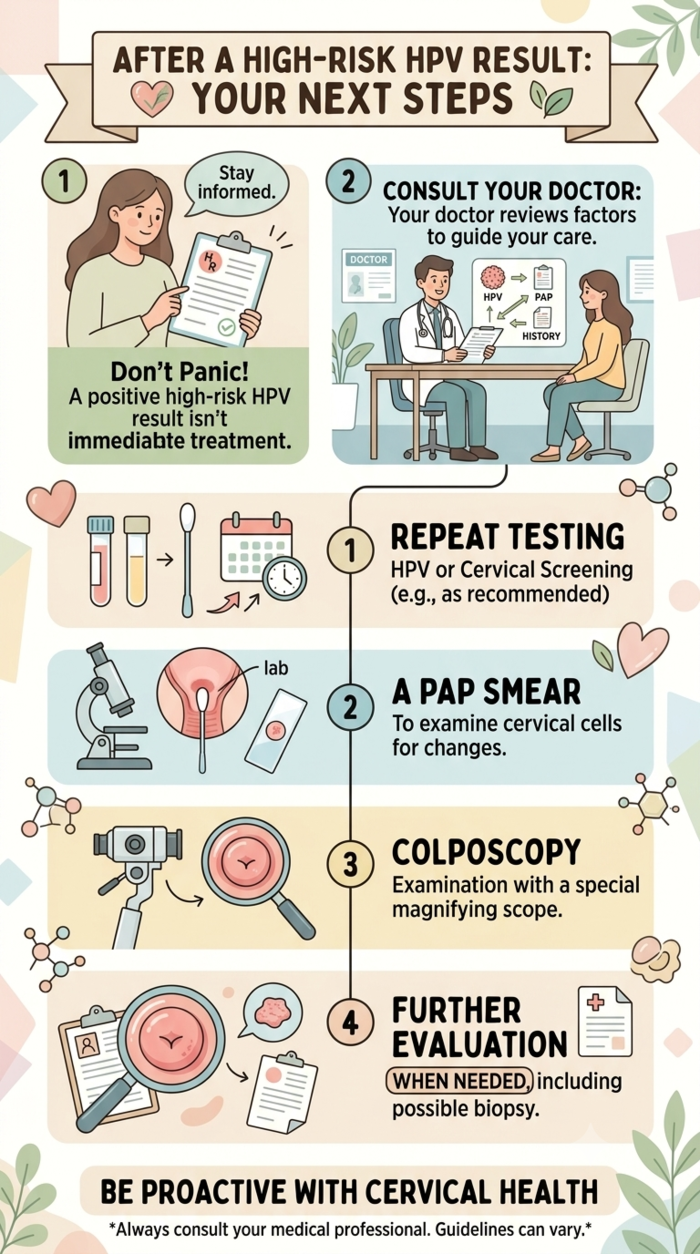
A positive HPV result does not automatically mean that you need treatment.Your doctor may consider your HPV test, Pap smear result and previous screening history. Depending on these findings, you may be advised to have:
- Repeat HPV or cervical screening
- A Pap smear
- Colposcopy
- Further cervical evaluation, when needed
Importantly, do not skip your follow-up just because you feel well. HPV-related cervical changes may not cause noticeable symptoms.
What If You Become Pregnant While HPV-Positive?
If you become pregnant while you have high-risk HPV, your pregnancy can usually proceed normally.However, your cervical screening results still matter. If abnormal cervical changes are present, your doctor may recommend monitoring during pregnancy.
Dr Chetna explains that cervical abnormalities can be monitored during pregnancy. Treatment for precancerous changes is generally postponed until after delivery unless there is a concern about cancer.
Colposcopy may be recommended during pregnancy when indicated. A clinically necessary cervical biopsy can also be performed. Treatment is not routinely carried out during pregnancy unless cancer is suspected.
Your doctor will decide the follow-up based on your cervical findings and individual situation.
Why Is Regular Cervical Screening Important?
High-risk HPV can clear naturally. In some women, however, the infection persists and may lead to cervical cell changes.Regular screening helps your doctor identify these changes and decide whether you need monitoring or further evaluation.
Dr Chetna stresses the importance of following your doctor's recommended surveillance schedule. Staying on track can help identify persistent HPV-related changes early and allow appropriate management.
If you are planning a pregnancy, tell your gynaecologist about your HPV result. Your doctor can then advise you about any evaluation that should be completed before conception.
A high-risk HPV result does not usually prevent pregnancy. The key is to understand your result, complete the recommended follow-up and continue cervical screening.
You’re not alone in your journey when trying to conceive. Join our supportive community to connect with others, share experiences, and find encouragement every step of the way.
FAQs on High-Risk HPV and Pregnancy
- Can I get pregnant if I have high-risk HPV?
Yes. High-risk HPV itself does not usually prevent pregnancy. However, your doctor may recommend cervical evaluation before conception, depending on your HPV and Pap smear results. - Does high-risk HPV mean I have cervical cancer?
No. A positive high-risk HPV result does not mean you have cancer. It means that you have an HPV type associated with a higher risk of cervical changes. - Can high-risk HPV be monitored during pregnancy?
Yes. Cervical abnormalities can be monitored during pregnancy when needed. Treatment for precancerous changes is generally delayed until after delivery unless cancer is suspected.