We spoke to Dr Mannan Gupta, Chairman and Head of Obstetrics and Gynaecology at Elantis Healthcare, New Delhi, about the relationship between lupus and fertility and the steps women can take before trying to conceive.
Does Lupus Cause Infertility?
Lupus does not necessarily lead to infertility. Many women with the condition can ovulate, conceive naturally and have children. However, certain circumstances may make conception more difficult or affect the safety of pregnancy.Dr Mannan Gupta explains that fertility concerns may arise when lupus is active, when the kidneys are affected or when particular immunosuppressive medicines are prescribed.
It is important to understand that difficulty conceiving and difficulty carrying a pregnancy are not the same thing. Lupus may increase pregnancy risks even when a woman's ability to conceive remains unaffected.
Your individual circumstances matter. Your age, menstrual cycle, ovarian function, general health and your partner's fertility can also influence your chances of conception.
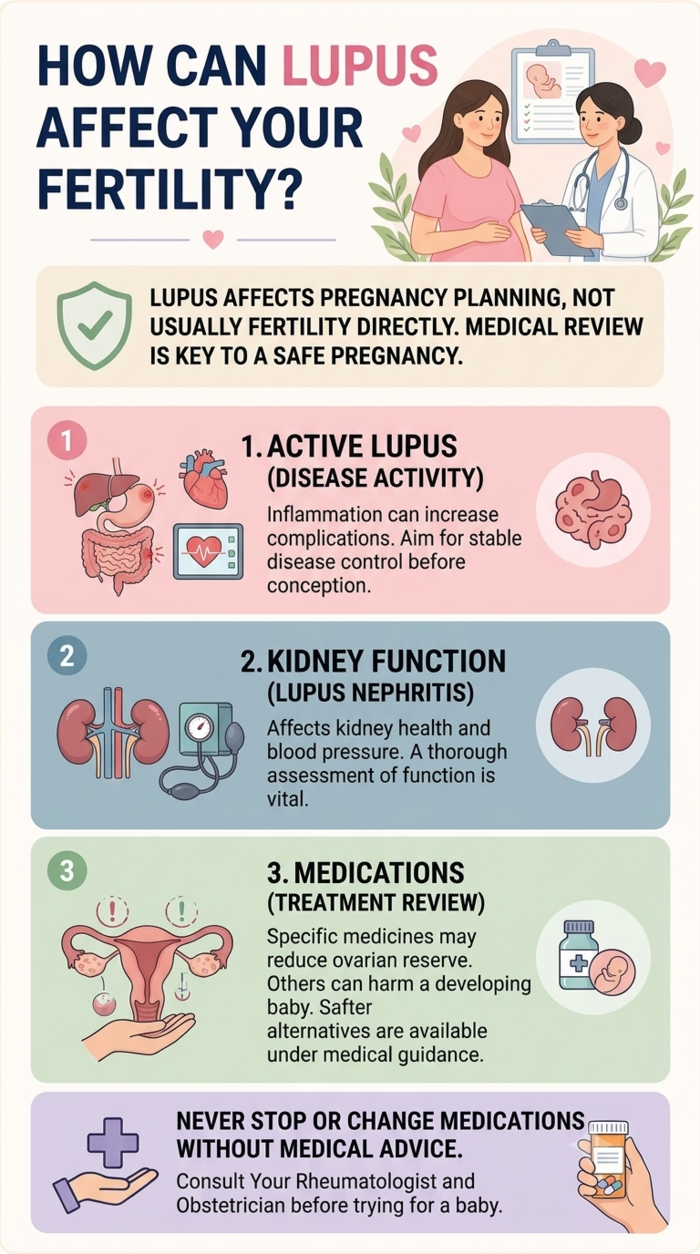
How Can Lupus Affect Your Fertility?
Many factors may influence fertility or the time at which it is safest to try for a baby.1. Active lupus
When lupus is active, there can be inflammation in your different organs. In this situation, pregnancy planning can be more complicated. Your doctor may recommend getting the disease under control before trying to conceive.
This does not mean active lupus always causes infertility. Instead, disease activity can affect the safety and timing of pregnancy, so a medical review is important.
2. Kidney involvement
Lupus can affect the kidneys, sometimes causing lupus nephritis. Significant kidney disease may increase pregnancy risks and require careful assessment before conception.
Kidney involvement does not automatically mean you cannot conceive. However, your kidney function, blood pressure and disease activity should be reviewed before you plan a pregnancy.
3. Certain lupus medicines
Some medicines used to treat lupus can affect fertility. For example, cyclophosphamide, an immunosuppressive medicine, can damage ovarian tissue and reduce ovarian reserve. The risk can depend on factors such as your age, cumulative dose and treatment history.
Other lupus medicines may need to be changed before conception because they can harm a developing baby, even if they do not directly cause infertility.
Never stop or change your medication without medical advice. Your doctor can help you understand the benefits and risks of your current treatment and identify safer alternatives where appropriate.
What Should You Do if You Have Lupus and Want to Conceive?
Planning ahead can help you understand your fertility and reduce avoidable risks.1. Speak to your doctor before trying
Dr Mannan Gupta advises women with lupus to discuss their pregnancy plans with their doctor. Ideally, lupus should be well controlled for at least six months before conception.
Your doctor may review your symptoms, kidney function, current medicines and relevant blood tests. You may also need input from a rheumatologist and a high-risk pregnancy specialist.
2. Discuss your ovarian health
If you have received medicines that may affect ovarian function, ask whether a fertility assessment is appropriate. Depending on your medical history, your doctor may recommend certain tests to check ovarian reserve. Your doctor may also refer you to a fertility specialist.
3. Review your treatment plan
Some medicines can be continued during pregnancy, while others need to be changed in advance. Your doctor will help you plan these changes without leaving your lupus inadequately controlled.
4. Seek a fertility assessment when needed
If you have been trying to conceive without success, discuss when to seek a fertility evaluation with your gynaecologist. Your age, menstrual history, previous pregnancies and other known fertility factors can influence the timing.
Fertility treatment may be possible for some women with lupus. However, your disease should be assessed and stabilised before treatment, with coordination between your fertility specialist and rheumatologist.
If you have lupus, consult your doctors for your pregnancy plans, get your treatment reviewed and aim for disease stability before trying for a baby.
FAQs on How Can Lupus Impact Your Fertility?
- Can you get pregnant naturally if you have lupus?
Yes. Many women with lupus conceive naturally. Your chances depend on several factors, including age, ovarian function, disease activity and any effects of previous treatment. - Can lupus medicines affect your eggs?
Some medicines, particularly cyclophosphamide, can damage the ovaries and reduce ovarian reserve. The risk varies with age and treatment exposure. Discuss your medication history and fertility concerns with your doctor. - Should you stop lupus medication when trying to conceive?
No. Do not stop prescribed treatment without medical advice. Some medicines need to be changed before pregnancy, but uncontrolled lupus can also affect your health and pregnancy outcomes.