
In this article:
What is the Success Rate of IVF in Women With Diabetes?
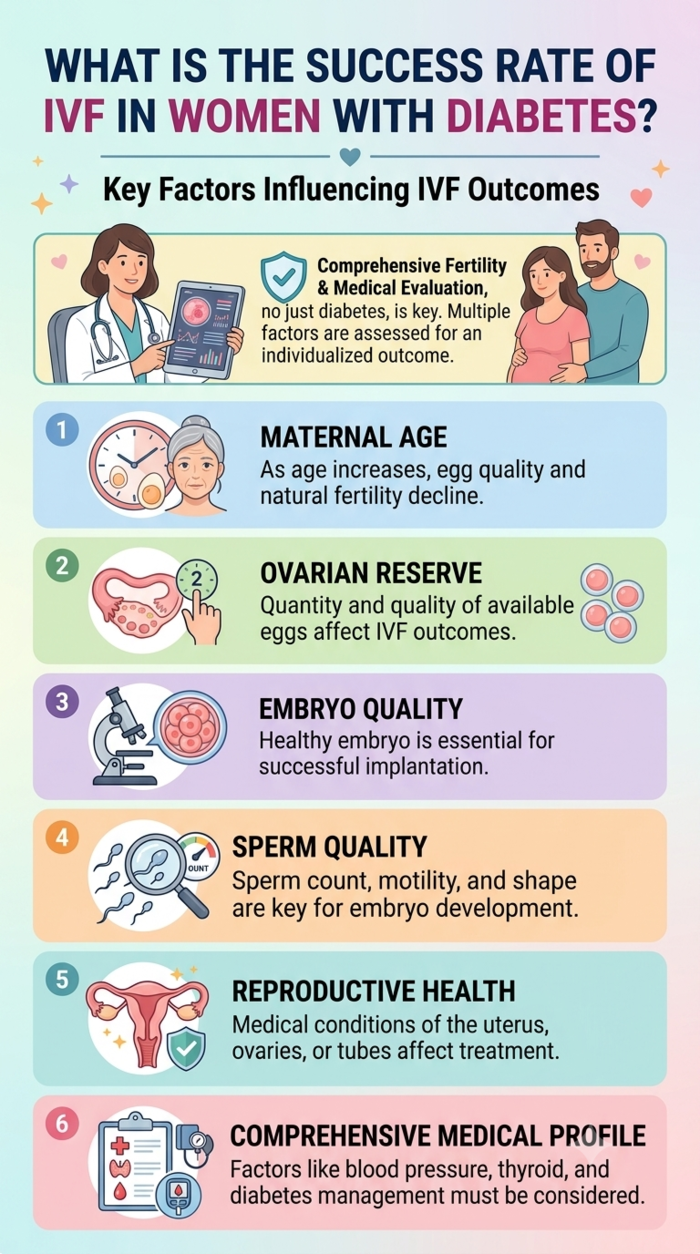
The following are some of the most important factors that contribute to the IVF success rate:- Age: Natural fertility declines with age, mostly due to low quality of eggs
- Ovarian reserve: The number and quality of available eggs may affect the outcome of an IVF procedure
- Embryo quality: A healthy embryo may allow for successful implantation
- Sperm quality: The count, motility, and shape of sperm may affect embryo development
- Any fertility issues: If there are any medical conditions affecting the uterus, ovaries, or fallopian tubes, this would affect the progress of treatment as well
- Medical conditions: Also, some other medical conditions need to be taken into consideration, such as blood pressure, thyroid issues, and diabetes-related issues
Expert Advice
“Diabetic women can certainly undergo IVF, but I would strongly recommend entering treatment with diabetes as well controlled as possible. IVF is not simply about getting an embryo; we also have to prepare the mother's body for a healthy pregnancy.”
- Dr Shobha Gupta, Gynaecologist and IVF Specialist from Mother’s Lap IVF Centre in New Delhi and Founder, Mumma’s Blessing IVF and Birthing Paradise in Vrindavan
Why is Diabetes Control Important Before IVF?
Maintaining proper control over blood sugar is necessary before the initiation of IVF. Having improper control of diabetes can adversely affect reproductive health and increase the risk of complications during the pregnancy. Thus, the doctor can check the level of glucose and HbA1c present in the blood to determine blood sugar levels.Your doctor or fertility specialist may review the medications being taken and also record your medical history. Some of the medications for diabetes may not be appropriate for use during pregnancy, and thus, the doses would need to be adjusted. However, it is highly advised that you do not alter or stop your medication without your doctor's advice.
Can Poor Blood Sugar Control Affect Pregnancy?
Managing blood sugar is essential throughout your IVF process and even after conception. Poorly managed diabetes can lead to an increased risk of miscarriage and complications during pregnancy. Once conception has occurred, you may be advised to check your blood glucose levels frequently, take the right medications, and get nutrition counselling. Good diabetes management will ensure a safe pregnancy and protection for both mother and baby.Should Women Delay IVF Because of Diabetes?
Diabetes does not always mean that fertility treatment must be delayed. However, women with poorly controlled diabetes should consult their doctors to achieve better blood sugar control. The IVF initiation will depend on age, ovarian reserve, fertility history, diabetes control, and other medical problems.Dr Shobha Gupta suggests that the necessary precautions be taken to prepare for IVF so that no time is wasted. The fertility expert can determine if the treatment can start or if better metabolic control is needed.
What Type of Medical Care is Needed?
Coordinated treatment by a fertility specialist and a doctor or diabetologist is the best option. This kind of combined care makes treating fertility issues and diabetes easier.Your specialist may analyse the following:
- Glucose levels
- HbA1c results
- Diabetes medications
- Blood pressure
- Other health issues
- Dietary habits and general nutrition
- Pregnancy progress after conception
You’re not alone in your journey when trying to conceive. Join our supportive community to connect with others, share experiences, and find encouragement every step of the way.
FAQs on IVF Success Rate in Diabetic Women: What to Know
- Does diabetes affect the menstrual cycle?
Poorly controlled diabetes can sometimes affect menstrual regularity and reproductive function. Women with irregular periods should discuss these changes with their doctors, particularly if they are planning pregnancy. - Can diabetic women have a healthy pregnancy through IVF?
Yes, diabetes does not rule out the possibility of a healthy pregnancy. However, careful monitoring and good glucose control are important. Women should attend scheduled appointments, follow their treatment plan, and inform their doctor about any changes in their health or medications. - Can diabetic women undergo frozen embryo transfer?
Yes, frozen embryo transfer may be an option for diabetic women when medically appropriate. The women's diabetes control and overall health should be assessed before proceeding with the transfer.