
In this article:
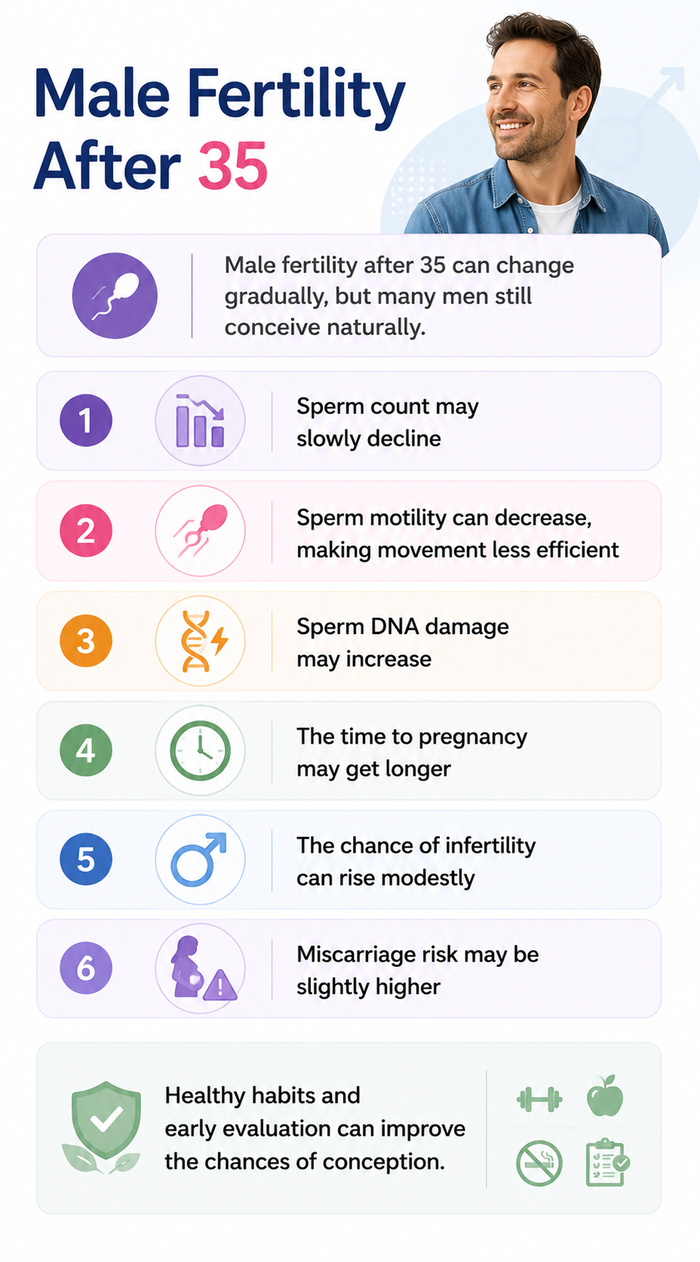
Male Fertility After 35
Male fertility after 35 can change gradually, but many men still conceive naturally.- Sperm count may slowly decline
- Sperm motility can decrease, making movement less efficient
- Sperm DNA damage may increase
- The time to pregnancy may get longer
- The chance of infertility can rise modestly
- Miscarriage risk may be slightly higher
Changes in Sperm Quality and Quantity
Sperm condition is an important factor affecting fertility. Starting at 35, small changes in Sperm function and production may begin to occur.The following could happen:
- Lower sperm count: Sperm production could gradually be reduced
- Motility: Sperm could move more slowly, thus hindering their ability to reach the egg
- DNA modification: There could be some variations in the genetic makeup
- Conception duration: It could take a longer period of time for conception
Changes in Hormones and Their Effects
Hormonal fluctuations can affect male fertility. The most important male hormone is testosterone, which may slowly decrease after the age of 35.This causes:
- Decrease in energy
- Decrease in libido (sex drive)
- Minor changes in Sperm formation
- Stress and mood swings
Lifestyle Influence on Fertility
Lifestyle has a great influence on male fertility, and adopting healthy behaviour ensures the maintenance of fertility well past 35 years old.Consider the following:
- Healthy eating habits: Consume fruits, vegetables, grains, and proteins
- Exercise regularly: Try activities like walking, jogging, or swimming to improve hormonal balance and general health
- Maintain a healthy weight: Good for maintaining healthy sperm
- Quit smoking and limit alcohol consumption: This can improve sperm count and DNA quality
- Manage stress: Adopt stress management techniques like meditation, yoga, or journalling
- Adequate sleep: Good sleep is crucial for proper sperm production and hormonal balance
- Other lifestyle changes: These include avoiding too much heat, reducing exposure to environmental hazards
Health Issues to Watch Out For
Some diseases are known to increase with age and may also affect fertility.Health issues that can affect fertility include the following:
- Diabetes
- High blood pressure
- Obesity
- Reproductive organs infection
- Hormonal imbalance
When Should You Seek Medical Assistance?
Always adopt a proactive attitude. If you wish to conceive after 35, seeking a doctor's assistance would be beneficial.You should seek medical advice when:
- You have tried to conceive for 6-12 months unsuccessfully
- You suffer from a known medical condition
- You are experiencing low libido or hormonal problems
- You have previously suffered reproductive problems
Male fertility after 35 may change gradually, but it remains very much within your control. Simple steps like maintaining a healthy weight, managing stress, and avoiding smoking or alcohol can make a real difference. Regular health checkups also help detect concerns early.
If you are planning a family, start conversations sooner rather than later. Small lifestyle improvements today can support stronger fertility outcomes tomorrow. With the right approach and timely care, many men continue to achieve healthy pregnancies well beyond 35.
You’re not alone in your journey when trying to conceive. Join our supportive community to connect with others, share experiences, and find encouragement every step of the way.
FAQs on Male Fertility After 35: What Changes to Expect
- Is it possible to preserve fertility for years?
Yes, male fertility can be preserved for years through sperm freezing (cryopreservation). Stored at very low temperatures, sperm can remain viable for decades, offering flexibility for future family planning. - Does frequency of ejaculation affect sperm quality?
Regular ejaculation can help maintain sperm health. Long gaps may reduce sperm motility, while very frequent ejaculation may lower sperm count temporarily. - Is genetic testing necessary for older men trying to conceive?
In some cases, doctors may suggest genetic testing to assess risks. It helps in making informed decisions for a healthy pregnancy.