We spoke with Dr Shilpa Ghosh, Senior Director & Unit Head – Obstetrics & Gynaecology, Max Super Speciality Hospital, Dwarka, to understand ovarian torsion and what it means for fertility treatment.
What Is Ovarian Torsion?
Ovarian torsion occurs when an ovary rotates around the ligaments and blood vessels that hold it in place. This twisting can partially or completely restrict blood flow to your ovary.This can interfere with the normal function of the affected ovary. Torsion may affect one ovary at a time and can occur during different stages of fertility treatment.
Why Can Fertility Treatment Increase the Risk?
Fertility treatment can stimulate the ovaries, sometimes making them larger than usual. Enlarged ovaries may be more mobile, increasing the chance of twisting. The risk may be higher with ovarian hyperstimulation syndrome (OHSS). However, ovarian torsion remains uncommon, even when the ovaries are enlarged.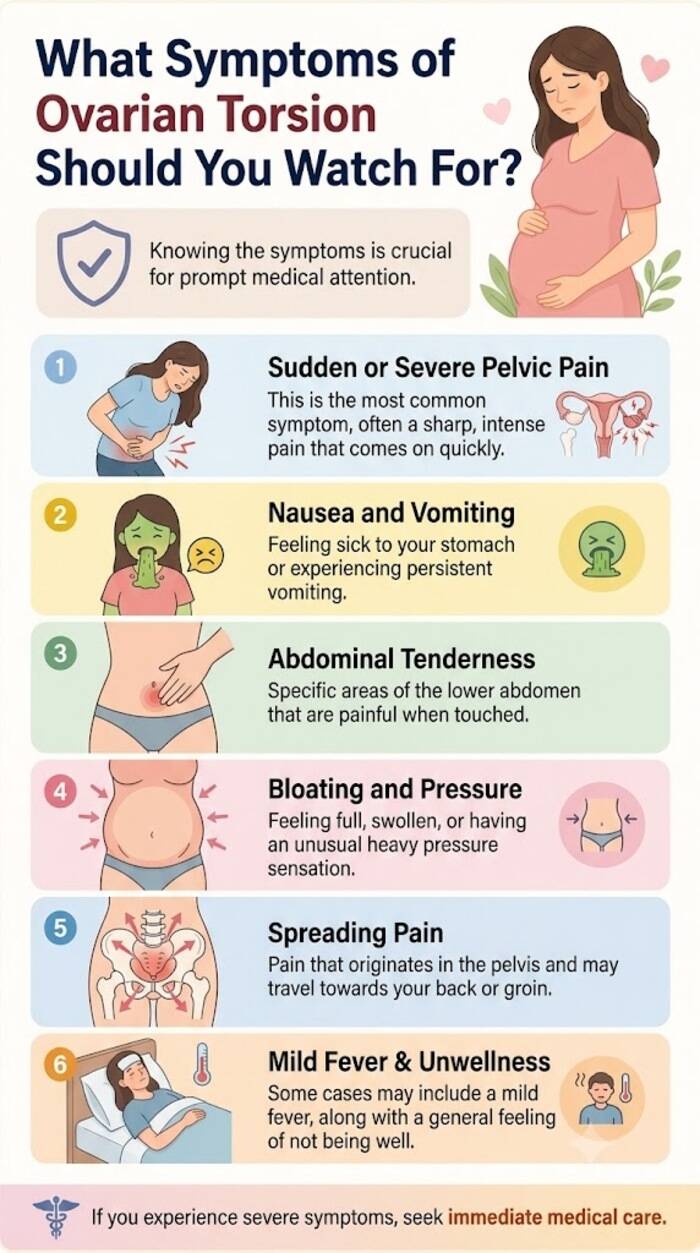
What Symptoms Should You Watch For?
The most common symptom is sudden or severe pelvic or lower abdominal pain.Other possible symptoms include:
- Nausea or vomiting
- Abdominal tenderness
- Bloating or a feeling of pressure
- Pain that may spread toward the back or groin
- Mild fever in some cases
- Feeling generally unwell
How Is Ovarian Torsion Diagnosed?
Dr Shilpa Ghosh explains that doctors usually use a combination of symptoms, examination, and imaging to assess whether ovarian torsion may be present.Tests may include:
- Medical history: Your doctor may ask about your pain, when it started, and your fertility treatment.
- Pelvic examination: This checks for tenderness or other signs of ovarian problems.
- Ultrasound: Checks the ovaries for swelling or changes that may suggest torsion.
- Doppler ultrasound: Assesses blood flow to the ovary. Reduced flow may suggest torsion, but normal flow does not always rule it out.
How Is Ovarian Torsion Treated?
Dr Shilpa Ghosh explains that ovarian torsion needs prompt medical attention because prolonged twisting can affect blood supply to your ovary.Treatment may include:
- Laparoscopy: Doctors commonly use this minimally invasive surgery to examine the ovary and treat the twisting through small abdominal openings.
- Untwisting the ovary: The surgeon carefully rotates the ovary back into its normal position to help restore blood flow.
- Preserving the ovary: If the ovarian tissue appears healthy, doctors usually try to keep the ovary in place whenever it is safe to do so.
- Removing a damaged ovary: If the blood supply has been severely interrupted and the tissue cannot recover, removal of the affected ovary may sometimes be necessary.
Can Ovarian Torsion Affect Fertility?
The effect on future fertility depends largely on whether the ovary can be saved and whether the other ovary is healthy.If torsion is treated quickly and the ovary recovers, there may be little or no lasting effect on fertility from that episode. If an ovary has to be removed, the remaining ovary can still release eggs and contribute to natural conception in many cases.
“Women undergoing fertility treatment should not ignore sudden or severe pelvic pain, particularly when accompanied by vomiting. Prompt medical evaluation is important to help protect ovarian function.”
- Dr Shilpa Ghosh, Senior Director & Unit Head - Obstetrics & Gynaecology, Max Super Speciality Hospital, Dwarka
When Should You Seek Medical Attention?
Seek urgent medical attention if:- Pain becomes sudden, intense, or difficult to tolerate
- Symptoms develop soon after ovarian stimulation or egg retrieval
- Pain is accompanied by repeated vomiting
- Discomfort continues despite rest
- You suddenly feel faint, weak, or unusually unwell
You’re not alone in your journey when trying to conceive. Join our supportive community to connect with others, share experiences, and find encouragement every step of the way.
FAQs on Ovarian Torsion and Fertility Treatment: What You Should Know
- Does ovarian torsion affect egg quality?
Torsion does not directly affect egg quality before it occurs. However, prolonged interruption of blood supply can damage ovarian tissue, potentially affecting ovarian function. - Can ovarian torsion happen after an egg retrieval?
Yes. The ovaries may remain enlarged following stimulation and egg retrieval, so torsion can occasionally occur during the recovery period. - Can ovarian torsion resolve on its own?
The ovary may sometimes twist and untwist, causing symptoms to disappear temporarily. This does not mean the condition is safe to ignore, as twisting can recur and affect blood supply.