
We spoke to Dr Tripti Raheja, Director - Obstetrics & Gynaecology at the CK Birla Hospital, Delhi, about some common myths surrounding PCOS and what women should know instead.
She added that PCOS may affect women across different body types. Moreover, it is not limited to those who are overweight. She also highlights that the condition can have many implications, including reproductive, metabolic, and psychological aspects.
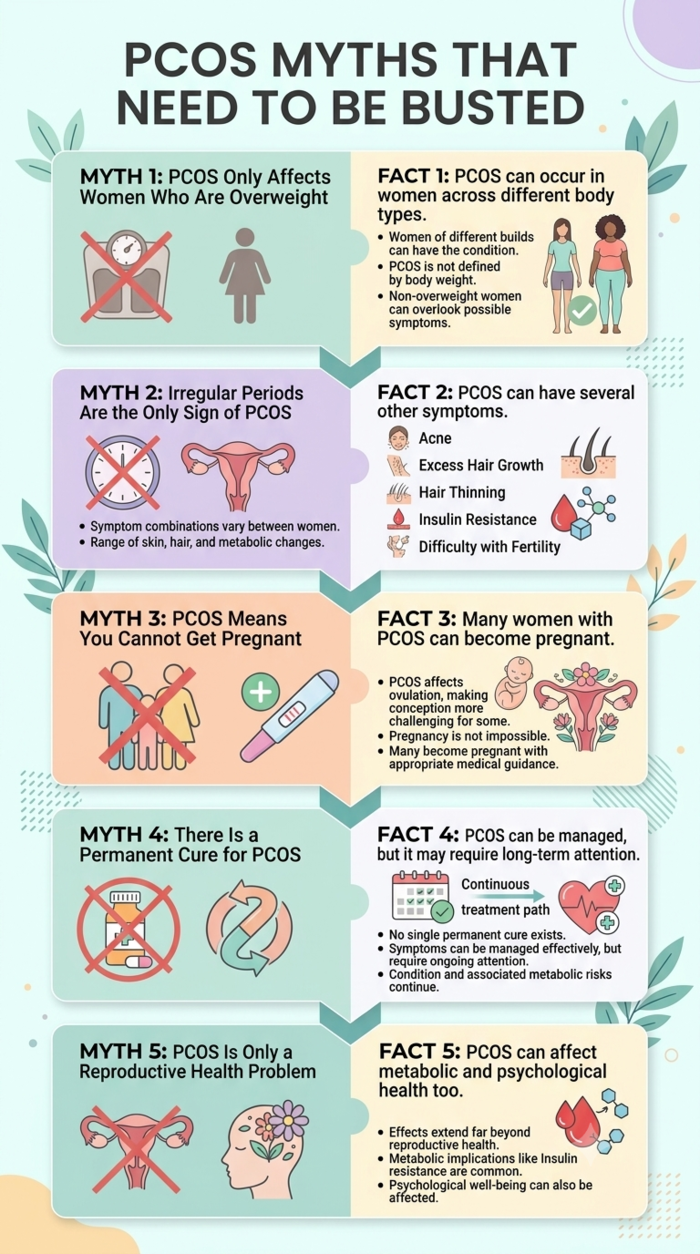
Myth 1: PCOS Only Affects Women Who Are Overweight
Fact: PCOS can occur in women across different body types.One common misconception is that being overweight is a requirement for developing PCOS. However, women with different body types can have the condition. Dr Tripti Raheja explains that PCOS is not limited to women who are overweight. This is important because women who do not have excess weight may overlook possible symptoms and assume that PCOS does not apply to them. Body weight can influence some aspects of PCOS, but it is not what defines the condition.
Myth 2: Irregular Periods Are the Only Sign of PCOS
Fact: PCOS can have several other symptoms.People often associate PCOS with irregular periods. But this is not the only possible sign, as the condition can have a range of other symptoms and effects.
Dr Tripti Raheja notes that symptoms may also include:
- Acne
- Excess hair growth
- Hair thinning
- Insulin resistance
- Difficulty with fertility
Myth 3: PCOS Means You Cannot Get Pregnant
Fact: Many women with PCOS can become pregnant.PCOS can affect ovulation, which may make conception more challenging for some women. However, a diagnosis of PCOS does not mean that pregnancy is impossible.
Dr Tripti Raheja explains that many women with PCOS can become pregnant with appropriate medical guidance. Depending on the individual situation, management may focus on improving ovulation and addressing other factors that may affect fertility.
Therefore, PCOS should not automatically be equated with infertility.
Myth 4: There Is a Permanent Cure for PCOS
Fact: PCOS can be managed, but it may require long-term attention.Another common misconception is that PCOS can be permanently cured with a single treatment. While symptoms can often be managed effectively, the condition and its associated metabolic risks may require ongoing attention.
Dr Tripti Raheja emphasises that long-term management is important because PCOS can affect women beyond their reproductive years.
A personalised approach may include lifestyle changes and medical treatment based on symptoms, reproductive goals and metabolic health.
Myth 5: PCOS Is Only a Reproductive Health Problem
Fact: PCOS can affect metabolic and psychological health too.PCOS is often discussed in the context of periods, ovulation, and fertility. However, its effects can extend beyond reproductive health.
According to Dr Tripti Raheja, PCOS can have metabolic and psychological implications as well. Insulin resistance is one metabolic concern associated with the condition, while psychological well-being can also be affected.
Early diagnosis, personalised treatment, and healthy lifestyle habits can play an important role in managing PCOS. As Dr Tripti Raheja highlights, understanding the condition correctly can help women make informed decisions about their health.
PCOS is a condition that may require long-term, comprehensive care. If you stay aware of its different effects, you can make informed decisions to support your PCOS journey.
You’re not alone in your journey when trying to conceive. Join our supportive community to connect with others, share experiences, and find encouragement every step of the way.
FAQs on PCOS Myths That Need to Be Busted
- Can women with a normal weight have PCOS?
Yes. PCOS can occur in women across different body types. Being overweight is not a requirement for having the condition. - Does PCOS always cause infertility?
No. PCOS can affect ovulation and make conception more challenging for some women, but many women with PCOS can become pregnant with appropriate medical guidance. - Can PCOS be permanently cured?
PCOS can be effectively managed, but it may require long-term attention to symptoms and associated metabolic risks. Management is tailored to the individual.