In this article:
Why Does the Placenta Need Spiral Artery Remodelling?
The placenta acts as the main interface between the mother and baby. It supplies the developing foetus with oxygen and nutrients and removes waste products. As pregnancy progresses, the baby's demands increase. The placenta therefore needs an adequate and relatively steady maternal blood supply.Before remodelling, spiral arteries are relatively narrow and high-resistance vessels. After remodelling, they become wider, more distensible and lower-resistance vessels. This allows increased blood flow into the placental circulation without the same degree of pressure and resistance seen in the non-pregnant uterus.
Why Is Spiral Artery Remodelling Important for the Babys Growth?
A fully remodelled spiral artery carries a high volume of blood at low pressure. This matches the placenta's rising demand for oxygen and nutrients as pregnancy advances and the baby grows.Adequate remodelling supports normal placental development, steady foetal growth, and appropriate birth weight. Because the process is largely complete by twenty weeks, its success in the first half of pregnancy influences outcomes in the second half, including the third trimester.
"Effective remodelling of spiral arteries is the cornerstone of a healthy pregnancy. To sustain foetal growth, these vessels must undergo total structural reorganisation to supply an uninterrupted, high-volume flow of maternal blood to the intervillous space."
Dr Sushma K, Consultant, Obs & Gyn, Apollo Hospitals
What Happens When Spiral Artery Remodelling Fails?
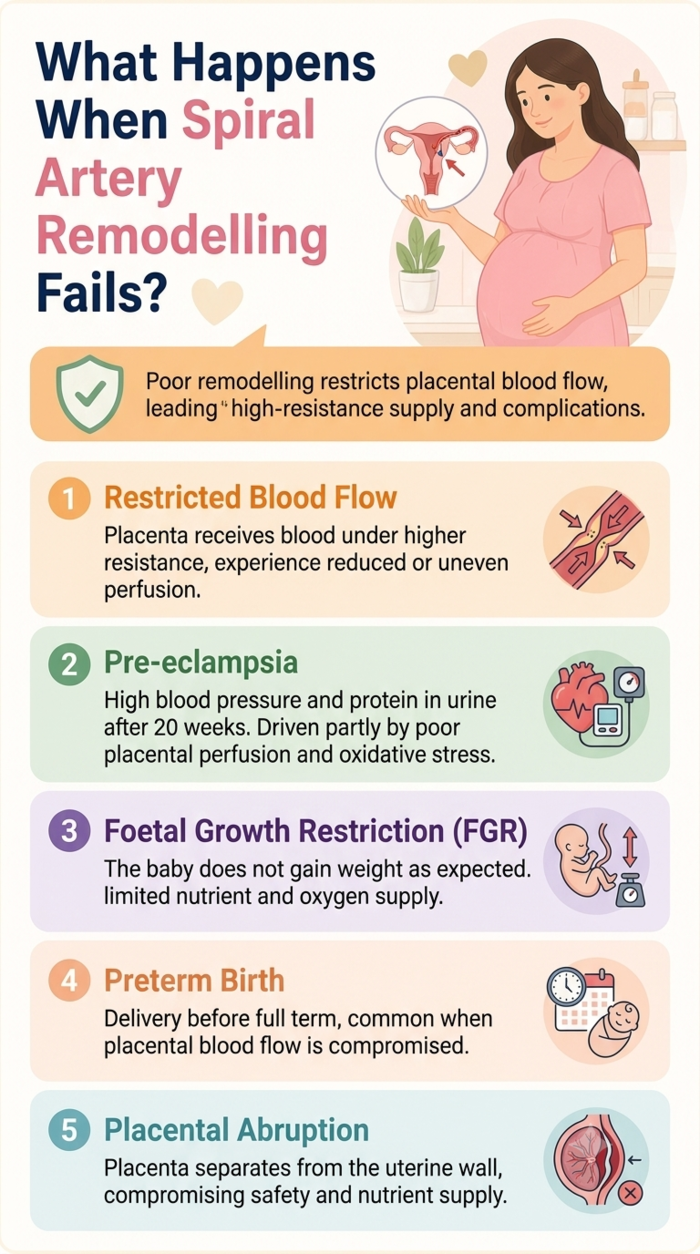
When spiral arteries do not undergo adequate transformation, blood flow to the placenta may remain more restricted than expected. The placenta may then receive blood under higher resistance and potentially experience reduced or uneven perfusion. This restricted, high-resistance blood supply is linked to several pregnancy complications:- Pre-eclampsia: High blood pressure and protein in urine after twenty weeks, driven partly by poor placental perfusion and oxidative stress.
- Foetal growth restriction (FGR): The baby does not gain weight as expected because of a limited nutrient and oxygen supply.
- Preterm birth and placental abruption: Both are more common when placental blood flow is compromised.
Can Doctors Check Spiral Artery Remodelling During Pregnancy?
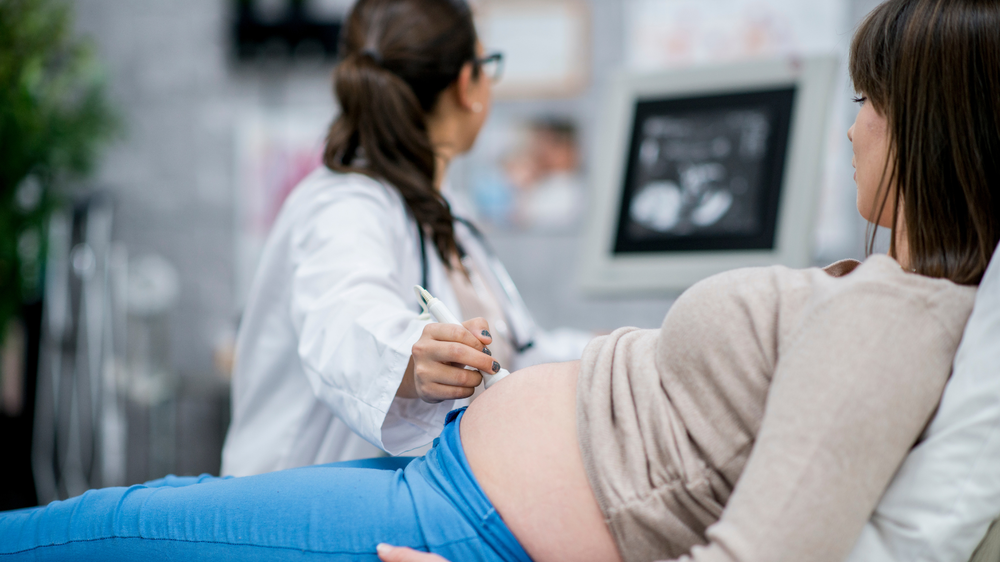
Spiral artery remodelling itself cannot be observed directly during a normal pregnancy, but its effect on blood flow can be estimated. A uterine artery Doppler ultrasound, usually done in the first trimester, measures the resistance index (RI) in the uterine arteries.A high resistance index suggests that remodelling is incomplete and flags a pregnancy at higher risk of pre-eclampsia and FGR, allowing doctors to plan closer monitoring and preventive care such as low-dose aspirin where indicated.
Can Spiral Artery Remodelling be Improved or Prevented?
There is currently no treatment that can directly repair spiral arteries once abnormal placentation has occurred. Spiral artery remodelling is a complex biological process involving trophoblasts, maternal blood vessels, immune cells and molecular signals.For pregnant women at increased risk of pre-eclampsia, doctors may recommend preventive measures such as low-dose aspirin in selected cases. However, aspirin should be started only on medical advice because the appropriate dose and timing depend on individual risk factors and clinical guidelines.
Spiral artery remodelling is a short but decisive process in early pregnancy, and its success shapes placental blood flow, foetal growth, and the risk of pre-eclampsia for the rest of gestation.
Whether you’re pregnant, a new mom, or navigating postpartum, you don’t have to do it alone. Join our support group to connect, share, and support one another.
FAQs on What Is Spiral Artery Remodelling and How Does It Affect Pregnancy?
- When does spiral artery remodelling occur?
It begins early in pregnancy and progresses mainly during the first half of pregnancy, with vascular changes continuing as gestation advances. - Can spiral artery remodelling problems be reversed once pregnancy has started?
No. Remodelling occurs mainly in the first half of pregnancy; by the time complications like pre-eclampsia appear, the focus shifts to monitoring and managing the pregnancy rather than reversing the vessel changes. - Does abnormal spiral artery remodelling always lead to pre-eclampsia?
No. It raises the risk significantly but is one of several contributing factors; not every pregnancy with reduced remodelling develops pre-eclampsia or FGR.