
In this article:
Dr Shobha Gupta, gynaecologist and IVF specialist from Mother’s Lap IVF Centre in New Delhi and founder of Mumma’s Blessing IVF and Birthing Paradise in Vrindavan, says that fertility nutrition should be viewed as part of overall health. No single vitamin or mineral can solve every fertility problem. A balanced diet is a better approach than relying on individual supplements.
Why Are Potassium and Magnesium Important?
Your body needs several nutrients to produce energy and keep the cells working properly. Magnesium and potassium are among these essential minerals.- Magnesium is involved in hundreds of biochemical reactions. It supports energy production, muscle formation, and nerve activity. It also helps maintain normal blood sugar levels and supports healthy bones. Magnesium also controls the functions of hormones like FSH (follicle-stimulating hormone), and any deficiency can lower progesterone levels and lead to a short luteal phase and increased risk of miscarriage.
- Potassium is an important electrolyte. It helps maintain fluid balance, supports normal nerve signals, and allows muscles to contract properly. It also plays a role in normal heart function and hormone secretion in both men and women.
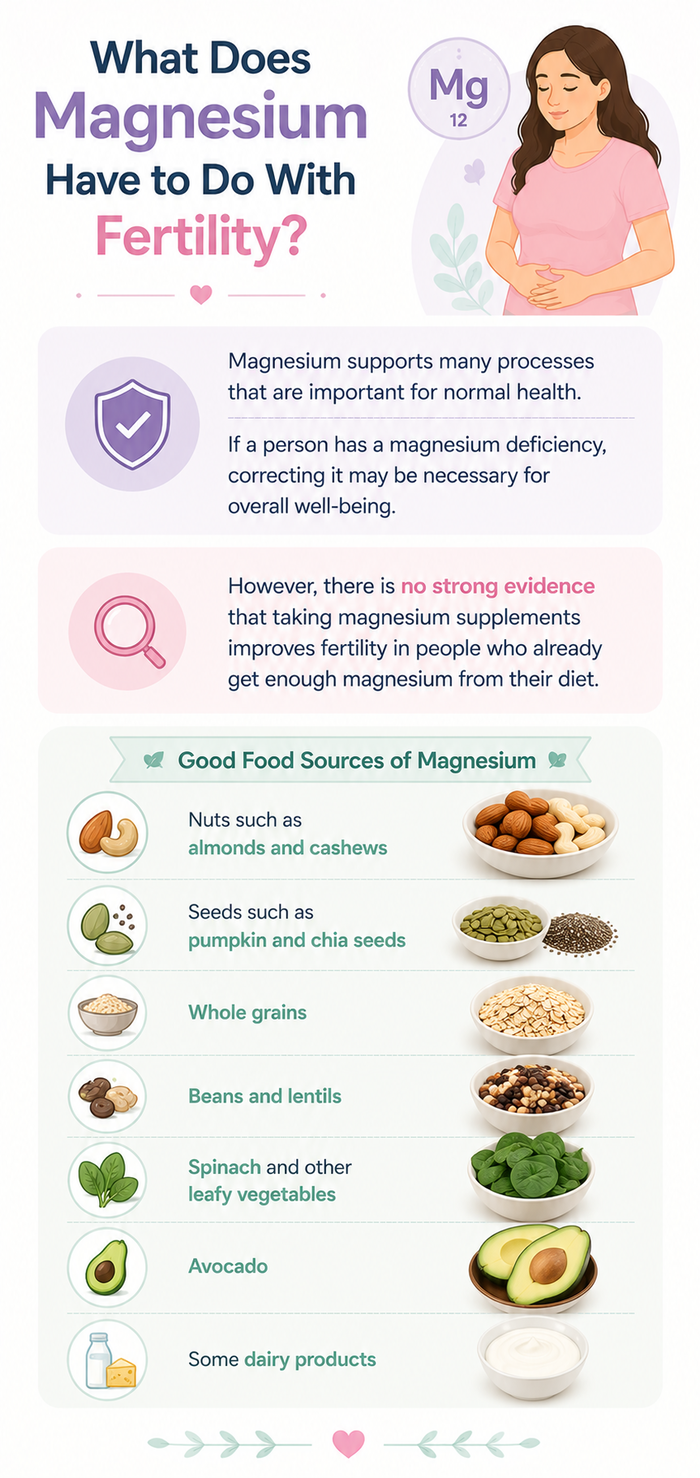
What Does Magnesium Have to Do With Fertility?
Magnesium supports many processes that are important for normal health. If a person has a magnesium deficiency, correcting it may be necessary for overall well-being. However, there is no strong evidence that taking magnesium supplements improves fertility in people who already get enough magnesium from their diet.Good food sources of magnesium include:
- Nuts such as almonds and cashews
- Seeds such as pumpkin and chia seeds
- Whole grains
- Beans and lentils
- Spinach and other leafy vegetables
- Avocado
- Some dairy products
What is the Role of Potassium?
Potassium helps the nerves, muscles and cells work normally. It also helps maintain the body's fluid balance. Most people can get sufficient potassium from food. Fruits, vegetables, pulses, and dairy products are useful sources. Potatoes, bananas, oranges, tomatoes, and beans are also commonly eaten potassium-rich foods.Potassium is important for overall health, but taking potassium supplements is not a proven way to improve fertility.
What Does Research Say?
It is important to understand the difference between meeting nutritional needs and taking supplements for specific fertility benefits. Fertility can be affected by many factors, including age, ovulation problems, ovarian reserve, endometriosis, blocked fallopian tubes, and male fertility problems. Nutrition can support general health, but it cannot replace proper evaluation and treatment when a fertility problem is present.“Potassium and magnesium are essential nutrients, but they should not be viewed as fertility-boosting supplements. Their importance lies in supporting normal body functions that are also relevant to reproductive health.”
- Dr Shobha Gupta.
Are Potassium and Magnesium Supplements Safe?
Supplements should not be taken in high doses without medical advice. More is not always better when it comes to minerals. Excess magnesium from supplements may cause diarrhoea, stomach discomfort and other side effects. High potassium levels can be more serious and may affect the heart's normal rhythm.People with kidney problems need particular caution because the kidneys help remove excess minerals from the body. Some medicines can also affect potassium or magnesium levels.
Women planning pregnancy should discuss supplements with their doctor, especially if they have a medical condition, take regular medicines or have previously been diagnosed with a nutritional deficiency.
What Should You Eat Before Pregnancy?
A balanced diet should be the starting point:- Include fruits, vegetables, whole grains, pulses, nuts, seeds, dairy or suitable alternatives, and healthy sources of protein.
- It is also important to discuss folic acid and other pregnancy supplements with a doctor.
- Maintaining a healthy weight, staying physically active, avoiding smoking, and getting adequate sleep can further support overall health.
Potassium and magnesium are important nutrients, but they are not shortcuts to pregnancy. The practical goal is to get enough of these minerals through a varied diet and use supplements only when there is a clear medical need.
If you are planning pregnancy, review your diet and supplements with your doctor. Address any known deficiencies and do not take high-dose minerals on your own. Good fertility care combines healthy nutrition with timely medical advice when needed.
You’re not alone in your journey when trying to conceive. Join our supportive community to connect with others, share experiences, and find encouragement every step of the way.
FAQs on the Role of Potassium and Magnesium in Fertility: What to Know
- Can magnesium supplements increase fertility?
Magnesium is needed for normal body functions, but there is not enough evidence that magnesium supplements directly improve fertility in people who already have adequate magnesium levels. - Can potassium deficiency affect fertility?
Potassium is important for normal nerve, muscle, and fluid balance. A significant imbalance can affect overall health, but potassium supplements should not be used as a fertility treatment without medical advice. - Should I take potassium and magnesium while trying to conceive?
Not every time, because most people can get these minerals from a balanced diet. Supplements may be recommended when a deficiency or specific medical need is identified.