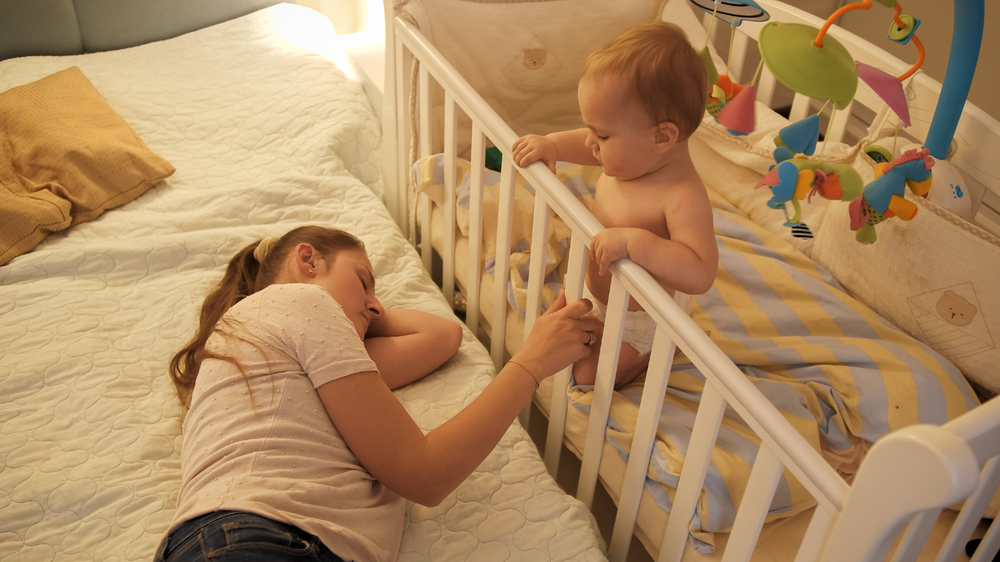
According to Dr Vivek Jain, Senior Director & Unit Head, Paediatrics, Fortis Hospital, Shalimar Bagh, Delhi, finding the reason behind sleep disturbance in toddlers will help parents adopt the right technique.
“When toddlers wake at night, parents should consider their physical comfort, emotional needs, health, and daily routine. Looking for a pattern can help identify the possible cause.”
- Dr Vivek Jain, Senior Director & Unit Head, Paediatrics, Fortis Hospital, Shalimar Bagh, Delhi
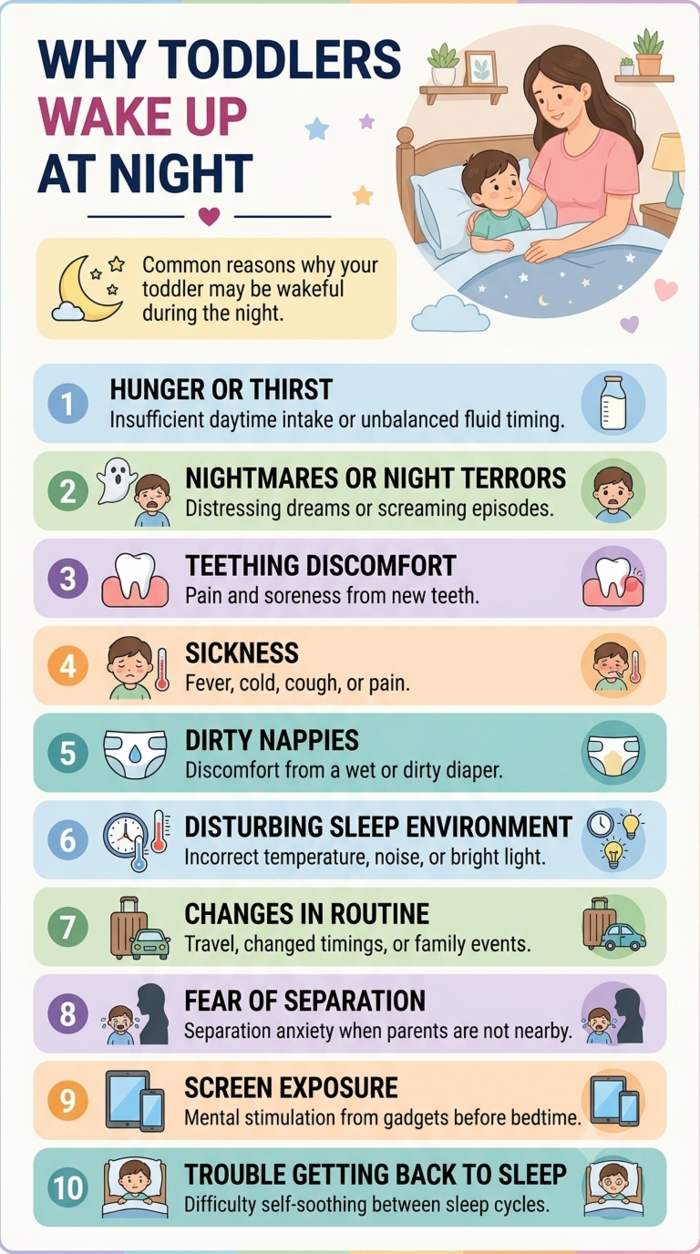
Why Toddlers Wake Up At Night
1. Hunger or ThirstA toddler who has had a small meal may be awake during the night. Thirst and drinking too much water can affect their sleep patterns too. It is best to give a balanced meal plus offer sufficient fluids during the day, and limit fluid intake just before bedtime.
2. Nightmares or Night Terrors
Nightmares cause toddlers to wake up crying or searching for their parents. Night terrors are different, as toddlers scream or cry while they are asleep. Parents need to reassure them and stay calm during this episode.
3. Discomfort Due to Teething
Teething causes sore and swollen gums and makes it really hard for toddlers to sleep well. If the toddler is in great pain, it might be best for parents to consult a doctor.
4. Sickness
Illness with symptoms like fever, cold, cough, and stomach pain can prevent toddlers from sleeping peacefully. By paying attention, parents can help understand the reason and visit the doctor if necessary. Symptoms like breathing problems, high-grade fever for a long time, vomiting, or severe pain require immediate and prompt medical care.
5. Dirty Nappies
Dirty nappies bring discomfort during nighttime. Parents should make sure to change the diaper before bedtime and use a good brand to avoid waking due to discomfort. The sleepwear and bed linens should also be of good quality.
6. Disturbing Sleep Environment
Toddlers can wake up if their sleeping environment is not appropriate. Too hot or too cold room temperature, excess noise, and bright lights can disturb the child's sleep, waking them often at night.
7. Changes in Routine
Travelling, changed sleep timings, and family gatherings can all affect the child's sleep. Deviations from the routine bedtime rituals and timings can negatively impact their sleep, waking them often at night. Lack of daytime naps can also overstimulate your toddler, making it difficult to fall asleep or causing them to awaken frequently.
8. Fear of Separation
Separation anxiety (fear of separation) can make toddlers wake at night because they may suddenly realise their parents are not nearby. They may cry, call for them, or feel unsafe, making it difficult to settle back.
9. Too Much Screen Exposure
Using gadgets like phones, TV, tabs just before bedtime can keep toddlers mentally stimulated and make it harder to relax. Bright screens can delay sleep, cause restlessness, and increase the likelihood of nighttime waking.
10. Trouble Getting Back to Sleep
Some toddlers wake up for a short period of time in between their sleep cycles but then are unable to go back to sleep. They might be crying, calling out to their parents, or wanting to be held. Having a set routine can help make sleep signals clear. Parents should be calm and respond to their child briefly.
How Can Parents Improve a Toddlers Sleep?
Parents can help their toddlers develop good sleeping habits by:- Maintaining a consistent bedtime and wake-up time
- Feeding children a nutritious dinner
- Giving enough liquids during the day but limiting them just before bedtime
- Reducing screen time before sleep
- Making sure the child's bedroom is calm, quiet, relaxing, and dimly lit
- Ensuring the child is not sick or uncomfortable
- Not engaging the child in any overstimulating activity during bedtime
When Should Parents Consult a Paediatrician?
Seek medical help if your toddler has:- Breathing difficulties, pauses in breathing, or loud, persistent snoring
- High or prolonged fever, severe pain, or repeated vomiting
- Unusual sleepiness, weakness, or difficulty waking
- Poor eating, drinking, or signs of dehydration
- Significant changes in behaviour and development
Whether you’re pregnant, a new mom, or navigating postpartum, you don’t have to do it alone. Join our support group to connect, share, and support one another.
FAQs on 10 Reasons Why Toddlers Wake Up at Night
- Is it normal for toddlers to wake up at night?
Yes, occasional night waking is common. Frequent waking that affects daytime behaviour, mood, or energy may need evaluation from a paediatrician. - What should parents do when a toddler wakes up crying?
Parents should stay calm, check for hunger, thirst, discomfort, illness, or fear, and offer brief reassurance. Keep lights dim and avoid play or stimulating conversations to encourage sleep. - How can frequent night waking affect daytime behaviour?
Frequent night waking can leave the toddlers tired, irritable, or less attentive during the day. They become more clingy, restless, or emotional, or have difficulty concentrating, playing, and following routines.