In this article:
Overview of an hCG Trigger Shot
An hCG trigger shot is a fertility medication used to help the final stage of egg maturation and trigger ovulation. It contains human chorionic gonadotropin (hCG), a hormone that acts similarly to luteinising hormone (LH), which naturally signals the ovary to release a mature egg.Fertility specialists commonly use trigger shots during ovulation induction, timed intercourse, intrauterine insemination (IUI), and in vitro fertilisation (IVF) cycles to help plan the timing of ovulation.
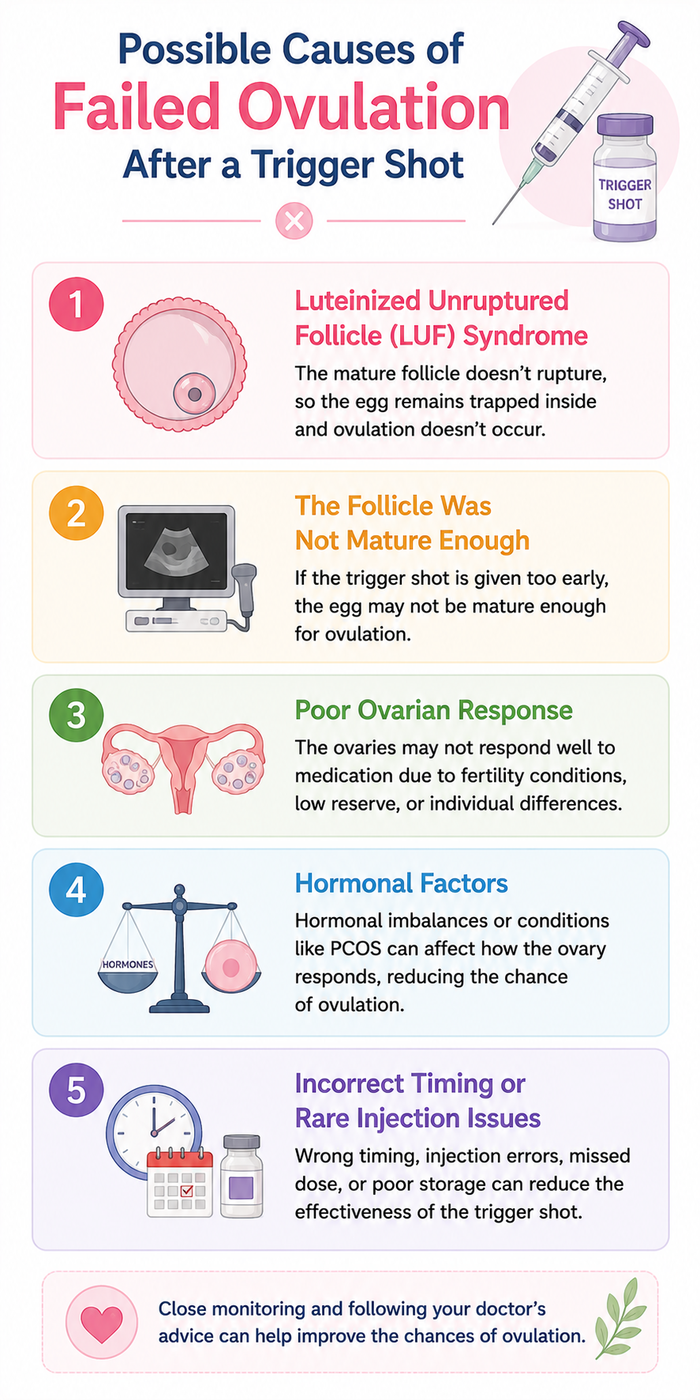
Possible Causes of Failed Ovulation After a Trigger Shot
Several factors may prevent ovulation after a trigger shot. These include:Luteinized Unruptured Follicle (LUF) Syndrome
Sometimes, even after a trigger shot, the mature follicle does not rupture to release the egg. Instead, the egg remains trapped inside the follicle, so fertilisation cannot occur. This condition is called luteinized unruptured follicle (LUF) syndrome. Although the trigger shot works by preparing the egg for release, the final step of ovulation does not happen.
The Follicle Was Not Mature Enough
A trigger shot works best when the leading follicle has reached an appropriate stage of development. If the injection is given too early, the egg may not have completed its final maturation, making ovulation less likely. This is why ultrasound monitoring is an important part of fertility treatment, as it helps your doctor decide the right time for the trigger shot.
Poor Ovarian Response
Sometimes, the ovaries do not respond as expected, even when the treatment plan is followed correctly. This may happen in women with certain fertility conditions, reduced ovarian reserve, or individual differences in how their ovaries react to fertility medications.
Hormonal Factors
Hormones such as LH, follicle-stimulating hormone (FSH), oestrogen, and progesterone all work together to support normal follicle development and egg release. In some women, hormonal imbalances or underlying conditions, such as polycystic ovary syndrome (PCOS), may affect how the ovary responds, making ovulation less likely despite a trigger shot.
Incorrect Timing or Rare Injection Issues
If the injection is given too early, the egg may not be ready for release. If it is given too late, the follicle may begin to change before the trigger shot can work effectively. In rare cases, problems such as an incorrect injection technique, a missed dose, or improper storage of the medication may also reduce its effectiveness. Although these situations are uncommon, they may affect whether ovulation occurs as expected.
What Happens Next If Ovulation Doesn't Occur?
If ovulation does not occur after a trigger shot, your fertility specialist may review your treatment plan and recommend the most appropriate next steps.These include:
- Review your treatment cycle to identify possible reasons
- Adjust the dose or type of fertility medication, if needed
- Modify your ovarian stimulation protocol in future cycles
- Monitor follicle growth and ovulation more closely in your next treatment cycle
Does One Failed Trigger Shot Mean Future Cycles Will Fail?
No. A single cycle in which ovulation does not occur after a trigger shot does not mean future cycles will also be unsuccessful. Many women go on to ovulate successfully and achieve pregnancy in subsequent treatment cycles.When Should You Contact Your Fertility Specialist?
You should contact your fertility specialist if you have:- Severe pelvic pain or unusual symptoms
- No signs of ovulation on follow-up monitoring
- Repeated cycles with failed ovulation after a trigger shot
- Questions or concerns about your treatment plan or next steps
You’re not alone in your journey when trying to conceive. Join our supportive community to connect with others, share experiences, and find encouragement every step of the way.
FAQs on What If You Don't Ovulate After an hCG Trigger Shot? Causes and Treatment
- Can a trigger shot fail more than once?
Yes. Although uncommon, some women may experience repeated failed ovulation after a trigger shot. If this happens, your fertility specialist may investigate the underlying cause and adjust your treatment plan. - Can I still get pregnant if the trigger shot doesn't work?
Not in the same treatment cycle if the trigger shot does not result in ovulation, as no egg is released for fertilisation. However, this does not mean you cannot become pregnant in future cycles after your treatment plan is adjusted. - Can another trigger shot be given?
Yes. Your fertility specialist may recommend another trigger shot in a future cycle. They may adjust the medication dose, timing of the injection, or stimulation protocol to improve the chances of successful ovulation.