According to Dr Gorav Gupta, Senior Psychiatrist & CEO, Tulasi Healthcare, New Delhi, acknowledging these feelings is the first step towards handling them in a healthy way. Instead of ignoring or judging yourself, try to understand what you truly need emotionally and seek support when required.
Understanding The Emotional State
Having friends and other people around you who are soon-to-be parents can create a mix of emotions. While rejoicing over their new opportunity ahead of them, you may also become more aware of your life experiences.In reaction to the situation, you may have emotional reactions such as longing, insight, or heightened sensitivity. It is essential to understand that these emotions will coexist, and they are completely normal and part of human nature. Experiencing happiness and personal feelings simultaneously is not a bad thing or something to feel guilty about; rather, it indicates emotional awareness.
Why These Feelings Deserve Acceptance
Often, emotions stem from one’s personal hopes, desires, and life plans. When something important has been happening in your environment, it is reasonable that your mind would be engaged in this regard.- You may notice a better perception of your life goals and time
- Your reflective capacity may increase when it comes to conversations connected to parenthood
- You may gain emotional sensitivity in particular social gatherings
- Dr Gorav Gupta, Senior Psychiatrist & CEO, Tulasi Healthcare, New Delhi
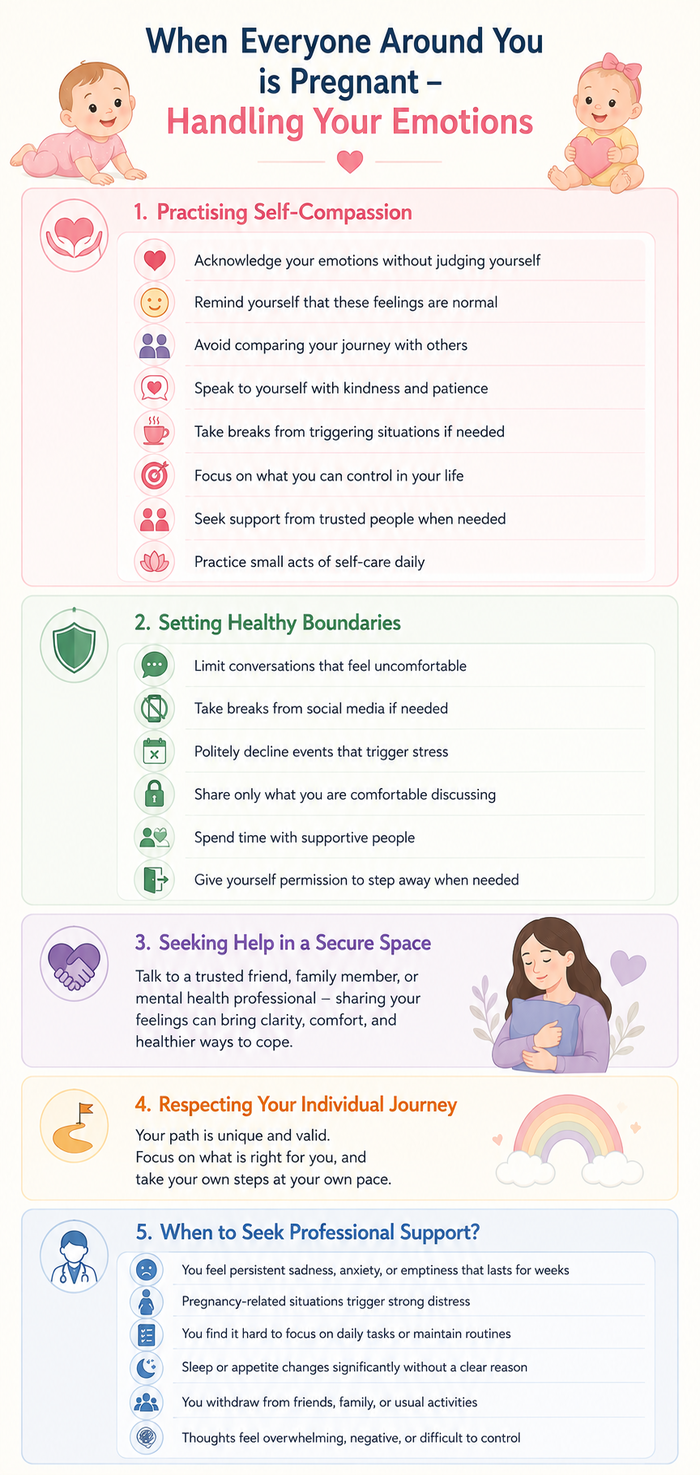
Practising Self-Compassion
Being kind to yourself during this time can ease emotional stress and build inner strength. Self-compassion helps you respond to difficult feelings with care instead of criticism.- Acknowledge your emotions without judging yourself
- Remind yourself that these feelings are normal
- Avoid comparing your journey with others
- Speak to yourself with kindness and patience
- Take breaks from triggering situations if needed
- Focus on what you can control in your life
- Seek support from trusted people when needed
- Practice small acts of self-care daily
Setting Healthy Boundaries
Creating healthy boundaries can protect your emotional well-being during sensitive times. It helps you stay balanced without feeling overwhelmed.- Limit conversations that feel uncomfortable
- Take breaks from social media if needed
- Politely decline events that trigger stress
- Share only what you are comfortable discussing
- Spend time with supportive people
- Give yourself permission to step away when needed
Seeking Help in a Secure Space
Reaching out for help in a safe and supportive space can make a big difference during emotionally challenging times. Talking to someone who listens without judgement helps you feel understood and less alone in your journey.This could be a trusted friend, family member, or a mental health professional. As Dr Gorav Gupta suggests, sharing your feelings openly can bring clarity, comfort, and healthier ways to cope with difficult emotions.
Respecting Your Individual Journey
Every woman's journey is unique, shaped by personal experiences, timing, and circumstances. It is important to remind yourself that your path does not have to look like anyone else's to be valid or meaningful.Comparing yourself to others can increase stress and take away from your own progress. Focus on what is right for you, and the steps you are taking at your own pace. Respecting your individual journey helps you stay grounded, patient, and hopeful while moving forward in a way that feels right for you.
When to Seek Professional Support?
Seek help from a doctor or, preferably, a psychiatrist if you notice the following situations:- You feel persistent sadness, anxiety, or emptiness that lasts for weeks
- Social situations, especially pregnancy-related, trigger strong distress
- You find it hard to focus on daily tasks or maintain routines
- Sleep or appetite changes significantly without a clear reason
- You withdraw from friends, family, or usual activities
- Thoughts feel overwhelming, negative, or difficult to control
You’re not alone in your journey when trying to conceive. Join our supportive community to connect with others, share experiences, and find encouragement every step of the way.
FAQs on When Everyone Around You is Pregnant: Handling Emotions
- Can social media trigger feelings of sadness?
Yes, social media can trigger sadness by constantly showing pregnancy updates, comparisons, and ideal moments. Repeated exposure may increase feelings of loneliness, inadequacy, or emotional discomfort, especially during sensitive phases. - How can I support a pregnant friend while managing my feelings?
Offer simple and genuine support without overextending yourself. Small gestures and kind words are enough; you don't have to be involved in everything. - What are some healthy ways to process these feelings?
Journaling, talking to someone you trust, practising mindfulness, and engaging in hobbies can help you process and release difficult emotions.