There are many causes behind such fertility problems. This may include newly developed medical conditions, advancing age, or changes affecting the reproductive health of you or your partner.
In some cases, these changes may reduce your chances of conception or carrying the pregnancy safely. This condition is medically known as secondary infertility. If you know the possible causes, management options, and when to reach out for fertility support, you can take proactive steps.
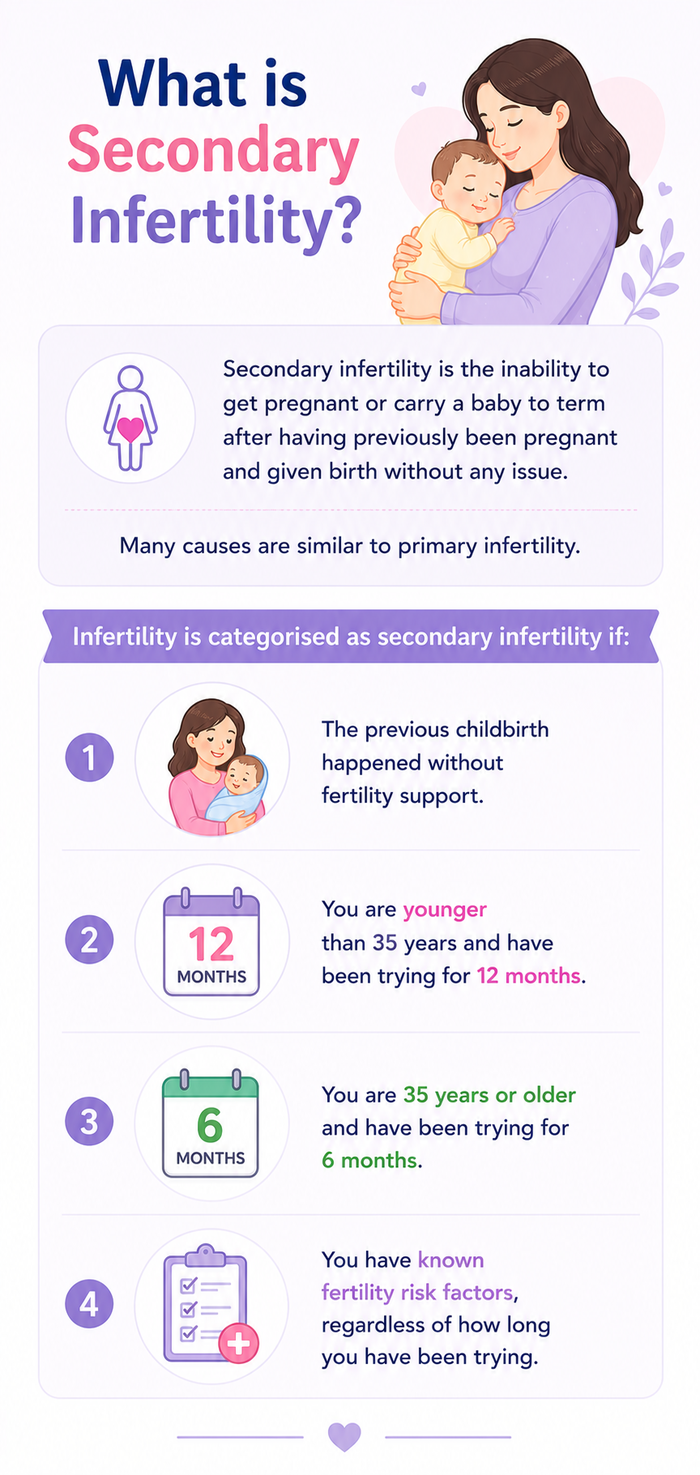
What is Secondary Infertility?
Secondary infertility refers to a condition in which you are unable to get pregnant or carry a baby to term after having previously been pregnant and given birth without any issue. Many of the causes of secondary infertility are similar to those of primary infertility.Infertility is categorised as secondary infertility if the following criteria are met:
- The previous childbirth happened without fertility support
- You are younger than 35 years and have been trying for 12 months
- You are 35 years or older and have been trying for 6 months
- You have known fertility risk factors, regardless of how long you have been trying
Why Can It Become Harder To Conceive the Second Time?
The following factors may contribute to secondary infertility:1. Age-related changes
Age is one of the major factors influencing fertility for both genders.
As you age, your egg quality and quantity decrease. In your late thirties, you will notice the signs of egg decline becoming much more apparent.
Male fertility also changes with age, although the decline in reproductive parameters (sperm quality, movement, and DNA integrity) is generally more gradual than in women.
2. Ovulation issues
Having regular ovulation supports your ability to conceive.
The following are the medical conditions that may affect ovulation:
- Polycystic ovary syndrome (PCOS)
- Thyroid disorders
- Raised prolactin levels
- Premature ovarian insufficiency
3. Fallopian tube damage
Healthy fallopian tubes allow the egg and sperm to meet.
Damage may occur due to:
- Pelvic inflammatory disease
- Previous abdominal or pelvic surgery
- Pelvic adhesions
- Previous ectopic pregnancy
4. Conditions affecting the uterus
Some conditions make implantation more difficult.
These include:
- Fibroids affecting the uterine cavity
- Endometrial polyps
- Adenomyosis
- Endometriosis
5. Changes in sperm quality
Secondary infertility is not only related to female reproductive health. The following are the causes of secondary infertility in male partners:
- Decreased sperm count
- Poor sperm motility
- Changes in sperm shape
- Ageing
- Certain medical conditions
- Smoking
- Obesity
- Excessive alcohol intake
- Environmental factors
Can Your Previous Pregnancy Affect Future Fertility?
In some cases, events during or after a previous pregnancy may influence future fertility.Possible factors include:
- Pelvic infection after childbirth
- Complications following miscarriage or abortion
- Scar tissue after pelvic surgery
- Adhesions inside the uterus or pelvis
Support Your Reproductive Health With Lifestyle Modifications
Changes in your lifestyle may help to improve your overall reproductive health. These are:- Maintain a healthy body weight
- Stop smoking
- Limit alcohol intake
- Exercise regularly without overtraining
- Include fruits, vegetables, whole grains, and adequate protein
- Manage your stress and maintain your mental well-being
When Should You Consult a Fertility Specialist?
Secondary infertility is more common than many couples realise, but it is often treatable once identified. A timely medical evaluation is necessary. It helps you to know the cause behind it and explore suitable options with your healthcare team.
You’re not alone in your journey when trying to conceive. Join our supportive community to connect with others, share experiences, and find encouragement every step of the way.
FAQs on Why Am I Not Getting Pregnant With My Second Child? Secondary Infertility Explained
- Can you have secondary infertility even if your first pregnancy was natural?
Yes. Fertility can change over time. A previous natural pregnancy does not rule out secondary infertility. - Does breastfeeding delay a second pregnancy?
Yes. Breastfeeding may suppress ovulation, particularly if your periods have not returned. Once regular ovulation resumes, fertility generally improves. - Is fertility treatment always needed for secondary infertility?
No. Treatment depends on the underlying cause. Some couples conceive after treating a medical condition or making lifestyle changes, while others may benefit from fertility treatments recommended by a specialist.