
In this article:
What Is the Best Pumping Schedule for Working Mothers?
Your pumping schedule at work should mirror how often your baby feeds. Here's a practical framework:
Pumping Schedule for an 8-Hour Workday (9 AM to 6 PM):
- Session 1: 10:30–11 AM
- Session 2: 1:00–1:20 PM (can align with lunch break)
- Session 3: 3:30–3:50 PM
Why Double Electric Pumps Save Time
A double electric pump cuts session time in half compared to single pumping and stimulates both breasts simultaneously, producing more milk per session.
How to Store Breast Milk Safely at the Workplace
Proper milk storage protects your baby and preserves the nutritional quality of your expressed milk.
As per CDC recommendations, storage guidelines are:
Breast Milk Storage Guidelines
| Location | Duration |
| Room temperature (up to 25°C) | 4 hours |
| Insulated cool bag with ice packs | Up to 24 hours |
| Refrigerator (4°C or below) | Up to 4 days |
| Freezer | Up to 6 months (ideally) |
Using Cool Bags and Ice Packs
In offices where a dedicated refrigerator may not always be available, carry a well-insulated cool bag with reusable ice packs.
Labelling and Storage Tips
Label each bottle or bag with the date and time. Use the oldest milk first.Store milk in BPA-free bottles or breast milk storage bags. Do not refreeze previously thawed milk.
Why Is My Milk Supply Dropping After Returning to Work?
A dip in supply after returning to work is common, and most cases are reversible. The usual causes:
- Missed or shortened pumping sessions due to meetings or workload
- Stress and fatigue, which can temporarily affect the let-down reflex
- Inadequate hydration is easy to neglect during a busy workday
- Infrequent feeding at night, if your baby starts sleeping longer, your total daily milk removal decreases
How to Increase Breast Milk Supply After Returning to Work
- Add a pumping session or extend existing ones by 5 minutes.
- Do a power pump once daily: 20 minutes on, 10 off, 10 on, 10 off, 10 on for 3 to 5 consecutive days. This mimics cluster feeding and stimulates production.
- Feed your baby directly at the breast during all non-work hours, including early morning and night.
- Stay hydrated; aim for 8–10 glasses of water daily.
- Eat enough calories. Breastfeeding burns approximately 500 extra calories per day.
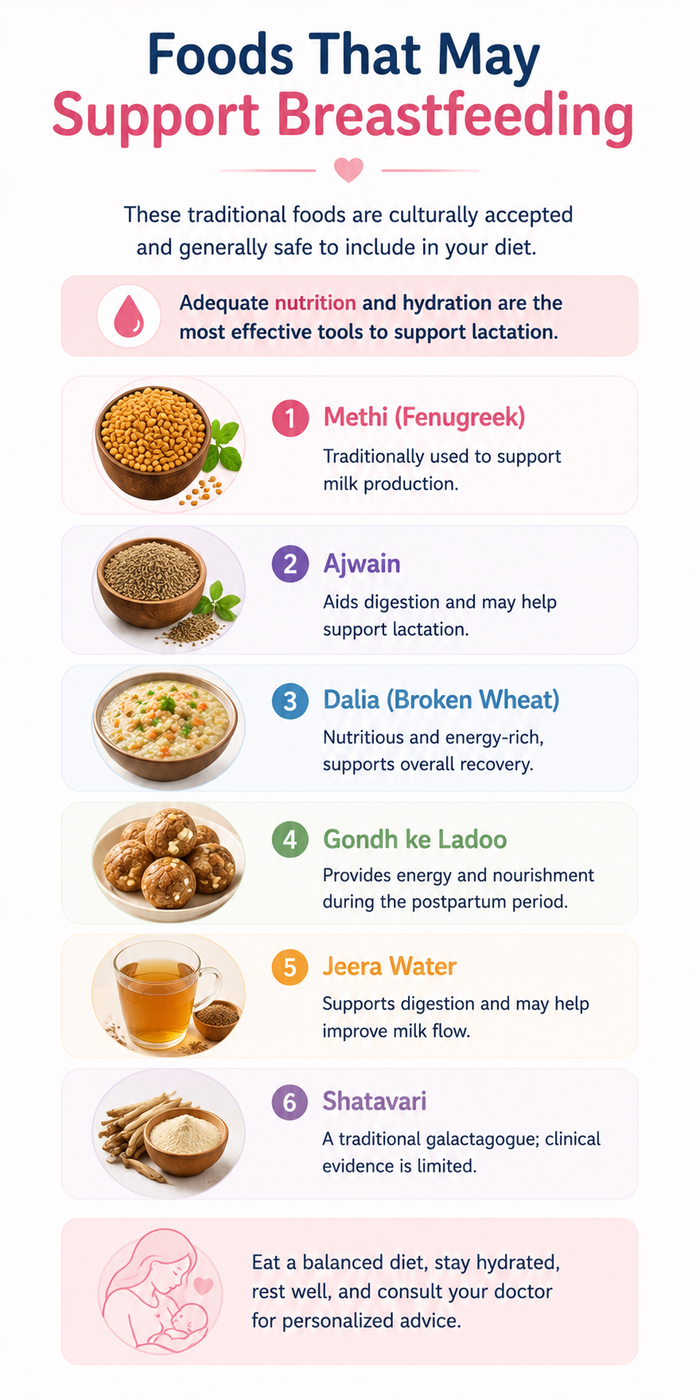
Foods That May Support Breastfeeding
Foods traditionally used to support lactation, such as methi (fenugreek), ajwain, dalia (broken wheat), gondh ke ladoo, and jeera water, are culturally accepted and generally safe. Clinical evidence for galactagogues (shatavari) is limited, but adequate nutrition and hydration remain the most effective tools.
How to Handle Let-Down Issues While Pumping at Work
The let-down reflex (the release of milk) can be harder to trigger in a work environment due to stress or unfamiliar surroundings.Practical strategies:
- Look at a photo or video of your baby before and during pumping.
- Use the same pump flanges, cushions, and settings you use at home to build a sensory routine.
- Apply a warm compress to your breasts for 2–3 minutes before pumping.
- Practice slow, deep breathing at the start of each session.
- Use a hands-free pumping bra so you can relax, read, or take a short work call during the session.
Whether you’re pregnant, a new mom, or navigating postpartum, you don’t have to do it alone. Join our support group to connect, share, and support one another.
FAQs on How Do I Pump at Work and Keep My Milk Supply Up?
- How many times should I pump at work to maintain supply?
Pump every 2–3 hours, which works out to 2–3 sessions during an 8-hour workday. The total number of milk removals in 24 hours (pumping + direct breastfeeding) should ideally match your baby's feeding frequency, typically 8–12 times per day for babies under 6 months. - How much milk should I pump per session at work?
Output varies widely. A typical session yields 60–150 ml per breast, but many mothers produce less. Total daily pump output for a working mother averages 350–500 ml over a full workday. If your baby is growing well and having 6+ wet diapers a day, your supply is adequate regardless of pump output numbers. - Can I breastfeed and pump simultaneously to increase supply?
Yes. Feeding your baby on one breast while pumping the other, a technique called simultaneous pumping, can increase output and stimulate supply. This is particularly useful during early morning feeds or on weekends to build a milk freezer reserve before returning to work.