What Is Postpartum Thyroiditis?
Postpartum thyroiditis is an autoimmune condition that occurs when the immune system becomes more active after childbirth and temporarily attacks the thyroid gland.
It usually shows up within the first year after delivery, most often during the first 8 months postpartum. It can change how your thyroid produces and releases hormones.
The American Thyroid Association estimates that postpartum thyroiditis occurs after approximately 8% of pregnancies.
The Phases of Postpartum Thyroiditis
At first, your thyroid may become overactive and release too much hormone into the bloodstream. Later, it becomes underactive as hormone levels decrease. Afterwards, thyroid function gradually returns to normal.
However, some women develop permanent hypothyroidism and may need long-term treatment. It is important to know that not every mother goes through all phases. For many women, thyroid function slowly returns to normal without lasting problems.
Overactive Thyroid After Childbirth
Postpartum thyroiditis can make your thyroid work too fast for a short time after delivery. When this happens, excess thyroid hormone enters your bloodstream and speeds up your body’s processes. It usually occurs 1 to 6 months after childbirth.
You may notice the following signs of an overactive thyroid after childbirth:
- Feeling anxious or irritable
- Rapid heartbeat or palpitations
- Heat intolerance or feeling unusually warm
- Increased sweating
- Trouble sleeping
- Weight loss despite normal eating habits
- Feeling restless or shaky
Underactive Thyroid After Childbirth
After the overactive phase, some women may develop an underactive thyroid, a condition known as hypothyroidism. During this stage, the thyroid does not produce enough hormones. It can often develop 4 to 8 months after delivery.
As a result, women may notice the following signs of an underactive thyroid after childbirth.
- Persistent tiredness
- Weight gain
- Feeling cold more often
- Dry skin
- Reduced breast milk supply
- Constipation
- Difficulty concentrating or brain fog
- Low mood or depression-like symptoms
- Muscle aches and weakness
Why Is Postpartum Thyroiditis Often Missed?
Postpartum thyroiditis can be hard to spot because its signs look very similar to normal postpartum changes. Some symptoms of postpartum thyroiditis, particularly fatigue, low mood, and difficulty concentrating, can resemble postpartum depression. In some cases, both conditions may occur together. Because of this, many mothers may not realise that they have an underlying thyroid condition.
Who Is More Likely to Develop Postpartum Thyroiditis?
Postpartum thyroiditis can happen to any mother after childbirth. But certain health conditions and medical histories may increase the likelihood.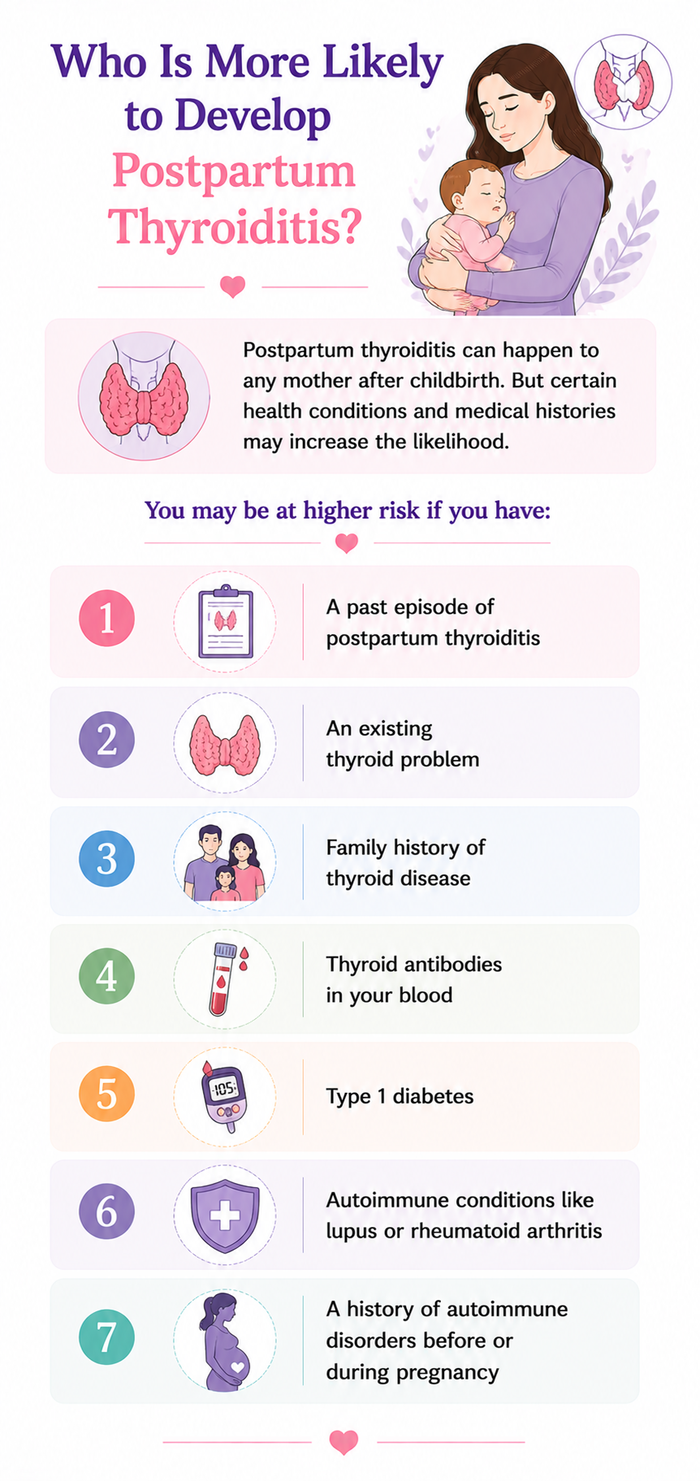
You may be at higher risk if you have:
- A past episode of postpartum thyroiditis
- An existing thyroid problem
- Family history of thyroid disease
- Thyroid antibodies in your blood
- Type 1 diabetes
- Autoimmune conditions like lupus or rheumatoid arthritis
- A history of autoimmune disorders before or during pregnancy
How Is Postpartum Thyroiditis Managed?
Postpartum thyroiditis is managed depending on which phase you are in and how severe your symptoms are.
| Phase | Common Management Approaches |
| Overactive Thyroid (Hyperthyroid Phase) | Monitoring symptoms, regular thyroid function tests, and medications such as beta-blockers to relieve symptoms when needed |
| Underactive Thyroid (Hypothyroid Phase) | Thyroid hormone replacement therapy for some women, periodic blood tests, and follow-up appointments to assess recovery |
| Recovery Phase | Periodic thyroid testing to confirm recovery and identify any long-term thyroid problems |
Self-Care Tips During Postpartum Thyroiditis
These simple steps may help support your thyroid health during the postpartum period.
- Attend your postpartum checkups
- Take thyroid medications as prescribed
- Do not ignore persistent health changes
- Get thyroid tests if your doctor recommends them
- Eat a balanced diet and stay hydrated
- Rest whenever possible
- Contact your doctor if symptoms affect your daily routine
When Should You Speak With a Doctor?
It is important to seek medical advice if you notice the following symptoms that are persistent, worsening, or affecting your daily activities.
- Severe or ongoing fatigue
- Persistent heart palpitations or a rapid heartbeat
- Significant or unexplained weight changes
- Symptoms that interfere with daily life or caring for your baby
- Ongoing low mood or depression-like symptoms
- Any concerns about your thyroid health during the postpartum period
Whether you’re pregnant, a new mom, or navigating postpartum, you don’t have to do it alone. Join our support group to connect, share, and support one another.
FAQs on Postpartum Thyroiditis: What New Mothers Should Know
- How is postpartum thyroiditis diagnosed?
Doctors diagnose postpartum thyroiditis through a review of symptoms, medical history, and blood tests that measure thyroid hormone levels and thyroid-stimulating hormone (TSH). - How long does postpartum thyroiditis last?
For many women, postpartum thyroiditis improves within 12 to 18 months after symptoms begin. However, some may develop long-term hypothyroidism and require ongoing treatment. - Can postpartum thyroiditis return after future pregnancies?
Yes. Women who have had postpartum thyroiditis once have a higher risk of experiencing it again after future pregnancies. Regular follow-up with a healthcare provider may help monitor thyroid health.