In this article:
What Is Pulmonary Embolism?
Pulmonary embolism is a condition that occurs when a blood clot blocks one of the blood vessels in your lungs. The clot often starts in the deep veins of your legs or pelvis and then travels through the bloodstream to the lungs. This can reduce the amount of oxygen reaching your body, making breathing difficult.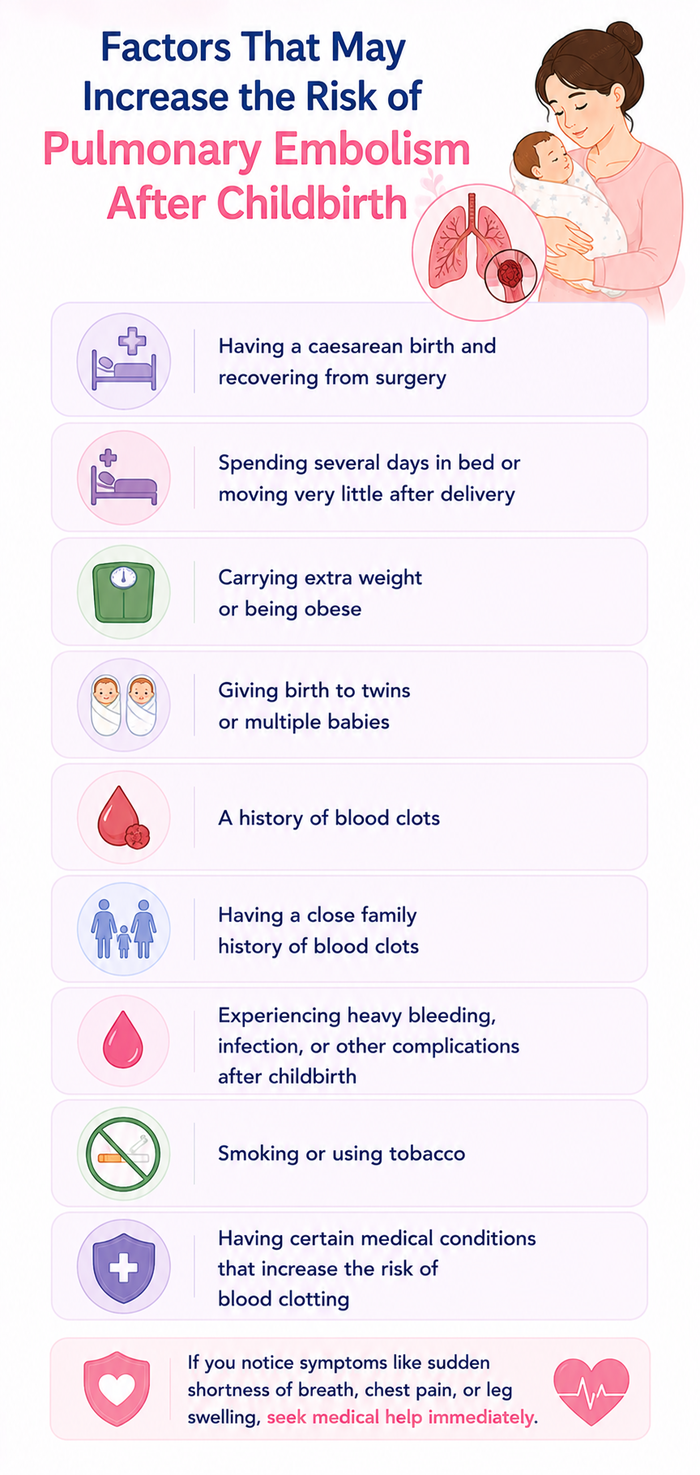
Factors That May Increase the Risk of Pulmonary Embolism After Childbirth
The following factors can increase the risk of pulmonary embolism during the postpartum period:- Having a caesarean birth and recovering from surgery
- Spending several days in bed or moving very little after delivery
- Carrying extra weight or being obese
- Giving birth to twins or multiple babies
- A history of blood clots
- Having a close family history of blood clots
- Experiencing heavy bleeding, infection, or other complications after childbirth
- Smoking or using tobacco
- Having certain medical conditions that increase the risk of blood clotting
Signs That May Indicate a Pulmonary Embolism
The following are the signs that may indicate a pulmonary embolism:- Sudden shortness of breath or difficulty breathing
- Chest pain that may worsen with deep breathing
- A fast heartbeat
- Feeling dizzy, lightheaded, or faint
- An unexplained cough that does not improve
- Coughing up blood, although this is less common
- Unusual tiredness or weakness that feels different from normal postpartum fatigue
- A feeling that something is seriously wrong or worsening quickly
Warning Signs of Deep Vein Thrombosis
In some women, a blood clot may develop in the deep veins of the leg or pelvis before reaching the lungs. This condition is called deep vein thrombosis (DVT).Paying attention to these symptoms may help identify a problem early.
- Swelling in one leg, especially if it appears suddenly
- Pain or tenderness in the calf or thigh
- Warmth in the affected leg
- Redness or discolouration of the skin
- Leg pain that worsens with walking or standing
Treatment for Pulmonary Embolism After Delivery
The treatment plan depends on the size of the clot, the severity of symptoms, and the mother's overall health.Blood-thinning medications
Doctors commonly prescribe blood thinners, also called anticoagulants, to prevent the clot from growing and to reduce the chance of new clots forming. These medicines may be given as injections or tablets, depending on the situation.Oxygen therapy
If your oxygen levels are low, extra oxygen may be given through a mask or nasal tube to help improve breathing and support the body's oxygen supply.Hospital Care and monitoring
Many women need to stay in the hospital for monitoring, especially if symptoms are severe. Healthcare providers may regularly check oxygen levels, heart rate, blood pressure, and breathing.Can Pulmonary Embolism Be Prevented?
Pulmonary embolism cannot always be prevented, but certain steps may help lower the risk after childbirth. These measures are especially important during the first few weeks after delivery.- Start moving around as soon as your doctor advises, even if it is just short walks at home
- Drink enough fluids to stay hydrated
- Avoid sitting or lying down for long periods without moving
- Follow your doctor's instructions after a cesarean birth or a complicated delivery
- Wear compression stockings if your doctor recommends them to improve blood flow in the legs
- Take blood-thinning medicines exactly as prescribed if you have a higher risk of blood clots
- Attend postpartum check-ups and discuss any new symptoms with your healthcare provider
When to Speak With Your Doctor
You Should Speak With Your Doctor If- Shortness of breath does not improve or becomes worse
- Chest pain develops, especially with deep breathing
- Swelling, pain, or redness appears in one leg
- Dizziness, fainting, or unusual weakness occur
- The heartbeat feels very fast or irregular
- Coughing up blood occurs
- Symptoms suddenly appear or become more severe
- Something about your recovery does not feel right
Whether you’re pregnant, a new mom, or navigating postpartum, you don’t have to do it alone. Join our support group to connect, share, and support one another.
FAQs on Pulmonary Embolism After Childbirth: Symptoms Every New Mother Should Know
- Can pulmonary embolism occur after a normal vaginal delivery?
Yes. Although the risk may be higher after a cesarean birth, pulmonary embolism can also occur after a normal vaginal delivery. Every new mother should be aware of unusual symptoms during the postpartum period. - How long after childbirth can pulmonary embolism develop?
The risk is generally highest during the first six weeks after delivery, but blood clots may occasionally occur later, depending on individual health factors. - Can breastfeeding continue during treatment for pulmonary embolism?
Many women can continue breastfeeding while receiving treatment, but the safety of specific medications should always be discussed with a healthcare professional.