In this article:
Is It Safe to Eat Peanuts During Pregnancy?
Peanuts are safe for most pregnant women. The NHS states that peanuts and other nuts are safe to eat during pregnancy unless a doctor has advised against it, or the woman has a nut allergy.Similarly, the British Society for Allergy and Clinical Immunology (BSACI) advises that all food allergens, including peanut and tree nuts, should be included in the diet throughout pregnancy unless there is a maternal food allergy or dietary restriction.
The only exception is a personal peanut allergy. Women who are allergic to peanuts should continue avoiding them completely during pregnancy, as an allergic reaction can be serious for both mother and baby.
Does Eating Peanuts During Pregnancy Cause Allergy in the Baby?
From 1998 to 2000, health bodies including the American Academy of Pediatrics advised allergy-prone mothers to avoid peanuts during pregnancy and breastfeeding. That guidance was rescinded by 2008.A review of maternal peanut consumption and childhood allergy risk found that current evidence does not support recommending pregnant women avoid peanuts as a strategy to prevent childhood peanut allergy, regardless of the mother's allergy history. In fact, the study has linked maternal peanut consumption during pregnancy to a lower risk of the child developing a peanut allergy.
The NIH is now running a dedicated trial (ESCAPE) to formally test whether eating peanuts and eggs during pregnancy and breastfeeding protects high-risk babies from developing early markers of food allergy. Until stronger data emerges, doctors do not recommend cutting peanuts from the pregnancy diet as an allergy-prevention step.
What Are the Benefits of Eating Peanuts During Pregnancy?
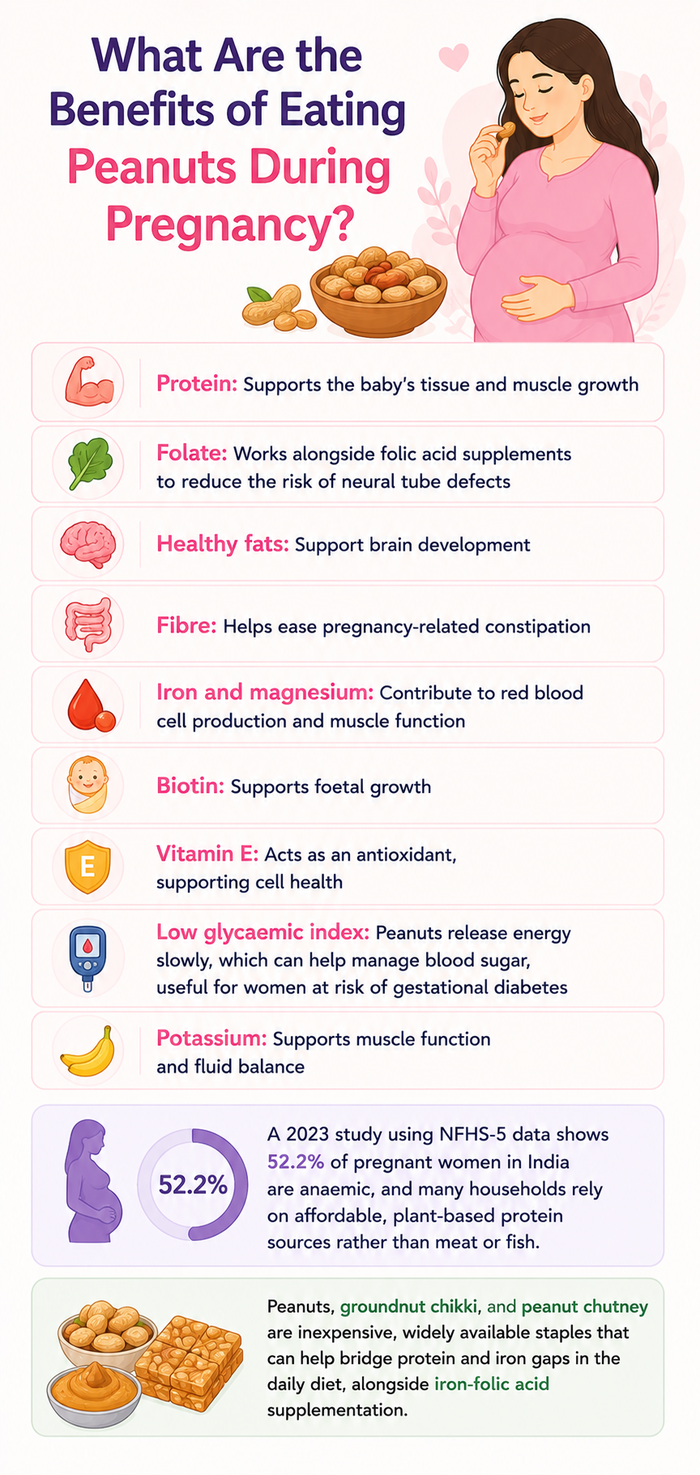
Peanuts are a compact source of nutrients:- Protein: Supports the baby's tissue and muscle growth
- Folate: Works alongside folic acid supplements to reduce the risk of neural tube defects
- Healthy fats: Support brain development
- Fibre: Helps ease pregnancy-related constipation
- Iron and magnesium: Contribute to red blood cell production and muscle function
- Biotin: Supports foetal growth
- Vitamin E: Acts as an antioxidant, supporting cell health
- Low glycaemic index: Peanuts release energy slowly, which can help manage blood sugar, useful for women at risk of gestational diabetes
- Potassium: Supports muscle function and fluid balance
Peanuts, groundnut chikki, and peanut chutney are inexpensive, widely available staples that can help bridge protein and iron gaps in the daily diet, alongside iron-folic acid supplementation.
What Are the Risks of Eating Peanuts During Pregnancy?
For most women, peanuts carry minimal risk during pregnancy. The risks that do exist are:- Allergic reaction: Women with a diagnosed peanut allergy can have a severe reaction, including anaphylaxis, which is a medical emergency for both mother and baby. Peanuts should be avoided completely in this case.
- Aflatoxin contamination: Poorly stored or old peanuts can develop mould that produces aflatoxin, a toxin linked to liver damage. This is a particular risk with loose, unpackaged peanuts sold in open containers, common in Indian markets, compared to sealed, packaged ones.
- Excess sodium and sugar: Salted peanuts, peanut candy, and flavoured peanut snacks add unnecessary sodium and sugar to the diet, which can contribute to high blood pressure and excess weight gain in pregnancy.
- Digestive discomfort: Eating large quantities can cause bloating or acidity, which pregnant women may already be prone to.
How Many Peanuts Can You Eat in a Day During Pregnancy?
There's no official upper limit specific to pregnancy, but moderation matters as with any food. A palm-sized handful (about 30g) of plain, unsalted or dry-roasted peanuts a day is a reasonable serving.Avoid:
- Heavily salted or sugar-coated peanut snacks (linked to excess sodium and calorie intake)
- Raw or old peanuts that may carry mould and aflatoxin contamination
- Peanuts if you have any signs of an allergic reaction, such as itching, swelling, or breathing difficulty
Peanuts remain a safe, affordable, and nutrient-dense addition to the pregnancy diet for most women, and current medical guidance advises against avoiding them without a diagnosed allergy.
Whether you’re pregnant, a new mom, or navigating postpartum, you don’t have to do it alone. Join our support group to connect, share, and support one another.
FAQs on Can You Eat Peanuts During Pregnancy? Benefits and Risks
- Do peanuts cause miscarriage or birth defects?
No. There is no scientific evidence linking peanut consumption in pregnancy to miscarriage or birth defects. - Can pregnant women eat peanuts daily?
Yes, a moderate daily serving (around 30g) of plain peanuts is safe for most pregnant women without a peanut allergy. - Is peanut butter safe during pregnancy?
Yes. Peanut butter made from roasted peanuts is safe during pregnancy and carries the same benefits as whole peanuts. Choose plain varieties without added sugar or hydrogenated oils.