In this article:
What is a Urinary Catheter?
A urinary catheter is a very small, flexible tube used for draining urine from the bladder. It connects the bladder to a collection bag, thus making it easy to keep track of urine output.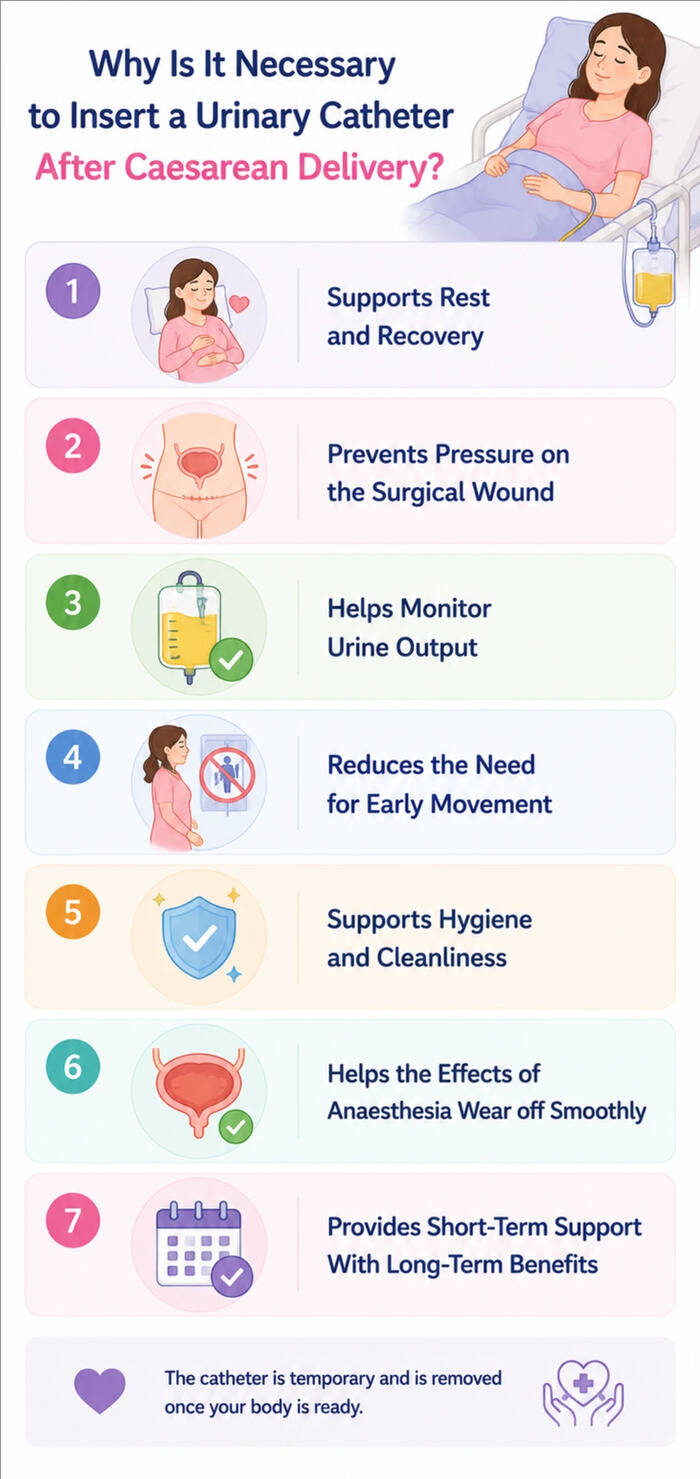
Why Is It Necessary to Insert a Urinary Catheter After Caesarean Delivery?
A urinary catheter may be needed after a caesarean delivery for the following reasons:Supports Rest and Recovery
A catheter allows your body to rest immediately after surgery without the need to get up frequently. Since movement is limited in the first few hours, it ensures you stay comfortable while your body recovers. This helps conserve energy and promotes smoother healing.Prevents Pressure on the Surgical Wound
After delivery, the uterus and the surrounding tissues are weak and sensitive. A full bladder can create pressure on the surgical site. The catheter keeps the bladder empty, helping reduce strain and gently supporting internal healing.Helps Monitor Urine Output
Doctors and nurses track urine output closely after surgery. This helps them understand how well your body is functioning, including hydration levels and kidney activity. It provides important medical information that supports safe recovery.Reduces the Need for Early Movement
In the early recovery stage, standing and walking may feel difficult. The catheter removes the need to visit the bathroom, allowing you to regain strength gradually before becoming mobile.Supports Hygiene and Cleanliness
Maintaining cleanliness is important after surgery. The catheter helps keep the area dry and clean, reducing discomfort and supporting overall care during the initial recovery period.Helps the Effects of Anaesthesia Wear off Smoothly
Anaesthesia can temporarily affect bladder control. A catheter ensures the bladder continues to empty properly until normal sensation and control return, making the transition smoother.Provides Short-Term Support With Long-Term Benefits
Although temporary, the catheter plays a key role in preventing complications and ensuring a stable recovery environment. It is removed once your body is ready, allowing a safe return to normal bladder function.What to Expect While the Catheter is in Place
You can expect the following during catheter placement:- The catheter is inserted at the time of surgery or right afterwards
- There will be no discomfort during insertion since the procedure is performed under anaesthesia
- Urine is drained automatically through a tube to empty the bladder, which is collected in a special bag
- Nurses often monitor the urine output and empty the bag frequently
Safety and Care Consideration
Your well-being is always a top priority throughout your recovery process. Although catheters are quite common and managed with care, it is always best to be mindful and share information with your doctor.- Always adhere to your doctor’s guidelines for activity and hydration
- Let your nurse know if you experience any pain or unusual symptoms
- Keep the supporting area of the catheter clean
- Do not manipulate the catheter tube by yourself
Whether you’re pregnant, a new mom, or navigating postpartum, you don’t have to do it alone. Join our support group to connect, share, and support one another.
FAQs on Why a Urine Catheter is Used After Caesarean Birth
- Is the catheterisation procedure painful?
Insertion of the catheter is done under anaesthesia, which means you don't feel any pain. Generally, the procedure is quite comfortable if the patient cooperates well. - Can I walk with a catheter?
Yes, you can usually walk with a urinary catheter if your doctor approves. Remember to secure the tubing, empty the bag regularly, avoid tugging, wear loose clothing, and stop if you feel pain or leakage. - Can a catheter cause a urinary infection?
Yes, a catheter may cause a urinary infection if kept inserted for a long time. This is because germs may enter through the tube into the urinary tract.