In this article:
Breastfeeding women also experience changes in thirst reflexes because of the let-down reflex.
Staying hydrated, along with a healthy diet and enough rest, supports your body's increased fluid needs during breastfeeding.
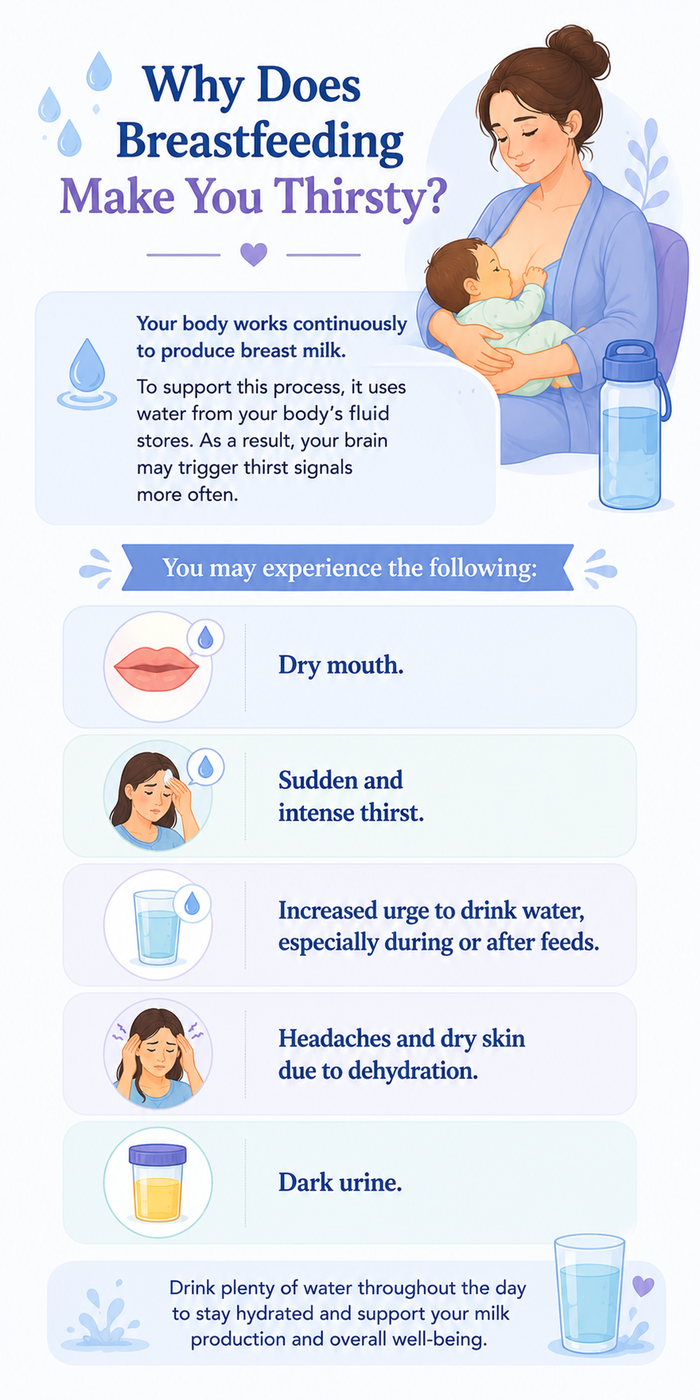
Why Does Breastfeeding Make You Thirsty?
Your body works continuously to produce breast milk.
To support this process, it uses water from your body's fluid stores. As a result, your brain may trigger thirst signals more often.
You may experience the following:
- Dry mouth
- Sudden and intense thirst
- Increased urge to drink water, especially during or after feeds
- Headaches and dry skin due to dehydration
- Dark urine
There is no fixed amount that suits everyone. Your fluid needs can vary depending on:
- Frequency of baby feeding
- The weather
- Your activity level
- Your overall health
Signs That You Are Drinking Enough
| Pale yellow urine | Good hydration |
| Comfortable thirst levels | Fluid intake is likely adequate |
| Normal energy levels | Your body is getting enough fluids |
Can Hormones Increase Thirst During Breastfeeding?
Many individuals experience sudden thirst, sometimes immediately after drinking fluids or just before breastfeeding. You may notice such an increase in thirst sensation just when you start to breastfeed.This may be due to changes in hormone levels following pregnancy. These fluctuations may influence your thirst responses.
You generally experience sudden thirst once your baby latches onto your breast, which is linked to the let-down reflex.
During the time of lactation, hormones such as oxytocin and prolactin are released to support milk formation and secretion.
Oxytocin may also trigger a sudden feeling of thirst or make you feel sleepy.
In this way, your body reminds you to replenish its fluids and restore its energy during breastfeeding.
Could Dehydration Be the Reason?
If you do not replenish the lost fluids, dehydration can develop. So, you may feel thirstier.The following are the signs of dehydration to watch for:
- Dark yellow urine
- Dry lips and skin
- Dizziness or lightheadedness
- Headaches
- Unusual fatigue
Foods and Drinks That Can Support Hydration
Taking adequate fluids and hydrating fruits can help you manage your dehydration and thirst when you are breastfeeding.You can also get fluids from:
- Milk
- Soups
- Coconut water
- Fresh fruits with high water content
- Homemade buttermilk
- Fruit shakes
Hydrating Food Options
| Watermelon | High water content |
| Cucumber | Supports hydration |
| Soup | Provides fluids and nutrients |
| Coconut water | Replaces fluids naturally |
When Should You Speak With a Doctor?
Feeling thirsty while breastfeeding is usually normal.However, medical advice may be helpful if you:
- Feel extremely thirsty all the time
- Notice persistent dizziness
- Pass very dark urine despite drinking fluids
- Develop unexplained weight loss
- Feel unwell in general
Simple Tips to Manage Thirst While Breastfeeding
The following are small habits that help you make a noticeable difference:- Keep a bottle of water nearby during feeds
- Drink fluids regularly throughout the day
- Avoid taking fried and junk foods
- Limit your caffeine intake
- Include water-rich foods in your meals
- Increase fluid intake during hot weather
- Monitor the colour of your urine
- Avoid outings in hot weather
- Include a fresh vegetable salad in your diet
Whether you’re pregnant, a new mom, or navigating postpartum, you don’t have to do it alone. Join our support group to connect, share, and support one another.
FAQs on Why Am I So Thirsty While Breastfeeding?
- Is it normal to feel thirsty while breastfeeding?
- It is common to feel thirstier because your body uses extra fluid to make breast milk. Hormonal changes during milk release may trigger sudden thirst. Many mothers notice these symptoms while nursing.
- What should I drink while breastfeeding?
Water is the best everyday choice. Milk, soups, coconut water, buttermilk, and water-rich fruits can also support hydration. - When is thirst during breastfeeding not normal?
Consult your doctor if you experience extreme thirst that is accompanied by symptoms such as dizziness, frequent urination, blurred vision, weight loss, or excessive fatigue.