
In this article:
What Are the Early Signs of Coeliac Disease in Toddlers?
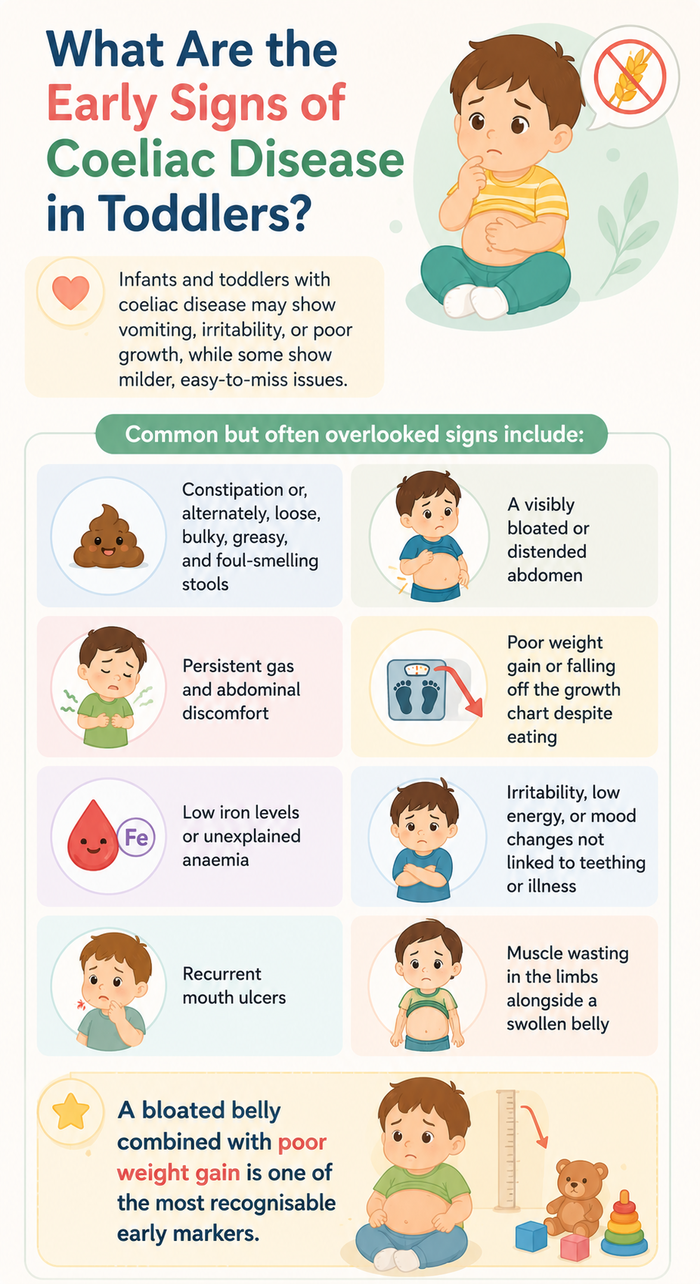
Infants and toddlers with coeliac disease may show vomiting, irritability, or poor growth, while some show milder, easy-to-miss issues.Common but often overlooked signs include:
- Constipation or, alternately, loose, bulky, greasy, and foul-smelling stools
- A visibly bloated or distended abdomen
- Persistent gas and abdominal discomfort
- Poor weight gain or falling off the growth chart despite eating
- Low iron levels or unexplained anaemia
- Irritability, low energy, or mood changes not linked to teething or illness
- Recurrent mouth ulcers
- Muscle wasting in the limbs alongside a swollen belly
Less obvious symptoms: A child may continue to eat but gain weight slowly, lose weight, or drop across expected growth centiles. Poor nutrient absorption can also affect height. A toddler may appear smaller than expected for their age or stop gaining height at the usual rate.
Other hidden symptoms: Nutrient malabsorption may lead to iron-deficiency anaemia, which can cause tiredness, reduced energy, poor appetite, paleness, and unexplained vitamin or mineral deficiencies.
“Blood tests, followed by specialist evaluation and sometimes an intestinal biopsy, help confirm the diagnosis. Early treatment with a strict gluten-free diet allows normal growth and prevents long-term complications. “
Dr Lipi Sharma, Consultant, Obs & Gyn, ShardaCare-HealthCity
Why Do Parents Miss Coeliac Disease Symptoms in Toddlers?
Coeliac disease symptoms in toddlers are frequently mistaken for common childhood issues. Many children have mild symptoms that are easy to miss, such as excessive gas, abdominal pain, or constipation, which parents may attribute to teething, a viral stomach bug, or simple fussy eating.Dr Sharma noted that around a third of children with coeliac disease show no obvious symptoms at all, which delays diagnosis further. Blood testing can also be inconclusive in young children, since they often haven't eaten enough gluten for standard tests to reliably detect antibodies, making diagnosis harder before the age of two.
Family history adds to the risk; a first-degree relative with coeliac disease raises a child's risk to about 1 in 10.
Is Coeliac Disease Common in Indian Toddlers?
Coeliac disease is not rare in India, particularly in wheat-eating regions. A community-based study found a prevalence of roughly 1 in 96 children, with a strong regional link to wheat-heavy diets rather than genetics alone.Prevalence is markedly lower in southern India, where rice is the staple grain. The Indian Council of Medical Research (ICMR) has issued national guidelines recommending the IgA anti-tissue transglutaminase (anti-tTG) blood test as the first screening step for suspected coeliac disease, followed by a duodenal biopsy to confirm diagnosis in children with a positive result.
Dr Sharma says, given how central wheat-based foods like roti, paratha, and sooji are in North Indian toddler diets, unexplained growth faltering or persistent digestive symptoms warrant a coeliac screen rather than a wait-and-watch approach.
When Should a Toddler Be Tested For Coeliac Disease?
A paediatrician should be consulted if a toddler shows:- Persistent constipation or diarrhoea lasting more than two weeks
- A stalled or dropping growth curve
- Unexplained anaemia
- Prolonged tiredness
- A swollen abdomen alongside thin limbs
Recognising the quiet, easy-to-miss signs of coeliac disease in toddlers early allows timely testing and a gluten-free diet that lets the small intestine heal and the child grow normally.
Whether you’re pregnant, a new mom, or navigating postpartum, you don’t have to do it alone. Join our support group to connect, share, and support one another.
FAQs on Signs of Coeliac Disease in Toddlers Parents Often Miss
- At what age can coeliac disease symptoms appear in toddlers?
Symptoms can begin as soon as gluten-containing foods are introduced, typically between 6 months and 2 years of age. - Can a toddler have coeliac disease without diarrhoea?
Yes. Many toddlers show constipation, bloating, poor growth, or irritability instead of diarrhoea, or have no obvious symptoms at all. - Is coeliac disease curable?
There is no cure, but a strict, lifelong gluten-free diet controls the condition and allows the intestine to heal.