In this article:
Are Prawns Safe During Pregnancy?
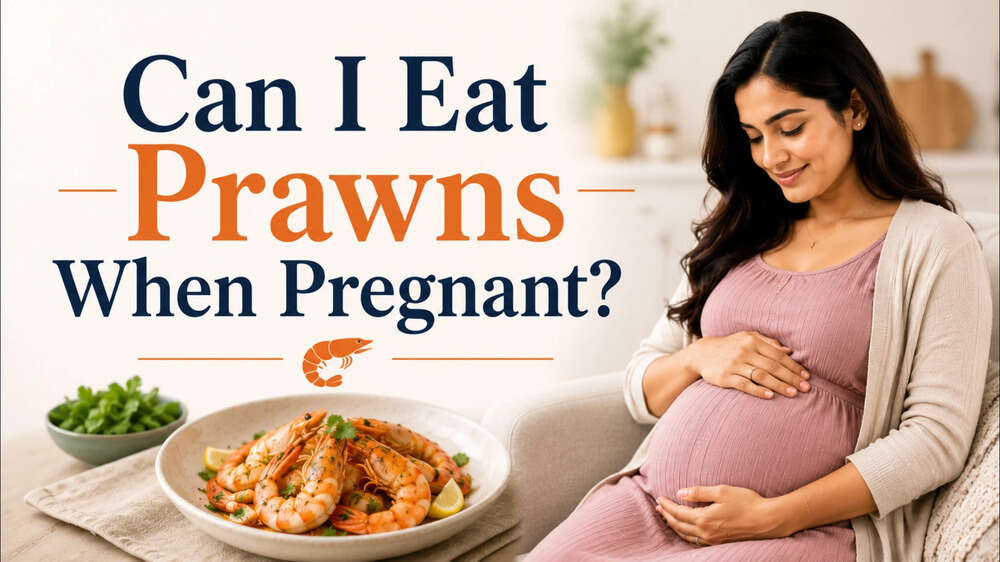
Yes, cooked prawns can be eaten during pregnancy.Prawns can be safely eaten during pregnancy provided they are thoroughly cooked. They provide protein, iodine and selenium, making them a useful addition to a diet.
The NHS lists cooked shellfish, including prawns, among foods that are safe during pregnancy, while advising women to avoid raw shellfish because of food-poisoning risks. NHS guidance also recommends thorough cooking to reduce the risk of harmful bacteria and viruses.
Dr Bharadwaj advises pregnant women to pay particular attention to preparation rather than avoiding prawns unnecessarily.
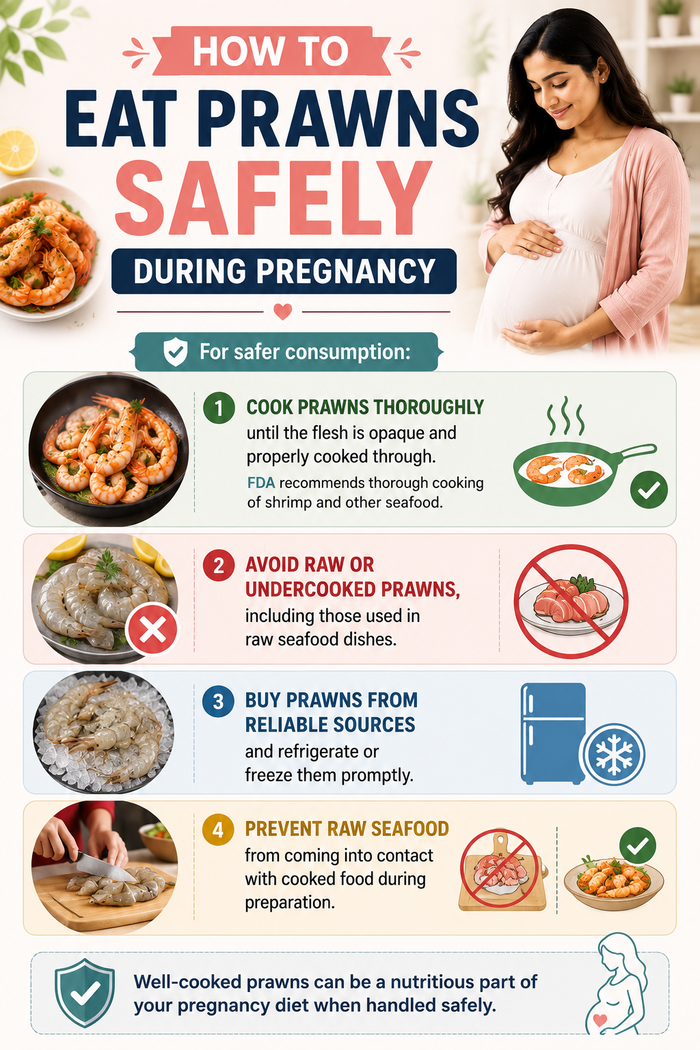
How To Eat Prawns Safely During Pregnancy
For safer consumption:- Cook prawns thoroughly until the flesh is opaque and properly cooked through. FDA recommends thorough cooking of shrimp and other seafood.
- Avoid raw or undercooked prawns, including those used in raw seafood dishes.
- Buy prawns from reliable sources and refrigerate or freeze them promptly.
- Prevent raw seafood from coming into contact with cooked food during preparation.
Are Prawns Nutritious During Pregnancy?
Prawns are low in fat and provide nutrients including iodine, selenium and zinc. Seafood can also contribute protein and omega-3 fatty acids to the diet, although oily fish such as salmon and sardines are richer sources of long-chain omega-3s. ACOG notes that seafood can provide nutrients important during pregnancy.So, can you eat prawns when pregnant? Yes — when they are thoroughly cooked, safely stored and sourced hygienically. Prawns can form part of a balanced pregnancy diet, but raw or undercooked shellfish should be avoided. If you have a shellfish allergy or have specific dietary concerns, speak to your healthcare professional.
FAQs on Safety of Eating Prawns During Pregnancy
- Can I eat cooked prawns when pregnant?
Yes. Thoroughly cooked prawns can be eaten during pregnancy when they have been safely stored and prepared. - Can pregnant women eat raw prawns?
No. Raw or undercooked prawns should be avoided during pregnancy because of the risk of food poisoning.