In this article:
Common Monsoon Illnesses In Children
Monsoon-related illnesses usually fall into four groups:- Mosquito-borne diseases
- Water-borne infections
- Respiratory illnesses
- Skin infections
Last monsoon, I attended to a 5-year-old child who developed severe dengue after a few days of fever and body aches. The family initially assumed it was a seasonal viral infection and delayed seeking medical attention.
Dr Sidana's warning is important because dengue can escalate quickly.
According to the WHO, dengue is transmitted by infected mosquitoes and may cause high fever, severe headache, pain behind the eyes, muscle pain, joint pain and rash. As per the CDC, preventing mosquito bites is the best way to prevent dengue.
Why Respiratory Illnesses Rise In Monsoon
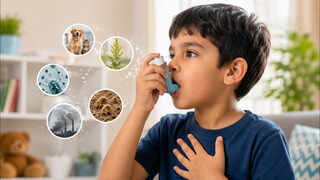
Humidity and indoor crowding can worsen coughs, wheezing and asthma symptoms.Monsoon brings a sharp rise in respiratory illnesses among children, including viral infections, bronchiolitis, pneumonia, wheezing episodes, and asthma flare-ups. Increased humidity, crowding, and exposure to infections and indoor allergens contribute to this seasonal surge.
Parents should watch for persistent cough, fast breathing, wheezing, chest retractions or difficulty feeding. These symptoms need medical attention, especially in infants or children with asthma.
How To Prevent Monsoon Diseases
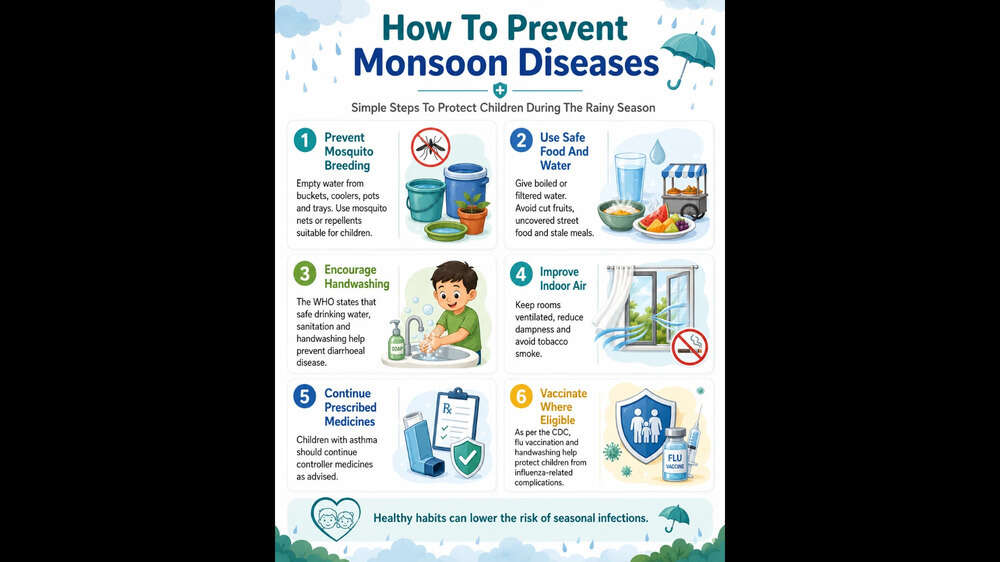
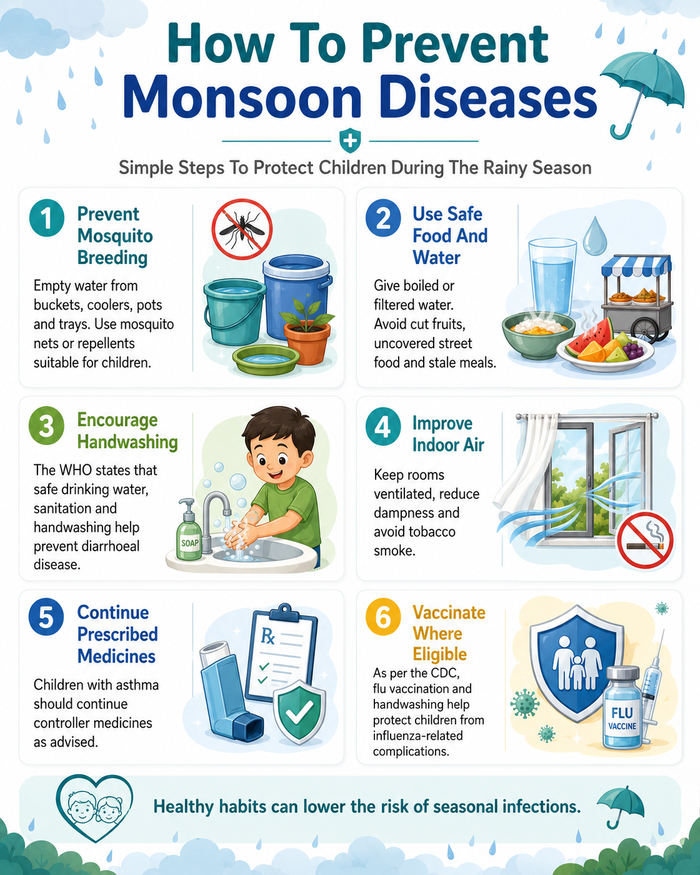
Follow these practical steps:- Prevent Mosquito Breeding: Empty water from buckets, coolers, pots and trays. Use mosquito nets or repellents suitable for children.
- Use Safe Food and Water: Give boiled or filtered water. Avoid cut fruits, uncovered street food and stale meals.
- Encourage Handwashing: The WHO states that safe drinking water, sanitation and handwashing help prevent diarrhoeal disease.
- Improve Indoor Air: Keep rooms ventilated, reduce dampness and avoid tobacco smoke.
- Continue Prescribed Medicines: Children with asthma should continue controller medicines as advised.
- Vaccinate Where Eligible: As per the CDC, flu vaccination and handwashing help protect children from influenza-related complications.
FAQs On Monsoon Diseases In Children
- When Should I Take My Child To A Doctor During Monsoon?
Seek care for persistent fever, breathing difficulty, dehydration, repeated vomiting, drowsiness, rash or worsening cough. - How Can I Prevent Dengue In Children?
Remove stagnant water, use mosquito nets or repellents, dress children in protective clothing and seek care early for fever with body aches.