
In this article:
First Trimester Pregnancy Tests
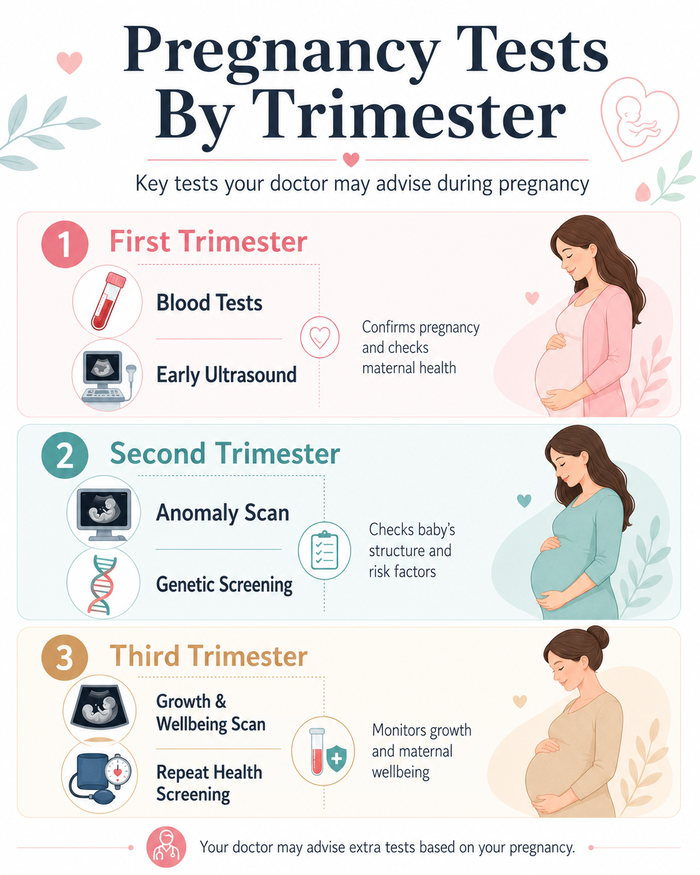
The first trimester usually focuses on confirming pregnancy, estimating gestational age and checking maternal health.- Blood Tests: These may check blood group, haemoglobin, Rh factor, thyroid function, blood sugar and infections. According to ACOG, routine lab tests during pregnancy help identify conditions that may increase complications and can often be treated during pregnancy.
- Early Ultrasound Scan: This helps confirm pregnancy location, foetal heartbeat, number of babies and estimated due date.
An early ultrasound scan helps confirm the pregnancy, estimate the due date, and assess foetal development.
Second Trimester Pregnancy Tests
The second trimester is important for checking the baby’s structure, growth and risk of certain conditions.- Anomaly Scan: Usually performed between 18 and 22 weeks, this scan evaluates the baby’s organs, growth and structural development. According to ACOG guidance, a detailed ultrasound evaluation at 18–22 weeks helps assess structural abnormalities.
- Genetic Screening: Some women may need screening for chromosomal conditions depending on age, family history, ultrasound findings or risk factors. The NHS explains that screening tests may include blood tests and ultrasound scans to look for health conditions that could affect the baby.
Third Trimester Pregnancy Tests
The third trimester focuses on growth, well-being, and preparing for delivery.- Growth and Wellbeing Scan: This scan may assess foetal growth,amniotic fluid, placental position and blood flow.
- Repeat Health Screening: “A screening test for gestational diabetes and repeat haemoglobin levels are done to ensure that the mother has not developed anaemia,” says Dr Kundra. The WHO notes that screening for anaemia, hyperglycaemia and blood pressure is important during antenatal care.
Timely testing throughout pregnancy enables early detection of complications and supports safer maternal and fetal outcomes.
FAQs On Pregnancy Tests You May Need During Each Trimester
- Are All Pregnancy Tests Compulsory?
No, but many are strongly recommended to monitor maternal and foetal health. Your doctor will guide you based on your pregnancy. - When Is The Anomaly Scan Done During Pregnancy?
The anomaly scan is usually done between 18 and 22 weeks to check the baby’s organs and structural development.