In this article:
Is Spotting Ever Normal In Pregnancy?
Light bleeding can happen very early, around the time the embryo implants in the uterus. According to ACOG, bleeding in the first trimester happens in 15 to 25 out of 100 pregnancies, and light spotting may occur after implantation.Implantation bleeding is much lighter than a routine period. It usually just comes and goes.
However, implantation bleeding usually happens around the missed period. Once pregnancy is confirmed, bleeding should be treated differently.
When Should You Call Your Doctor?
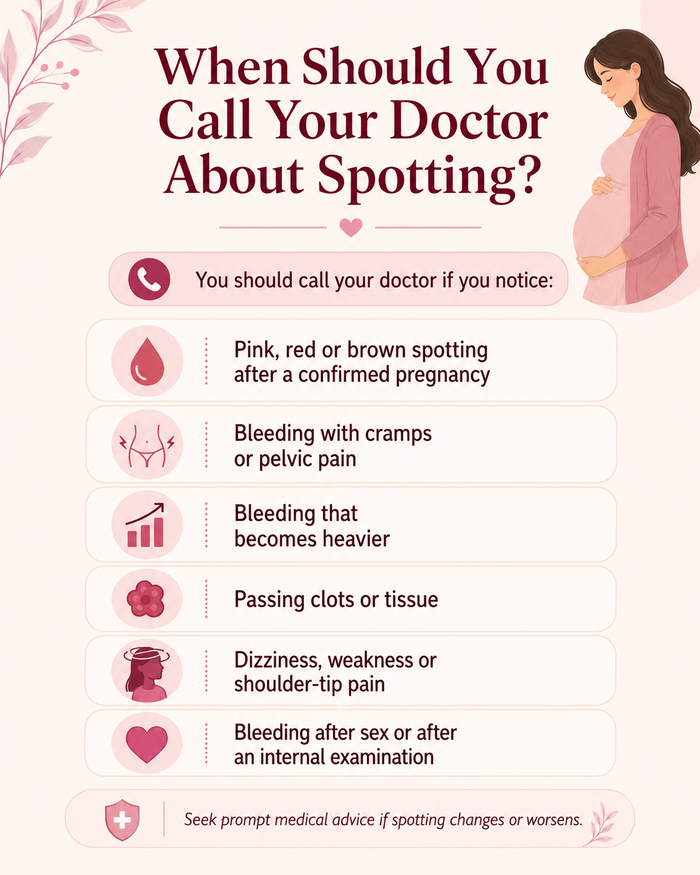
Dr Gupta warns, “Spotting is something women should be concerned about. It should be reported to the doctor immediately.”You should call your doctor if you notice:
- Pink, red or brown spotting after a confirmed pregnancy
- Bleeding with cramps or pelvic pain
- Bleeding that becomes heavier
- Passing clots or tissue
- Dizziness, weakness or shoulder-tip pain
- Bleeding after sex or after an internal examination
What Could Cause Spotting?
There can be several causes. Some may be minor, while others need urgent care.Dr Gupta explained, “Sometimes it may happen without a clear cause, but sometimes there may be a subchorionic haemorrhage, which is bleeding between the baby tissues and the uterine wall.”
According to Cleveland Clinic, a subchorionic haematoma can cause vaginal bleeding during pregnancy. The Merck Manual also notes that vaginal bleeding in early pregnancy needs prompt evaluation because causes can include miscarriage or ectopic pregnancy.
What Will The Doctor Check?
When we asked Dr Gupta, she said, “We may need to do an internal checkup, an ultrasound, and check the safety of the baby.”Your doctor may advise an examination, ultrasound, blood tests, Rh status check or follow-up scan depending on your symptoms and pregnancy stage.
Spotting in pregnancy is not always dangerous, but it is always worth reporting. Do not wait, self-diagnose or assume it is implantation bleeding after pregnancy is confirmed. Calling your doctor early can help identify the cause and protect both you and your baby.
FAQs On Spotting During Pregnancy
- Is Light Spotting Normal In Early Pregnancy?
Light implantation bleeding may happen very early, but any spotting after pregnancy is confirmed should be reported to your doctor. - Should I Go To The Doctor For Brown Spotting?
Yes. Brown spotting may be old blood, but it still needs medical advice during pregnancy.