What Does It Mean When a Baby Clenches Their Fists?
Clenched fists are one of the earliest hunger signals in newborns. Research identifies fist clenching, rooting (turning the head to the side), and hand-to-mouth movements as early hunger cues that appear well before crying begins. Feeding at this stage is easier and less stressful for both the baby and the mother.
Clenched fists also appear when a baby is overstimulated or tense. The context matters: fists during a feed point to hunger, whereas fists during play or in response to loud noise point to stress.
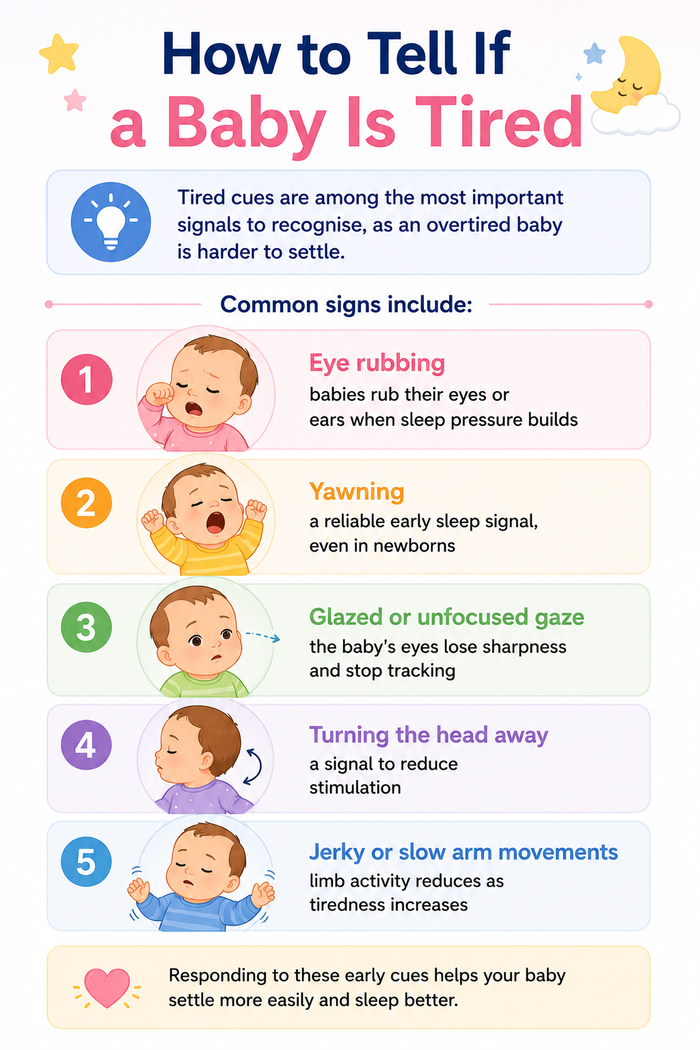
How to Tell If a Baby Is Tired
Tired cues are among the most important signals to recognise, as an overtired baby is harder to settle. Common signs include:
- Eye rubbing: babies rub their eyes or ears when sleep pressure builds
- Yawning: a reliable early sleep signal, even in newborns
- Glazed or unfocused gaze: the baby's eyes lose sharpness and stop tracking
- Turning the head away: a signal to reduce stimulation
- Jerky or slow arm movements: limb activity reduces as tiredness increases
Baby Hand Gestures and What They Mean
Infant hand movements carry consistent meaning across age groups:
- Open, relaxed hands indicate a calm, content state. A baby with loose fingers and a soft body is ready to interact.
- Hands raised near the face can signal self-soothing or overstimulation. Babies use their own hands as comfort objects early on.
- Repeated hand-to-mouth movements are a hunger cue in the first months, and later they become part of teething behaviour. The distinction lies in age and context.
- Swiping at or reaching for nearby objects from around three to four months signals engagement and curiosity. Babies at this stage are actively inviting interaction.
What Does It Mean When a Baby Turns Away From You?
Head and gaze aversion is a clear signal that a baby needs a break. When a baby turns their head, looks away, arches their back, or pushes away during play or feeding, they are communicating sensory overload.
The Neonatal Intensive Care Unit literature refers to this as a time-out signal. Pausing the interaction, reducing noise or light, and giving the baby a few minutes of calm typically resets the baby's readiness to engage. Forcing continued stimulation after these signals can make the baby harder to settle.
How Newborn Facial Expressions Signal Pain or Discomfort
Pain cues in infants are distinct from fussiness. The Neonatal Facial Coding System (NFCS), used in paediatric research globally, identifies the following as pain indicators:- Brow lowering and furrowing
- Eyes tightly closed
- Nasolabial furrow deepening (the crease from nose to mouth)
- Open, square-shaped mouth
- Chin trembling
These expressions appear during vaccination, colic, or physical discomfort. Gas and bloating, by contrast, typically present with leg pulling, a red face, and a hard, distended abdomen.
What Happy Baby Cues Look Like
Engagement cues include:
- Bright, wide eyes with sustained eye contact
- Soft, open mouth or a relaxed smile from around six weeks
- Smooth, slow arm and leg movements
- Cooing or gurgling sounds
- Leaning towards a familiar face or voice
These signals indicate the baby is in an alert, quiet state, the optimal window for interaction, talking, and play.
Infant body language follows consistent patterns, but individual babies do develop personal signals. Keeping a brief mental note of what a specific baby does before each feed, sleep, or fussiness helps caregivers build a personalised read within the first few weeks.
Whether you’re pregnant, a new mom, or navigating postpartum, you don’t have to do it alone. Join our support group to connect, share, and support one another.
FAQs on Baby Body Language: How to Understand Your Infant's Cues
- How is the baby's body language different from baby talk or sounds?
Body language refers to physical signals: posture, expression, movement, while vocalisations (coos, cries, grunts) are a separate communication channel. Babies typically use both simultaneously, and reading them together gives the clearest picture of what a baby needs. - At what age can I start reading my baby's body language?
From birth. Newborns display hunger, tiredness, pain, and contentment cues within the first 24 hours. Early hunger signals such as rooting and fist clenching are present from day one. - My baby makes eye contact and then looks away repeatedly. Is this normal?
Yes. This gaze cycling, looking, then looking away, is how babies regulate sensory input during social interaction. It is a healthy self-regulation mechanism, not a sign of a developmental problem. Respond by pausing interaction when the baby looks away and re-engaging when they look back.