In this article:
Can You Fly During Pregnancy? A Trimester-wise Breakdown
We consulted a doctor for her inputs.Most healthy pregnant women can safely travel by air during pregnancy, particularly during the second trimester, which is often considered the most comfortable time to travel.
According to ACOG, occasional air travel during pregnancy is generally safe for uncomplicated pregnancies, and most commercial airlines allow pregnant women to fly up to 36 weeks. However, ACOG also notes that some airlines restrict international flights earlier and may require documentation of gestational age.
Check out Pregatips' comprehensive week-wise pregnancy guide here.
As per the NHS, the chance of labour naturally increases after 37 weeks for a single pregnancy and after about 32 weeks for twins, which is why many airlines become cautious in late pregnancy.
Best Time To Fly Internationally
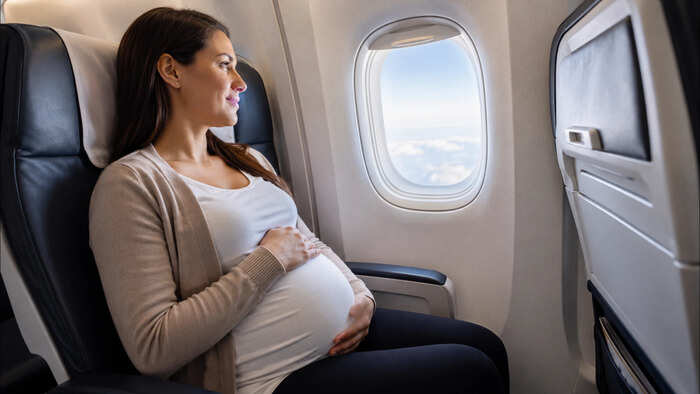
“The second trimester, from 14 to 28 weeks, is usually the ideal time for international travel,” says Dr Thukral.By this stage, morning sickness often improves, energy levels may be better, and the risk of miscarriage or preterm labour is generally lower than in the first and third trimesters. Still, every pregnancy is different.
What To Check Before Booking
Before international travel, check:- Airline Rules: Many airlines ask for a fit-to-fly certificate after 28 weeks.
- Medical Clearance: Speak to your obstetrician, especially before long-haul travel.
- Maternity Care At Destination: Know where the nearest hospital is.
- Travel Insurance: Confirm pregnancy-related coverage.
- Vaccines and Infections: Discuss destination-specific risks with your doctor.
In-Flight Safety Tips
According to the CDC, long flights increase the chance of blood clots, and pregnancy itself is a risk factor.Pregnant travellers should stay hydrated, wear comfortable clothing, and move around the cabin every hour or two during long flights.
When Should You Avoid Flying?
Avoid or postpone international travel if you have pre-eclampsia, uncontrolled diabetes, placenta previa, multiple pregnancy, bleeding, severe anaemia, ruptured membranes or a history of preterm labour.Most uncomplicated pregnancies can include air travel, but international flights need planning. The safest window is often the second trimester. Always check airline rules, carry medical records and discuss your itinerary with your obstetrician before you fly.
FAQs On Flying Internationally During Pregnancy
- Can I Fly Internationally At 30 Weeks Pregnant?
Possibly, if your pregnancy is uncomplicated, but many airlines may require a medical certificate. Check with your doctor and airline first. - Is The Second Trimester Best For International Travel?
Yes, it is often the most comfortable time because nausea may improve and the risk of pregnancy complications is generally lower.