
In this article:
We spoke with Dr Bharat Jain, Senior Consultant – Pediatric and Neonatology, Cocoon Hospital, Chandigarh, to understand congenital CMV infection in babies.
What Is Congenital CMV Infection in Babies?
Congenital CMV is a CMV infection that is already present when a baby is born. CMV belongs to the herpesvirus family and is a common viral infection. Its effects can vary, with some babies remaining well and others developing health concerns that require medical attention.According to the CDC, about 1 in 200 babies in the United States is born with congenital CMV infection. Among babies with congenital CMV, about 1 in 5 may have birth defects or long-term health problems, such as hearing loss.
How Does a Baby Get CMV During Pregnancy?
CMV can reach a developing baby when the virus passes from the mother through the placenta during pregnancy. A mother may pass CMV to her baby after a new infection, but transmission can also happen if a previous CMV infection becomes active again. In some cases, infection with a different CMV strain may also lead to transmission.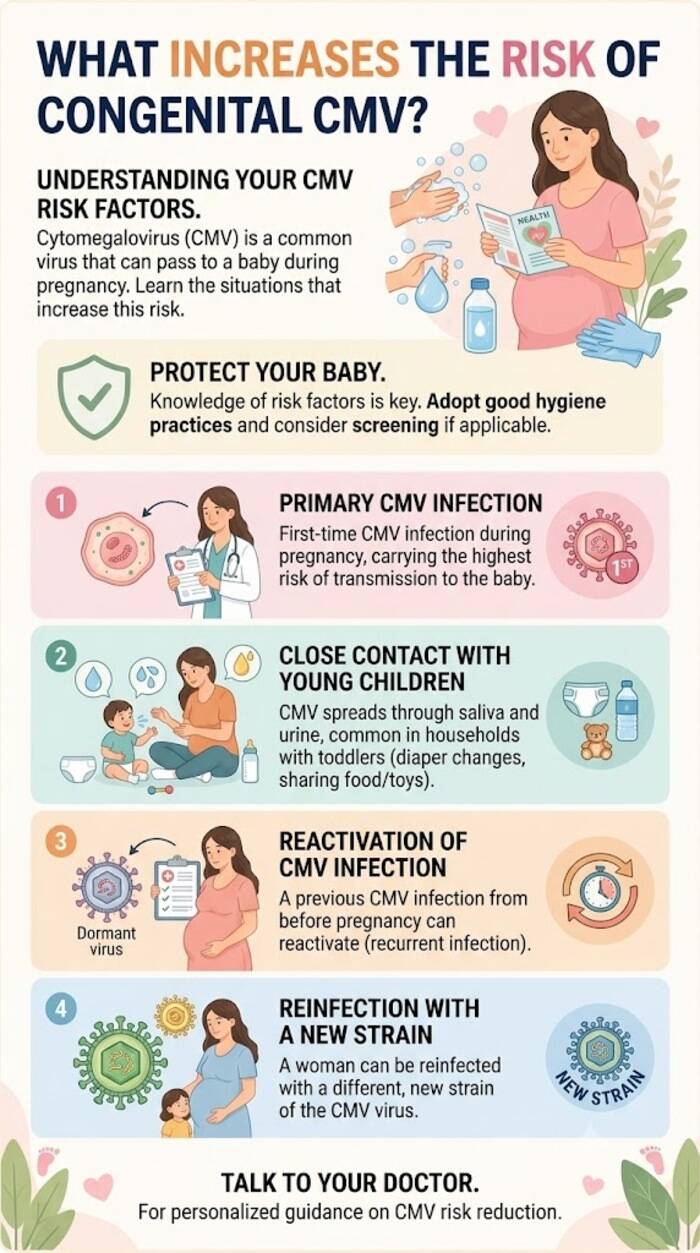
What Increases the Risk of Congenital CMV?
Some situations can increase the chance of CMV infection during pregnancy:- First CMV infection during pregnancy: The risk of passing CMV to the baby may be higher.
- Close contact with young children: CMV can spread through saliva and urine, especially when caring for toddlers.
- Reactivation of CMV: A previous infection can reactivate during pregnancy.
- Reinfection: Exposure to a different CMV strain may also cause infection.
Symptoms of Congenital CMV in Babies
“Babies with congenital cytomegalovirus infection may not present with any clinical features, but they can experience some problems related to hearing, vision, growth, and nervous system development.”— Dr Bharat Jain, Senior Consultant – Pediatric and Neonatology, Cocoon Hospital, Chandigarh
Some babies with congenital CMV may have signs of infection at birth. These can vary depending on how the infection affects the baby.
- Small head size (microcephaly)
- Low birth weight or poor growth
- Yellowing of the skin or eyes (jaundice)
- Small red or purple spots on the skin
- Enlarged liver or spleen
- Seizures
How Is Congenital CMV Diagnosed in Babies?
Dr Bharat Jain explains that congenital CMV is usually diagnosed by testing a baby’s saliva or urine for the virus, ideally within the first 21 days after birth.He recommends the following tests:
- Saliva test: Often used as the first test
- Urine test: May be used to confirm a positive saliva result
- PCR testing: Detects CMV genetic material in the sample
- Additional tests: Hearing, vision, blood tests, or brain imaging may be advised
How Is Congenital CMV Treated?
Dr Bharat Jain explains that treatment is decided based on the baby’s symptoms, overall health, and test results.Treatment may include:
- Regular monitoring: Babies who are well may need hearing, vision, growth, and developmental checks.
- Antiviral medicines: Ganciclovir or valganciclovir may be used for some babies with significant symptoms.
- Ongoing care: Follow-up helps doctors identify and manage any concerns that develop as the baby grows.
What Complications Can Congenital CMV Cause?
Congenital CMV can sometimes lead to health problems that become noticeable at birth or later in childhood.Some possible complications include:
- Hearing loss: It may occur at birth or develop later.
- Vision problems: Some children may develop eye-related complications.
- Developmental difficulties: Some children may experience challenges with learning, speech, or other areas of development.
- Movement problems: Muscle coordination or movement may be affected.
- Seizures: Severe infection can sometimes affect the brain.
- Neurological problems: CMV may affect the developing nervous system in some children.
When Should You See a Doctor?
Parents should seek medical advice if they notice unusual symptoms or changes in their baby’s health, hearing, vision, feeding, growth, or development.- Seizures or unusual movements
- Difficulty feeding or gaining weight
- Poor response to sounds
- Unusual eye movements or vision concerns
- Delays in developmental milestones
- Jaundice or unusual skin spots
- Suspected or confirmed congenital CMV infection
Whether you’re pregnant, a new mom, or navigating postpartum, you don’t have to do it alone. Join our support group to connect, share, and support one another.
FAQs on Congenital CMV Infection in Babies: Symptoms, Causes, Diagnosis & Treatment
- Can a baby with Congenital CMV breastfeed?
Yes, most babies with congenital CMV can breastfeed. However, doctors may take additional precautions for very premature or very low-birth-weight babies because CMV can sometimes be transmitted through breast milk after birth. - Can Congenital CMV be detected before birth?
Yes, congenital CMV may be suspected during pregnancy if the mother has a CMV infection or an ultrasound shows findings that raise concern. When appropriate, doctors may recommend further testing, such as amniocentesis, to check whether the fetus has been infected. - Does congenital CMV affect a baby's growth?
It can. Some babies with symptomatic congenital CMV may have poor growth or low birth weight. Growth can be monitored during routine appointments to identify whether additional nutritional or medical support is needed.