In this article:
The vaccine is a conjugate vaccine containing components of the bacterium rather than live Hib bacteria. Therefore, it cannot cause Hib infection.
What Are the Benefits of the Hib Vaccine?
According to Dr Abhishek Chopra, Hib vaccination is particularly important because young children are more vulnerable to invasive Hib disease. Vaccination may help protect your baby against:- Meningitis: Hib can infect the membranes surrounding the brain and spinal cord and cause bacterial meningitis.
- Pneumonia: Hib can cause serious lung infections, particularly in young children.
- Bloodstream infections: The bacterium can enter the bloodstream and cause invasive disease.
- Epiglottitis: This serious infection can cause swelling around the airway and breathing difficulties.
What Is the Hib Vaccine Schedule for Babies in India?
In India, Hib is included in the pentavalent vaccine, which protects against diphtheria, tetanus, pertussis, hepatitis B and Hib.Under the Government of India's National Immunisation Schedule, pentavalent vaccine doses are given during infancy, beginning at 6 weeks, followed by doses at 10 and 14 weeks.
| Age | Hib-containing vaccine |
| 6 weeks | Pentavalent dose 1 |
| 10 weeks | Pentavalent dose 2 |
| 14 weeks | Pentavalent dose 3 |
Dr Abhishek Chopra advises parents to follow the vaccination schedule applicable to their child and complete all primary and booster doses recommended by their paediatrician.
What If Your Baby Misses a Hib Vaccine Dose?
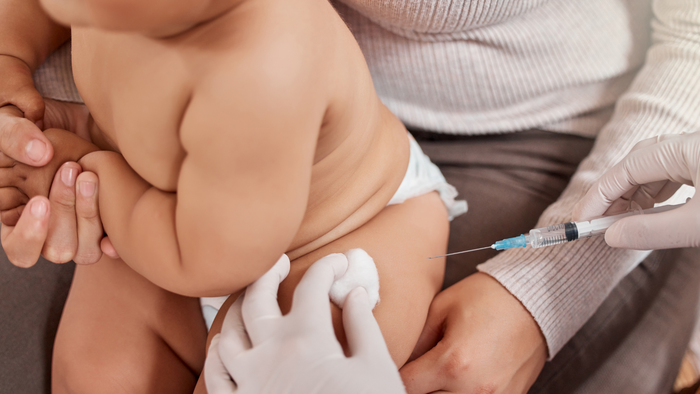
If your baby misses a scheduled Hib dose, speak to your paediatrician or vaccination provider. Do not assume that the entire series needs to be restarted.The vaccination card can help the doctor determine which dose is due and whether a catch-up schedule is required. An interrupted vaccination series can generally be continued without repeating doses that have already been given.
Keeping your baby's immunisation record updated is therefore important. Dr Abhishek Chopra also emphasises completing the recommended primary and booster doses to maintain protection.
What Are the Side Effects of the Hib Vaccine?
The Hib vaccine is generally well tolerated. As Dr Abhishek Chopra explains, most children do not experience serious problems after vaccination.Some babies may develop:
- Pain, redness or swelling at the injection site
- Mild fever
- Irritability or fussiness
- Tiredness or sleepiness
- Reduced appetite
Hib vaccination can protect young children against potentially life-threatening bacterial infections. Keeping your baby's vaccination card updated and completing the recommended doses can help maintain this protection.
Whether you’re pregnant, a new mom, or navigating postpartum, you don’t have to do it alone. Join our support group to connect, share, and support one another.
FAQs on Haemophilus influenzae Type b (Hib) Vaccine: Benefits and Schedule
- What does the Hib vaccine protect against?
It helps protect babies and young children against serious Hib infections, including meningitis, pneumonia, bloodstream infections and epiglottitis. - Is Hib included in India's National Immunisation Schedule?
Yes. Hib is included in the pentavalent vaccine given at 6, 10 and 14 weeks under India's National Immunisation Schedule. - Does my baby need a Hib booster dose?
The IAP schedule recommends a Hib booster at 16–18 months. The Government of India's routine immunisation programme does not include a separate Hib booster. Follow the schedule advised by your baby's paediatrician.