In this article:
What Is Cushings Syndrome, and Why Is It Rare in Pregnancy?
Cushing's syndrome develops when the body is exposed to excessively high levels of cortisol for a prolonged period. The cause may be an adrenal gland tumour, a pituitary tumour (Cushing's disease) that produces excess adrenocorticotropic hormone (ACTH), or long-term use of steroid medicines.Excess cortisol disrupts ovulation and periods, making pregnancy uncommon. When it does occur, diagnosis is harder because normal changes such as weight gain, stretch marks, and high blood sugar mimic Cushing's syndrome.
Normal Pregnancy vs Cushings Syndrome: Key Differences
Diagnosis can be difficult because several features overlap with normal pregnancy. However, certain findings may raise suspicion, especially when they are pronounced or appear together.| Feature | Normal pregnancy | Cushing's syndrome |
| Stretch marks | Thin, pink or silvery lines on the abdomen, hips and breasts | Wide, purple or violaceous marks that may also appear on the thighs, armpits and arms |
| Weight gain | Steady gain, mainly over the belly, hips and breasts | Fat gathers on the trunk and upper back (buffalo hump), while the arms and legs stay thin |
| Face | Mild puffiness | Rounded, full face |
| Skin | Firm skin, with mild acne in some women | Thin skin, easy bruising, and marked acne |
| Muscle strength | Tiredness is common, but strength is normal | Weakness, with difficulty climbing stairs or rising from a chair |
| Hair | Hair thickens, with shedding after delivery | Excess facial or body hair, and hair loss |
| Blood pressure | Gestational hypertension usually appears after 20 weeks | Rises early (around 16 weeks) or is hard to control |
| Blood sugar | Gestational diabetes is usually found at screening around 24 to 28 weeks | High blood sugar that appears early or is hard to control |
| Potassium | Normal on blood tests | Low on blood tests |
| Infections | Occasional | Recurrent or slow-to-clear |
Risks of Cushing's Syndrome to the Mother
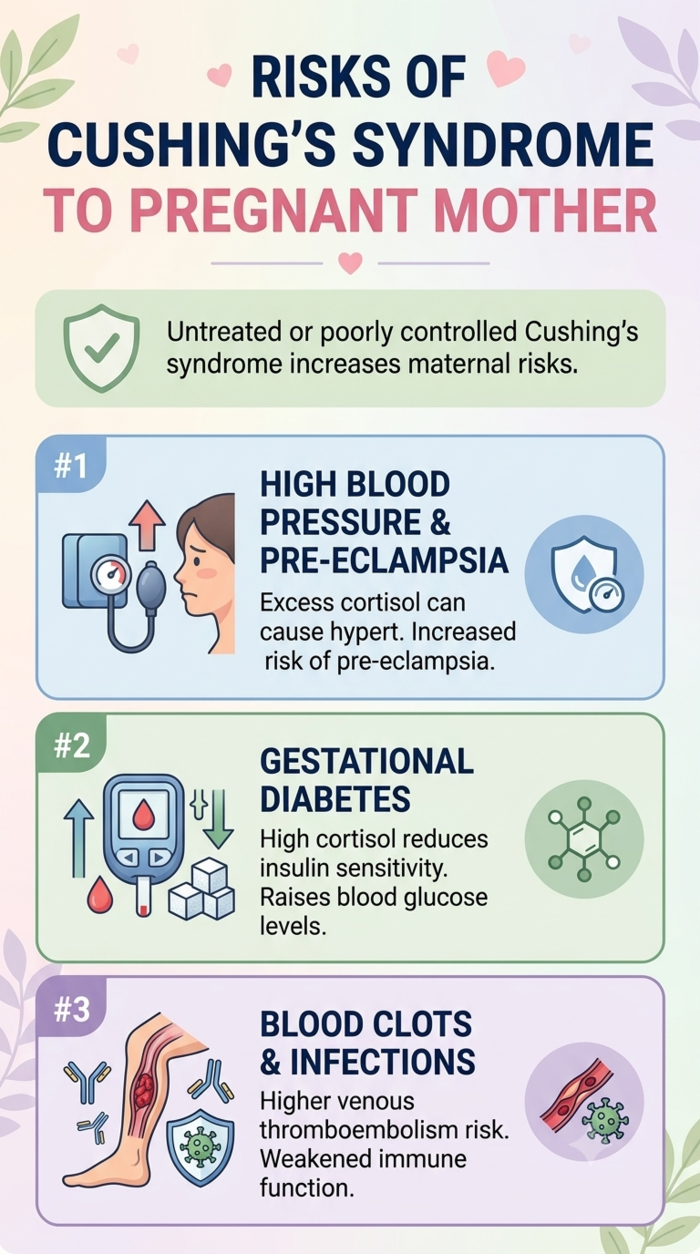
Untreated or poorly controlled Cushing's syndrome can increase the risk of several complications.- High blood pressure and pre-eclampsia: Excess cortisol can contribute to hypertension during pregnancy. Women with Cushing's syndrome are also at increased risk of pre-eclampsia.
- Gestational diabetes: Cortisol increases blood glucose levels and can reduce insulin sensitivity. As a result, women with Cushing's syndrome may develop diabetes or have difficulty controlling existing high blood sugar during pregnancy.
- Blood clots and infections: Cushing's syndrome can increase the risk of blood clots (venous thromboembolism). Excess cortisol can also affect immune function, increasing susceptibility to infections.
Risks of Cushing's Syndrome to the Baby
High maternal cortisol levels can affect pregnancy and foetal outcomes. Reported complications include:- Preterm birth
- Poor foetal growth or low birth weight
- Pregnancy loss
- Foetal or neonatal complications
- Low blood sugar in the newborn
- Respiratory problems after birth
Women diagnosed with Cushing’s syndrome who are planning a pregnancy should ideally receive preconception counselling. If it is diagnosed during pregnancy, care should be provided by a multidisciplinary team involving endocrinologists, obstetricians and maternal-fetal medicine specialists.
How Is Cushing's Syndrome Treated During Pregnancy?
Treatment depends on the cause, severity, and stage of pregnancy. The aim is to reduce excessive cortisol while protecting the mother and foetus.- Surgery: Removing the tumour by laparoscopic adrenalectomy or pituitary surgery is preferably done in the second trimester, before 24 weeks. Steroid cover is needed afterwards to prevent adrenal insufficiency.
- Medicine: Medication is considered when surgery is not possible or while preparing for surgery. Because evidence on medicines for Cushing's syndrome during pregnancy is limited, treatment requires specialist assessment rather than self-medication.
- Monitoring: Regular blood pressure checks, blood sugar tests, and baby growth scans.
Whether you’re pregnant, a new mom, or navigating postpartum, you don’t have to do it alone. Join our support group to connect, share, and support one another.
FAQs on Cushing's Syndrome During Pregnancy: Risks to Mother and Baby
- Can you get pregnant with Cushing's syndrome?
Yes, but it is uncommon because high cortisol disrupts ovulation and periods. Women whose cortisol is controlled before pregnancy have a lower risk of complications. - Is Cushing's syndrome dangerous for the baby?
It can be. Untreated disease raises the risk of preterm birth, low birth weight, and stillbirth. - What are the first signs of Cushing's syndrome in pregnancy?
Early high blood pressure, raised blood sugar, a rounded face, fat on the upper back, acne, excess hair, and muscle weakness.