In this article:
What is Inguinal Hernia in Newborns?
An inguinal hernia is a medical condition where a portion of the intestines protrudes into an opening in the abdomen located in the groin area. The swelling can be seen extending to the scrotum in baby boys. Baby girls exhibit swelling in the groin area.Inguinal hernia is common in premature babies, especially boys and babies with a history of hernia that runs in the family.
Why Does it Happen?
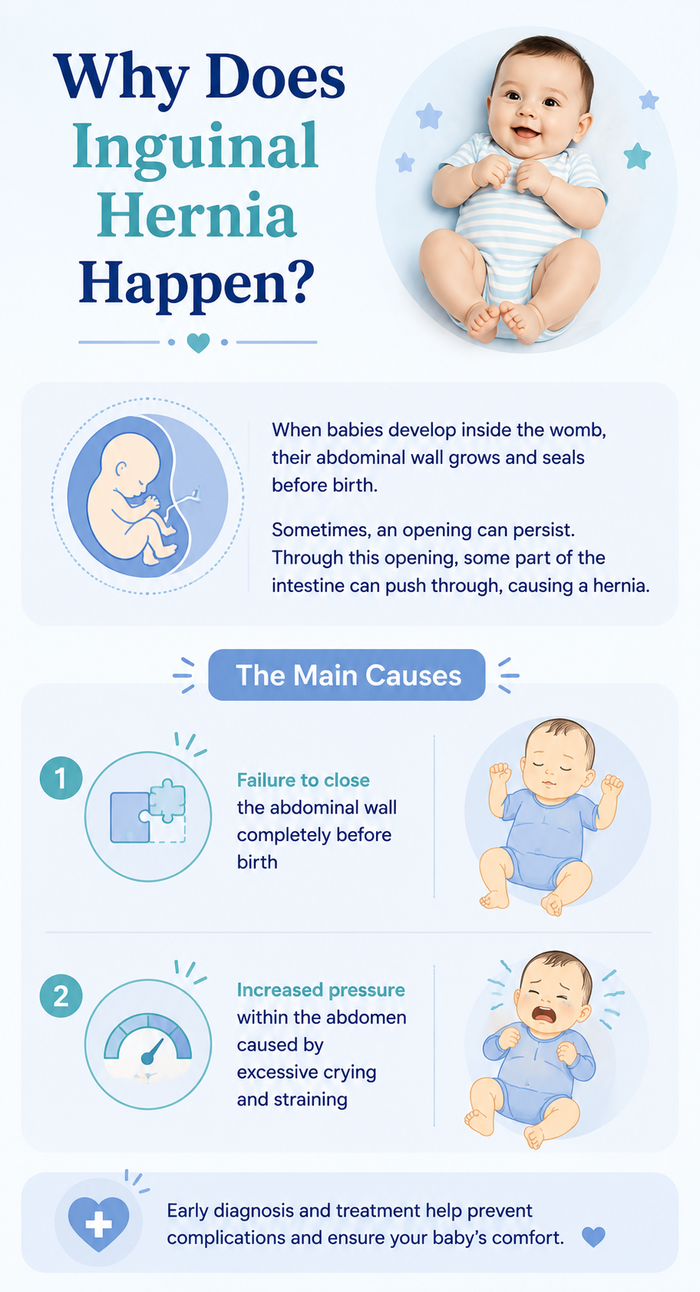
When babies develop inside the womb, their abdominal wall grows and seals before birth. Sometimes, an opening can persist. Through this opening, some part of the intestine can push through, causing a hernia.The main causes include:
- Failure to close the abdominal wall completely before birth
- Increased pressure within the abdomen caused by excessive crying and straining
Signs and Symptoms to Watch For
Being able to identify early warning signs can enable you to take early action. You can expect the following signs and symptoms for an inguinal hernia:- Your baby might show a bulge or swelling around his/her groin or scrotum area
- This swelling will be more noticeable when the baby is crying, coughing, or straining himself
- The bulge should go away once the baby calms down and lies still
When Should Parents Worry?
Although most cases of inguinal hernias are not emergencies, certain conditions require immediate medical help. Consult a paediatrician immediately if your baby shows the following symptoms:- The hernia is hard, swollen, or tender
- The lump does not get softer even after your baby calms down
- Baby cries inconsolably due to discomfort and pain
- Redness or discolouration on the skin near the lump
- Your baby vomits and refuses to feed
How is Inguinal Hernia Treated?
Inguinal hernias cannot heal by themselves; they need to be treated by surgery alone.Hernia Repair Surgery
This surgical procedure is very safe and common in babies. It is usually done under general anaesthesia so that the baby sleeps and doesn't feel any pain. The surgeon makes a small cut (incision) and gently pushes the intestine to its original position. The cut is closed with a small stitch.
Recovering After a Hernia Surgery
Recovery after hernia surgery is usually smooth and quick, with minimal discomfort. Most babies feed normally within hours and feel better in a day or two. Mild swelling or discomfort is common. Keep the area clean and follow your doctor's instructions.
Can Inguinal Hernias be Prevented?
Inguinal hernias in babies cannot usually be prevented, as they are present from birth due to natural developmental gaps in the abdominal wall. However, early detection and timely medical care can prevent complications. Regular checkups and following paediatric advice are important when you notice a bulge.Why Medical Attention Matters
Seeking timely medical help for an inguinal hernia in babies is essential to ensure safety and prevent complications. It helps in the following ways:- Prevents the hernia from being trapped (incarcerated)
- Reduces the risk of loss of blood supply to the tissues
- Helps avoid pain, discomfort, and feeding difficulties
- Ensures early, simple treatments with better outcomes
- Gives parents reassurance and proper guidance
Whether you’re pregnant, a new mom, or navigating postpartum, you don’t have to do it alone. Join our support group to connect, share, and support one another.
FAQs on Inguinal Hernia in Newborns: When to Worry
- Does an inguinal hernia impact your baby's development?
An inguinal hernia does not affect your baby's growth and development. With timely treatment, most babies grow normally without any long-term issues or delays. - Can inguinal hernias recur?
Inguinal hernias can recur in babies, but it is usually very uncommon, especially after a proper surgical repair. Following post-surgery care and regular checkups helps reduce the risk further. - Can inguinal hernias occur on both sides?
Yes, inguinal hernias can occur on both sides, known as bilateral hernias. This is more common in babies, especially premature infants, and both sides may be treated during surgery if needed.