In this article:
How Hormones Change the Sense of Touch in Pregnant Women
The skin is the body's largest sensory organ, and it is affected by pregnancy hormone levels. Both estrogen and progesterone, whose levels greatly increase during pregnancy, affect the density, hydration and sensitivity of the skin, influencing its perception of touch. Estrogen causes increased blood flow to the skin and impacts the activity of sensory nerve endings, small structures inside the skin that perceive touch, pressure, temperature and pain.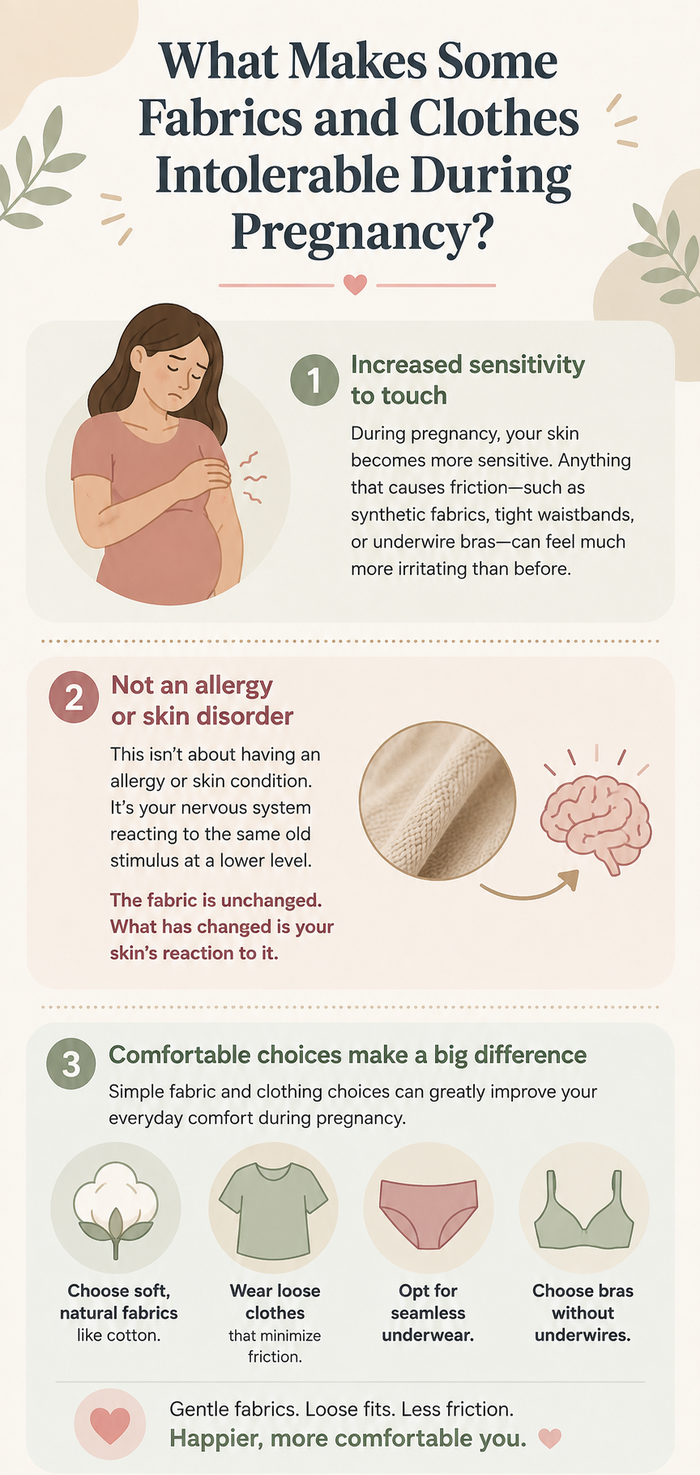
What Makes Some Fabrics and Clothes Intolerable During Pregnancy?
When you suddenly find some clothes you have worn before pregnancy to be intolerable on your skin while pregnant, then this is another common effect of increased sensitivity to touch. Anything that causes friction against your sensitised skin will irritate you more than when you were not pregnant; this includes synthetic materials, tight waistlines, and underwire bras, among others.This is not about having an allergy or skin disorder; it is your nervous system reacting to the same old stimulus at a lower level. The fabric is unchanged. What has changed is your skin reaction to the material.
The use of soft natural fabrics like cotton while being pregnant is just one of the solutions to this problem. Loose clothes that minimise friction, seamless underwear, and bras without any underwires will make a significant difference in your everyday life.
When to Contact Your Doctor
Stronger sensitivity to touch during pregnancy is normal for many women. It would be wise to consult your doctor when:- The itching is severe, constant, and involves the palms of the hands and feet, especially during nighttime, because this could be a sign of intrahepatic cholestasis (a liver condition that slows the flow of bile).
- A rash appears along with your sensitivity, especially when it starts in the stretch marks and spreads to the abdominal area.
- There is tingling, numbness, or pain in the hands, wrists, or fingers that interferes with sleep or daily functioning; this could be due to carpal tunnel syndrome that can be managed with a wrist brace or physiotherapy.
- Tactile sensitivity in a particular area of skin is associated with pain, redness, or swelling, suggesting another medical issue besides hormonal sensitivity.
Whether you’re pregnant, a new mom, or navigating postpartum, you don’t have to do it alone. Join our support group to connect, share, and support one another.
FAQs on Why Does Your Sense of Touch Feel More Sensitive During Pregnancy?
- Is skin sensitivity an early sign of pregnancy?
Body-wide sensitivity is known to occur due to an increase in estrogen levels during the first trimester. However, although it is known as an early sign of pregnancy, it is not an accurate sign on its own. - Is increased touch sensitivity in pregnancy common to all women?
Not really. Increased touch sensitivity is experienced differently by different women in various pregnancies and also between pregnancies in the same woman. While some women experience increased touch sensitivity early in the first trimester, others experience no or little change at all. - Does skin sensitivity return to normal post-delivery?
For most women, the answer is yes. Sensitivity tends to subside as the levels of pregnancy hormones fall off in the weeks after giving birth.